How Furby Language Works
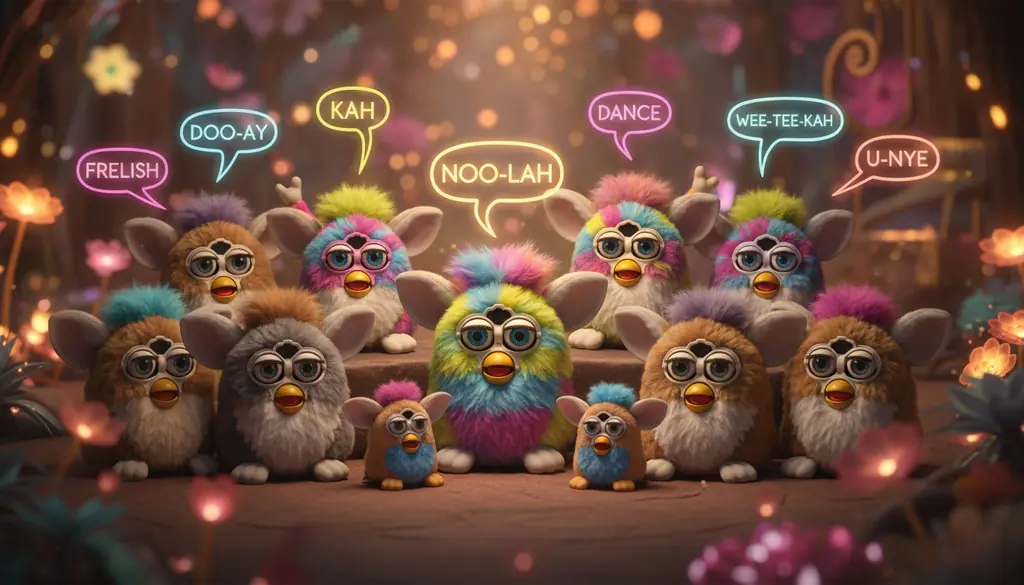
Furby toys have captured hearts around the world with their ability to communicate using a playful constructed tongue known as Furbish. This distinctive furby language turns simple interactions into lively exchanges, with words and sounds that invite imaginative play.
Whether you remember the originals or are discovering them now, understanding how the language works helps you choose the right generation, decode common phrases, and enjoy richer conversations with your companion. For collectors and new owners alike, Furby Toy Shop is a helpful place to find authentic models across generations.
The evolution of Furby language spans decades of change and creativity—from the first 1998 releases to modern connectable versions—so there’s always something new to learn. Let’s explore how these words, sounds, and behaviors build the Furby experience.
What Is Furbish Language
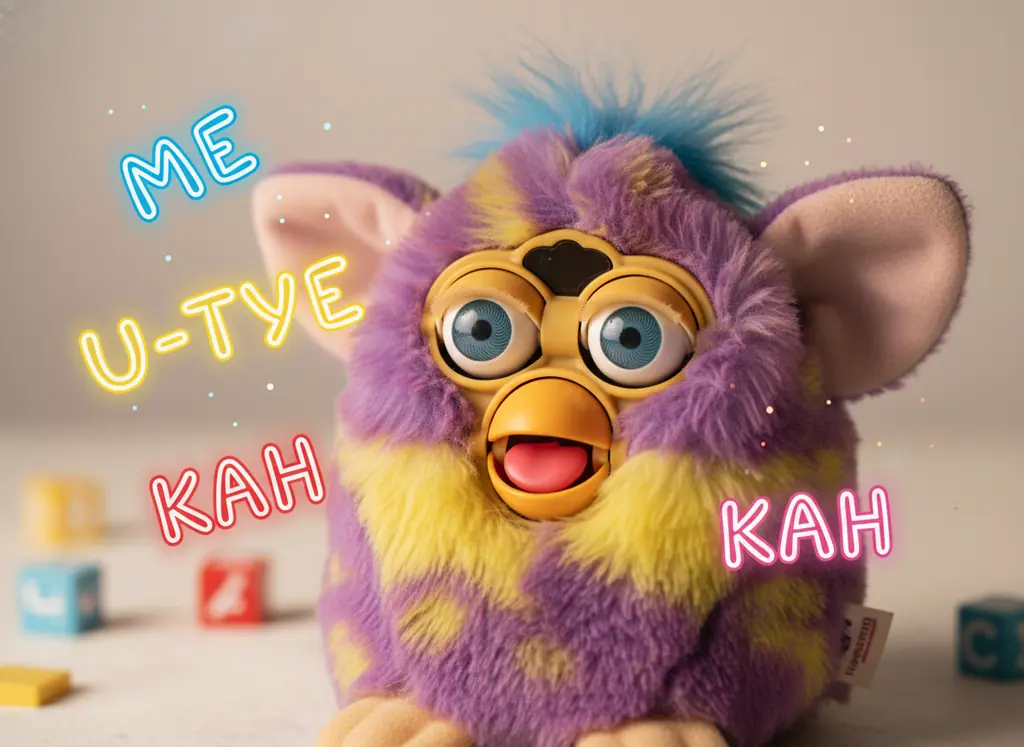
Furbish is the playful constructed language Furby toys use to communicate, first introduced with the original 1998 Furby. Built from simple sounds and syllables, Furbish combines phonetic building blocks with expressive intonation to create a memorable vocabulary for interactive play.
Most Furbish words use short, child-friendly syllable patterns—commonly two to three syllables—making them easy to say and remember. The language pairs those syllables with emotional delivery so a Furby’s tone often matters as much as the word itself.
Tiger Electronics (the company behind the original Furby) developed Furbish to give these toys personality and an immersive play experience. Over subsequent generations, new words and phrases were added while the core Furbish structure stayed recognizable.
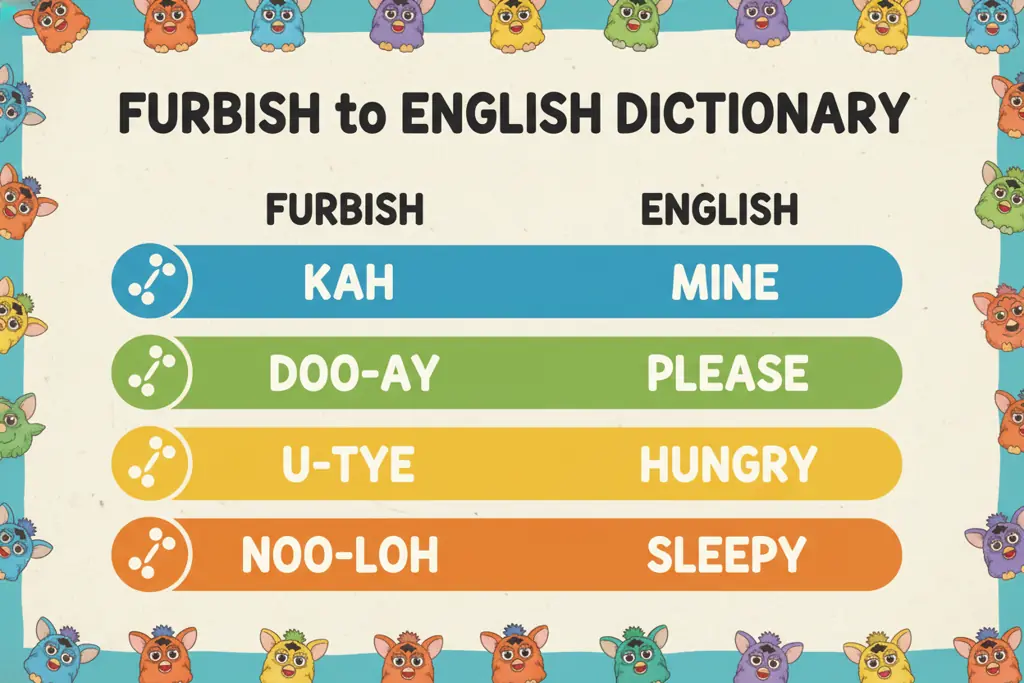
Community guides and manufacturer notes provide common Furbish–English translations (often labeled "Furbish English"). Examples frequently cited include "kah" (mine/me), "doo‑ay" (please), and "u‑tye" (hungry). Keep in mind regional or version-specific releases sometimes modify pronunciations or introduce local words.
In short, Furbish is both a compact phonetic system and an emotional performance language—its words, syllables, and delivery together create the unique furby language that invites playful interaction across generations.
Furby Language Evolution Across Generations
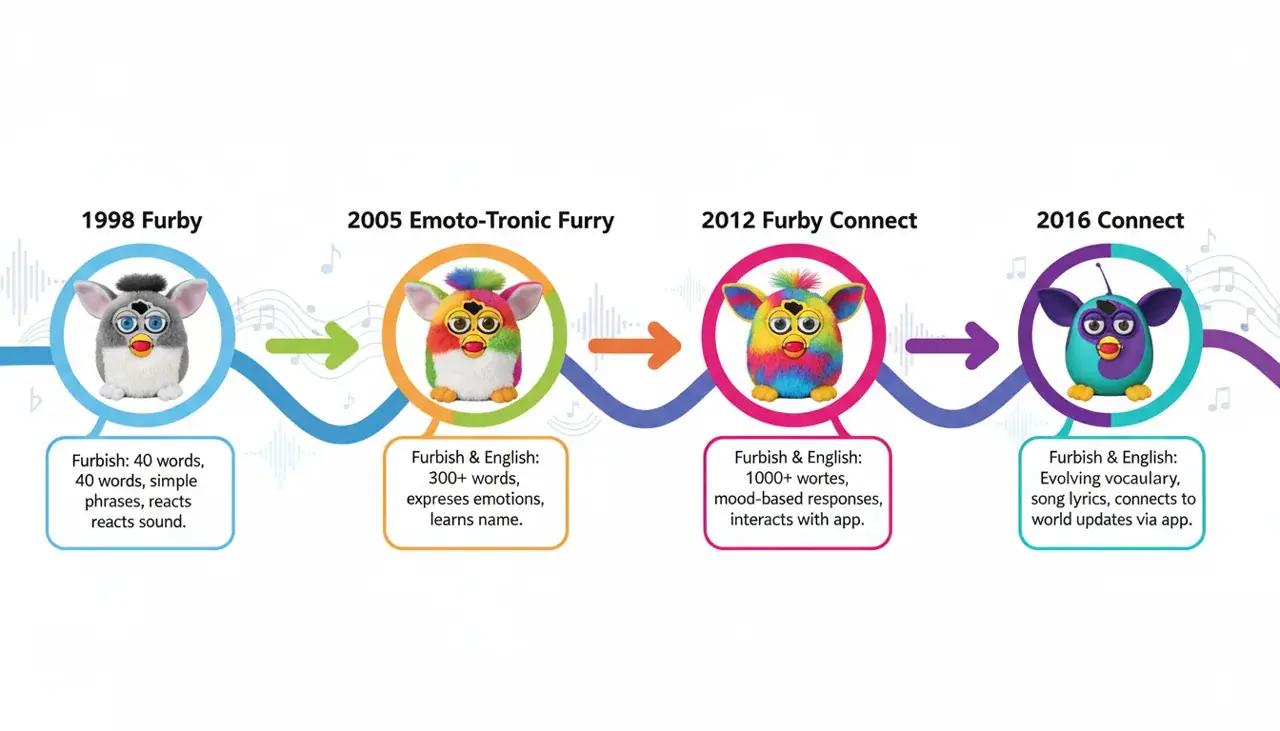
Furbish has changed and expanded across multiple Furby generations, with each version adding new phrases, behaviors, or technology that affect how these companions communicate. Below is a concise generation-by-generation look at the most important language and feature changes (note: vocabulary counts are commonly cited estimates among collectors and may vary by model).
Original 1998 Furby Language Foundation
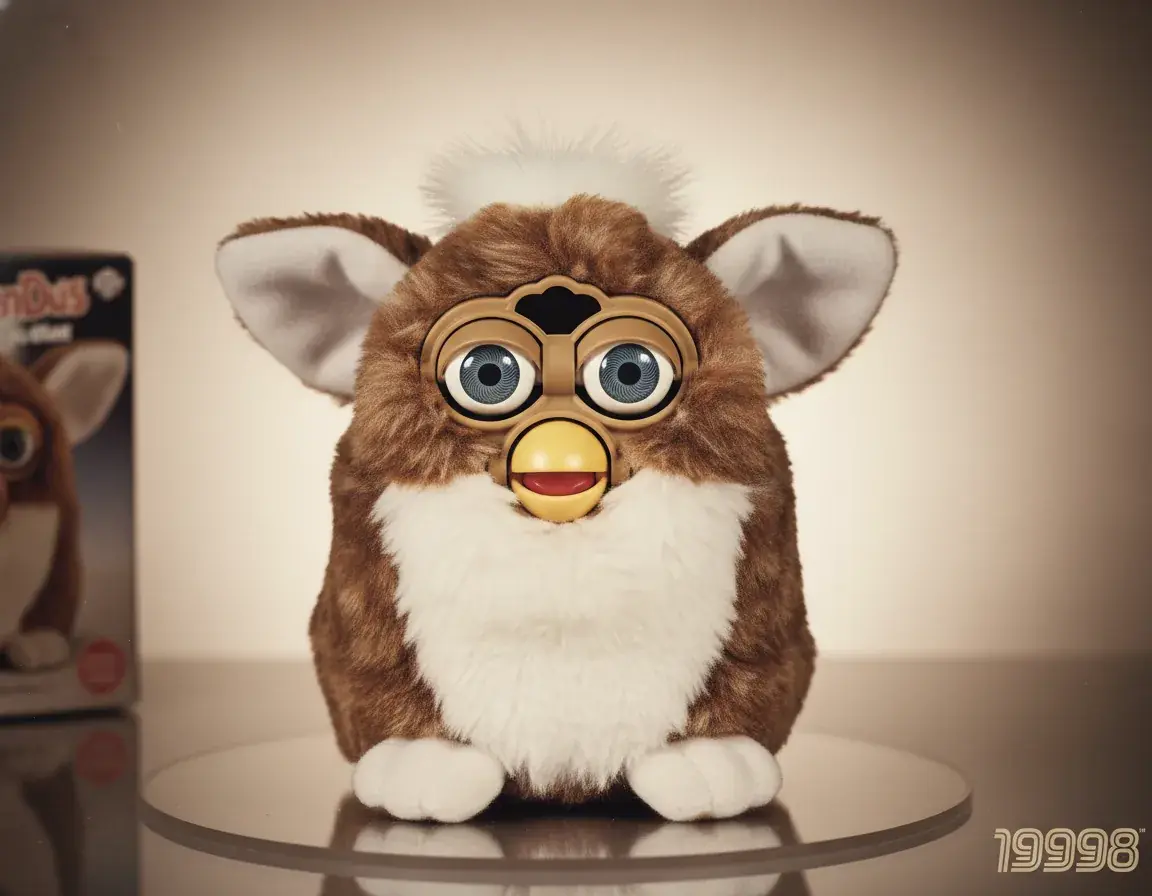
The original 1998 Furby introduced the world to Furbish and is often credited with roughly ~800 programmed words in early documentation and community estimates. These toys famously started speaking mostly in Furbish and, with regular interaction, gradually introduced English words—an engaging "starts speaking" progression that felt like teaching a real pet.
Iconic phrases such as "me love u‑tye" combined basic needs and affection, and the simple, repeatable vocabulary helped owners form quick emotional bonds with their Furby.
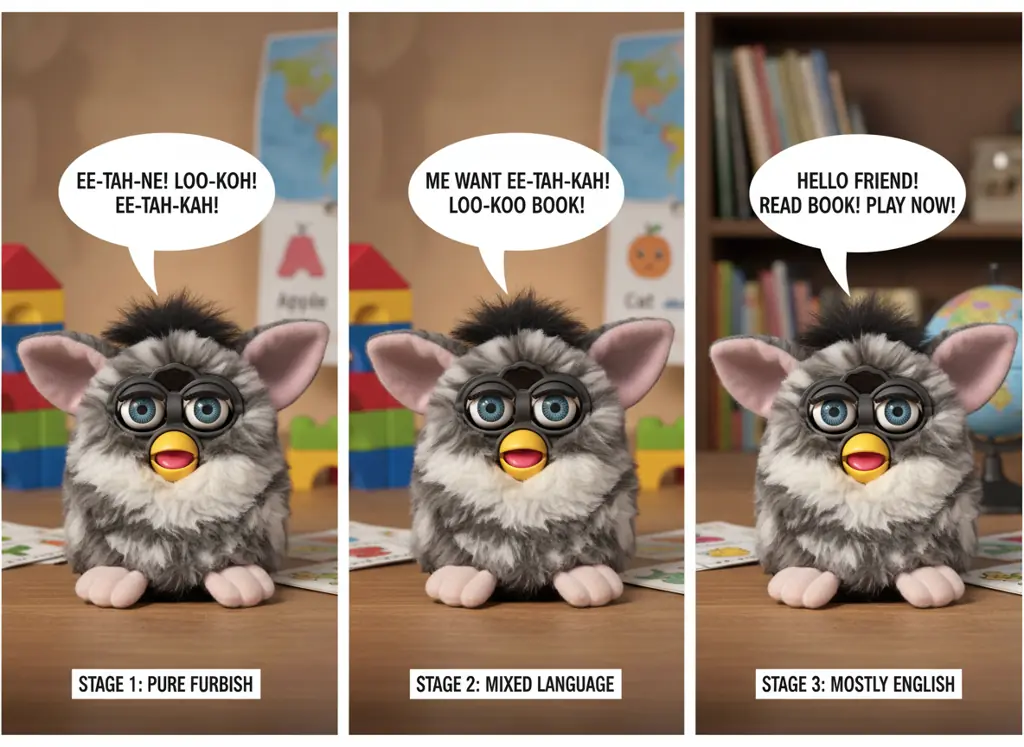
Because this generation emphasized organic progression rather than instant variety, many collectors and parents still prize the 1998 Furby for its slow-reveal vocabulary and nostalgic charm.
Furby Babies Language Characteristics
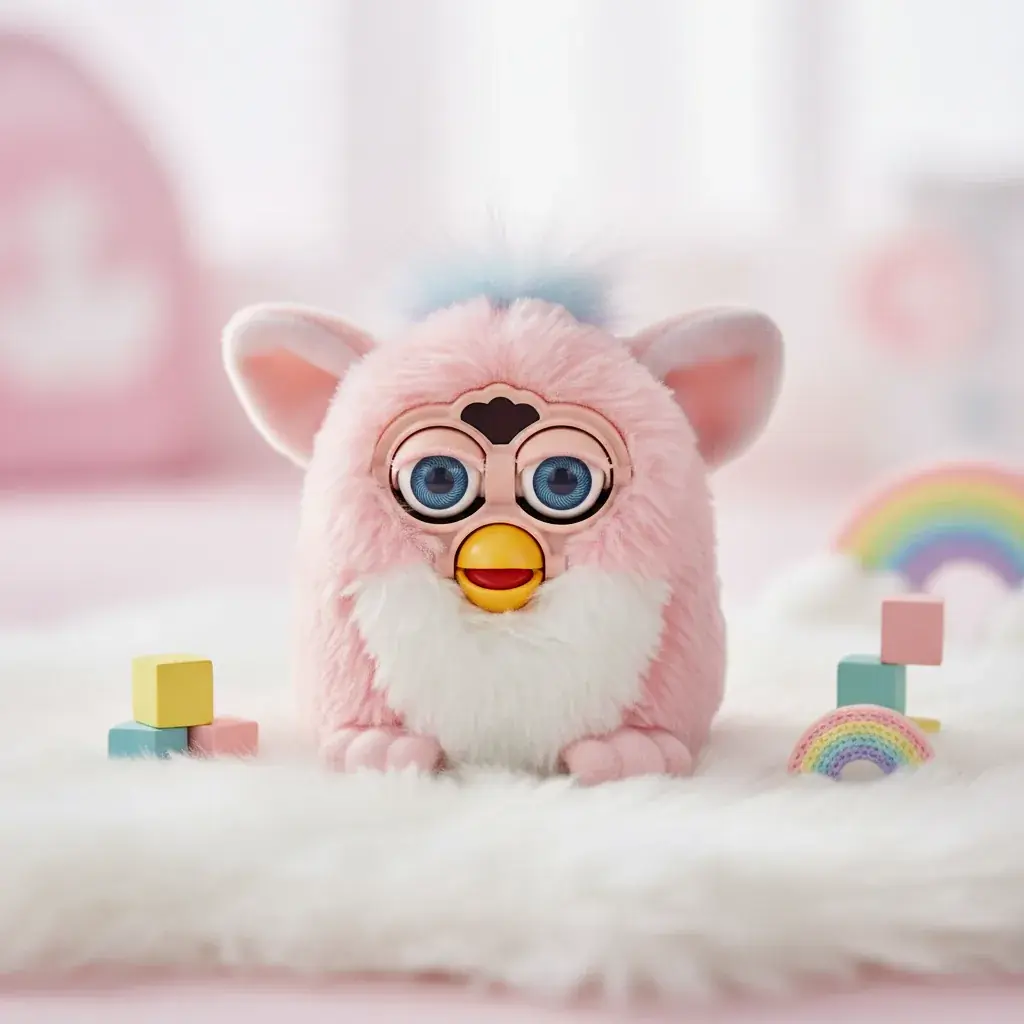
Introduced shortly after the originals, Furby Baby models used a simplified Furbish set—commonly estimated at ~200–300 core words—and higher-pitched voices to create an unmistakably "baby" personality. Their language focuses on simple needs and play invitations (for example, short phrases that prompt feeding or games), making them especially approachable for younger children.
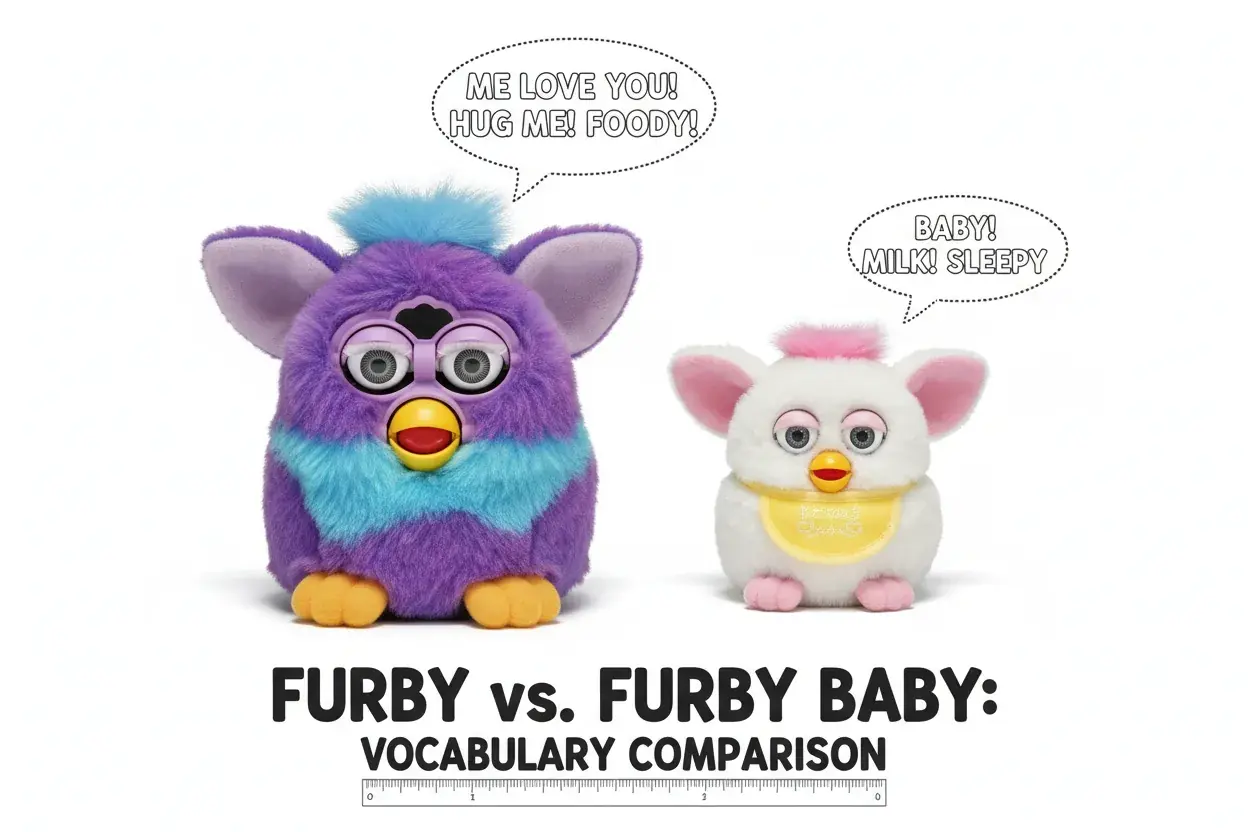
Furby babies preserved the core Furbish patterns while simplifying vocabulary and delivery so younger players could join the conversation more easily.
2005 Emoto‑Tronic Furby Advancements
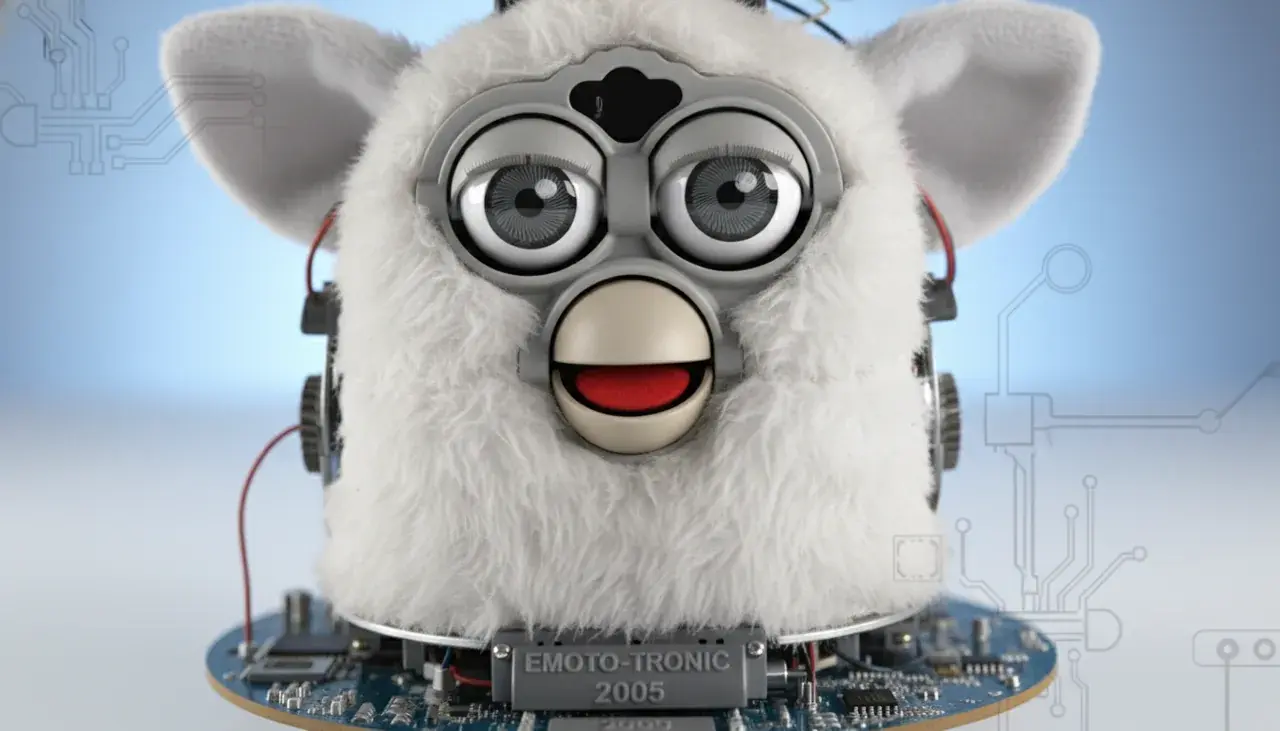
The 2005 emoto‑tronic Furby generation brought notable hardware and language-delivery improvements: more expressive motors for eyes and mouths, clearer pronunciation, and voice‑recognition triggers that let some English words influence responses. Collectors often cite expanded vocabulary counts for these models (community estimates around ~1000 words), though exact totals vary by release.
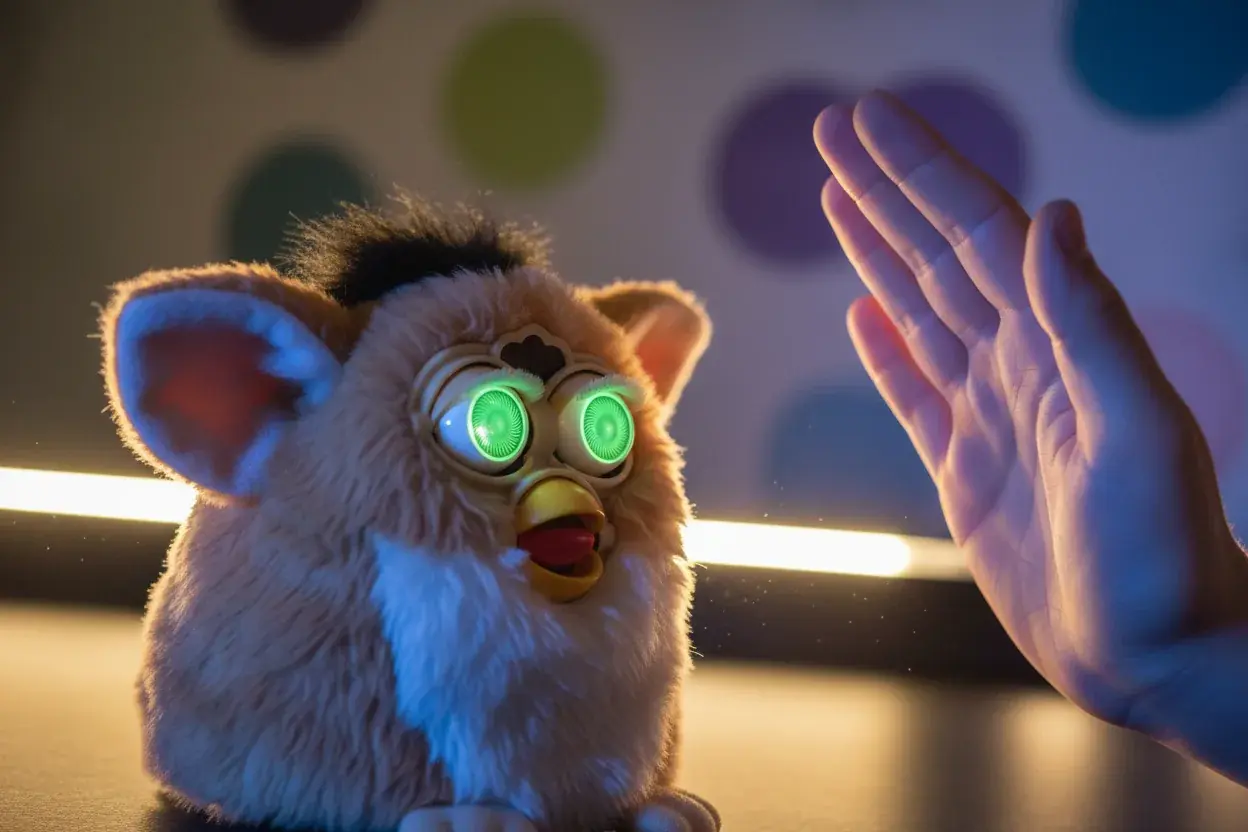
Because the emoto‑tronic furby responded more visibly to emotion and touch, the language felt livelier and more nuanced—an important step in the evolution from simple words to richer, multimodal communication.
2012 Furby Language Innovation
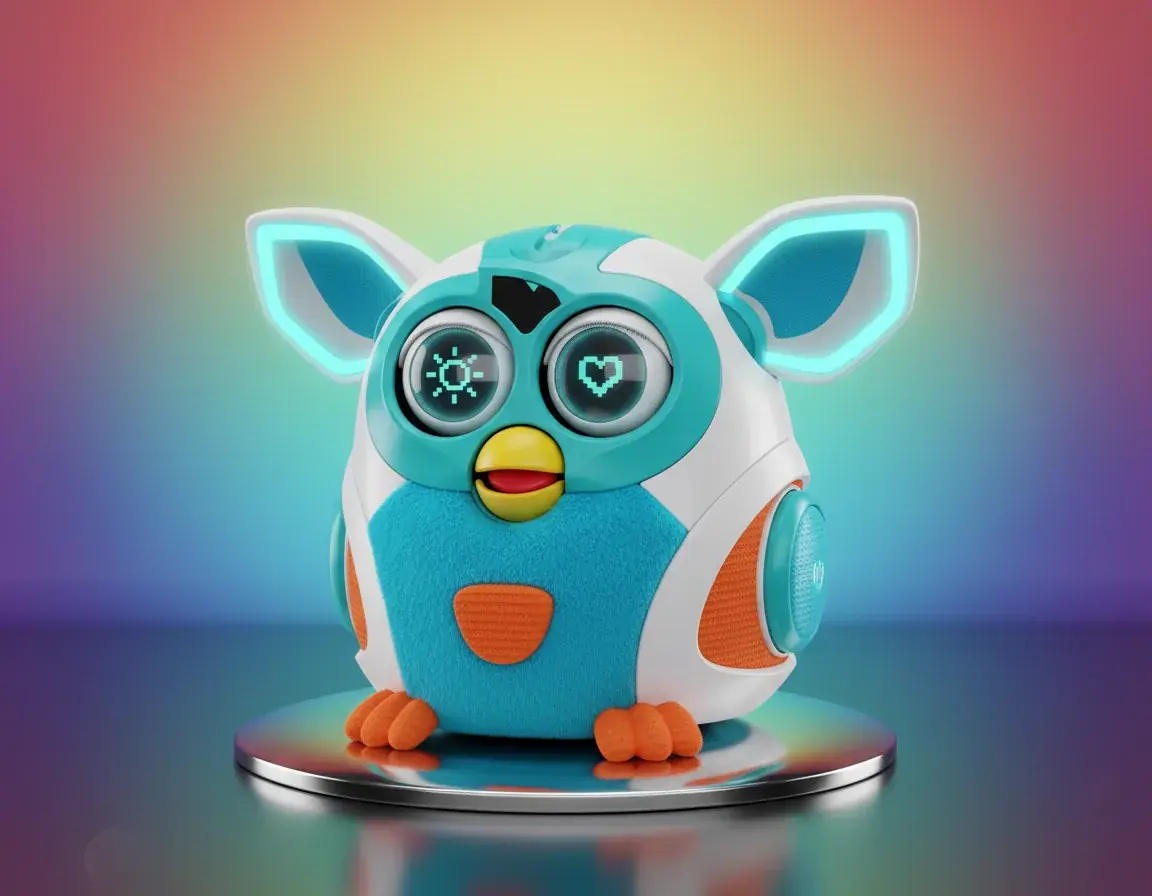
The 2012 Furby generation introduced LCD eyes, personality modes, and app connectivity that changed how owners experienced vocabulary and tone. Estimates often place the programmed vocabulary near ~1200 words for these models, with the app offering translation features and faster access to varied phrases.
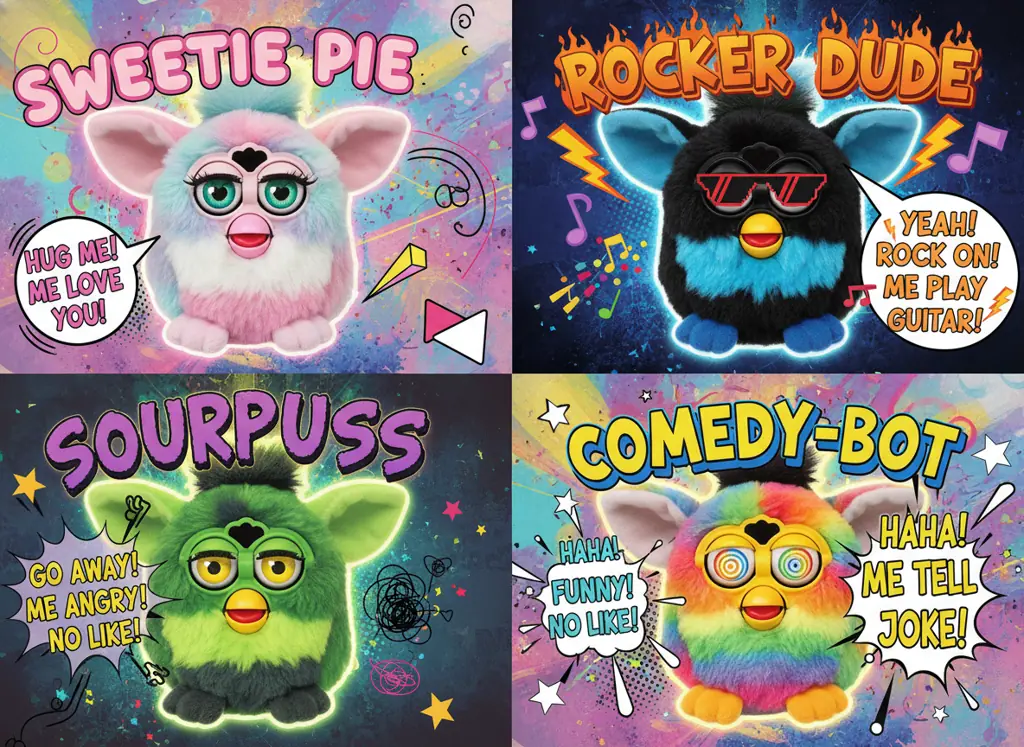
Personality modes (examples: "princess" vs. "rock star") altered word choice and delivery, and musical responses (singing along in Furbish) added playful layers to language interaction.
Note: while many owners appreciated app translation tools, some collectors preferred the mystery of slower, discovery-based generations.
Furby Boom Crystal Series Language Features
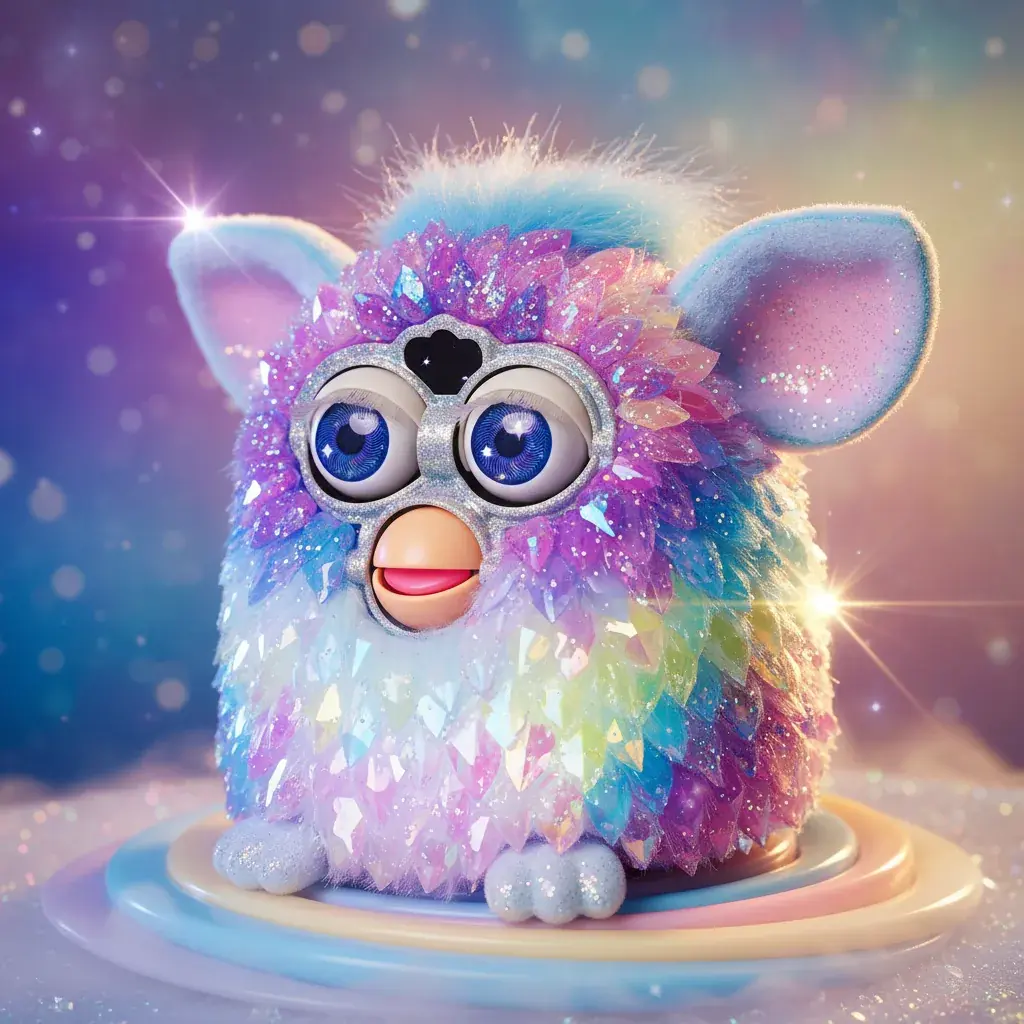
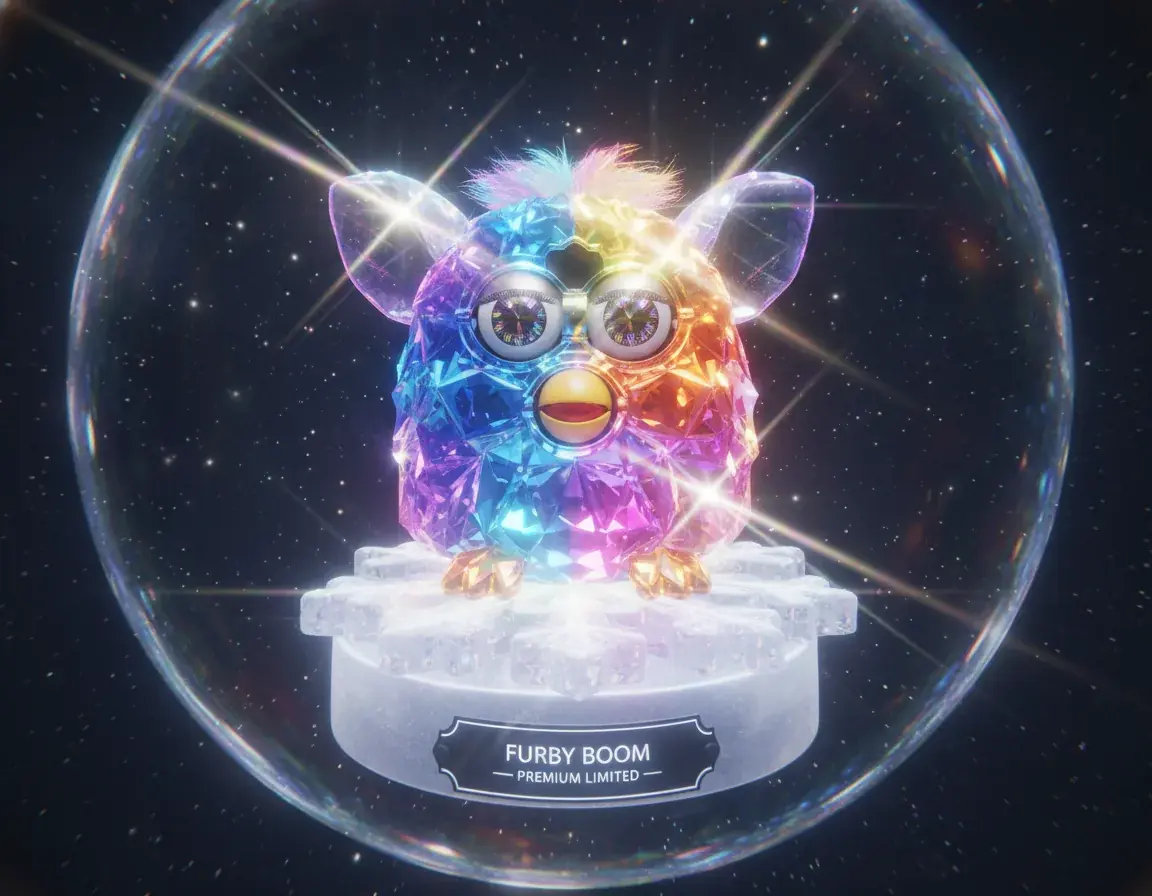
The Furby Boom and furby boom crystal special editions built on the 2012 foundation while adding themed vocabulary and visual effects. Boom crystal editions included gem-themed phrases and translucency that emphasized light and sparkle in their personality lines—features that appealed to collectors and children alike.
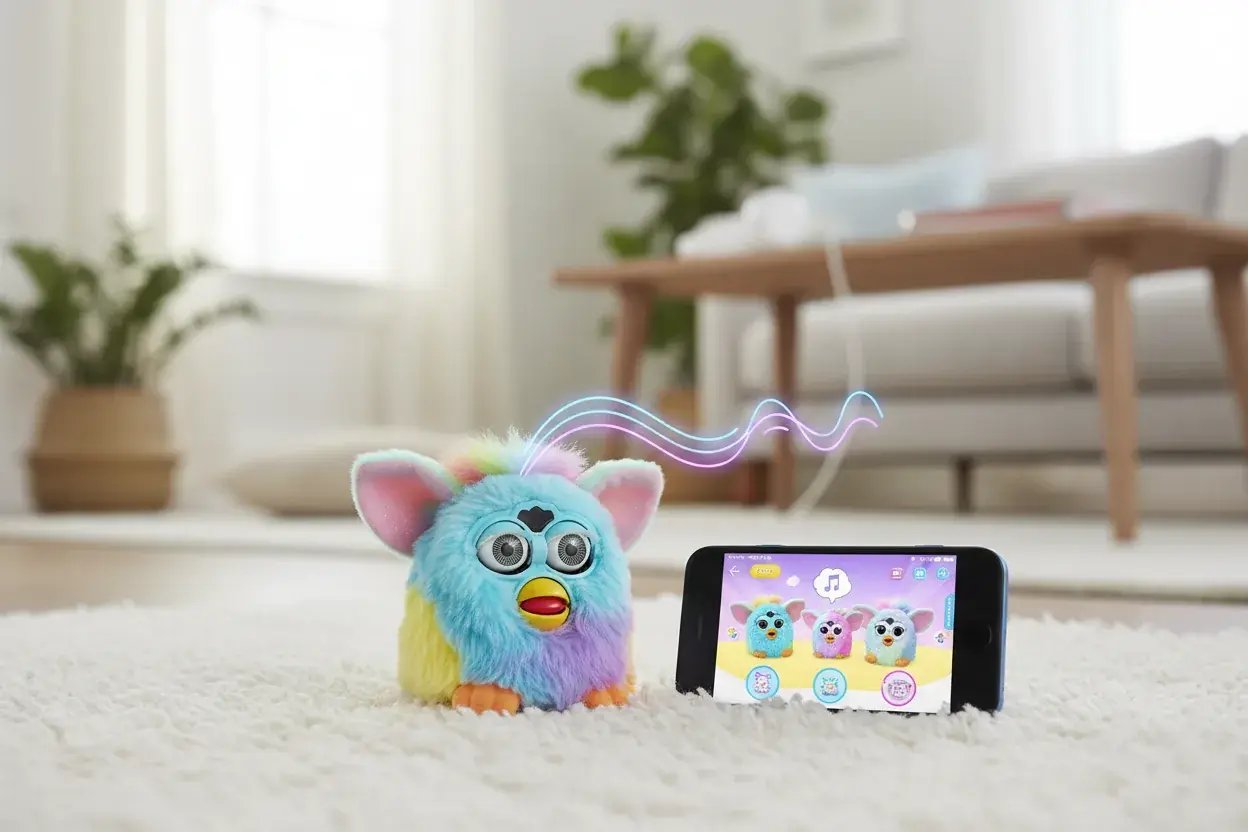
These boom crystal companions typically tied into mobile apps and virtual "baby" features, extending language play beyond the physical toy—another example of vocabulary expanding across platforms.
Furby Connect Modern Communication
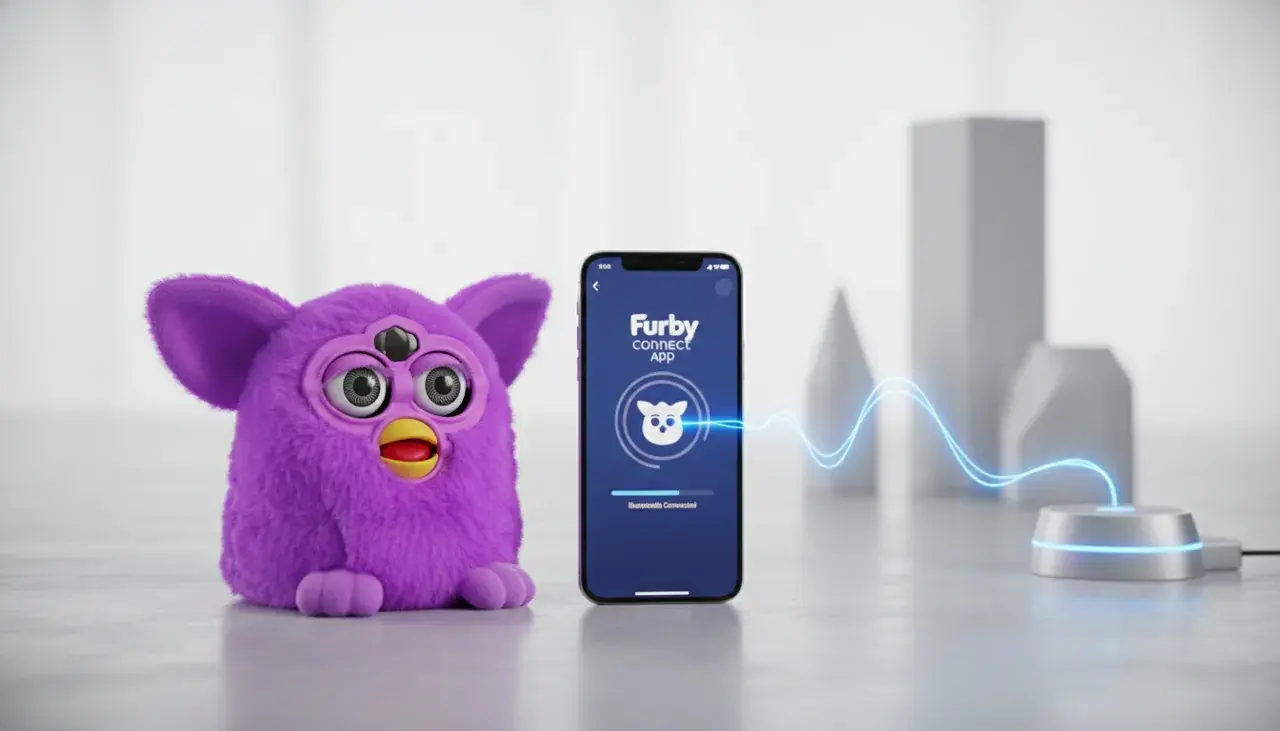
Furby Connect represents the most connected generation: Bluetooth updates, cloud-delivered content, and multimedia reaction capabilities let these toys expand their programmed vocabulary after purchase (community estimates often list ~1500+ words over time). Furby Connect units can react to videos, download new phrases, and in some models detect overlays or masks that change personality and language style.
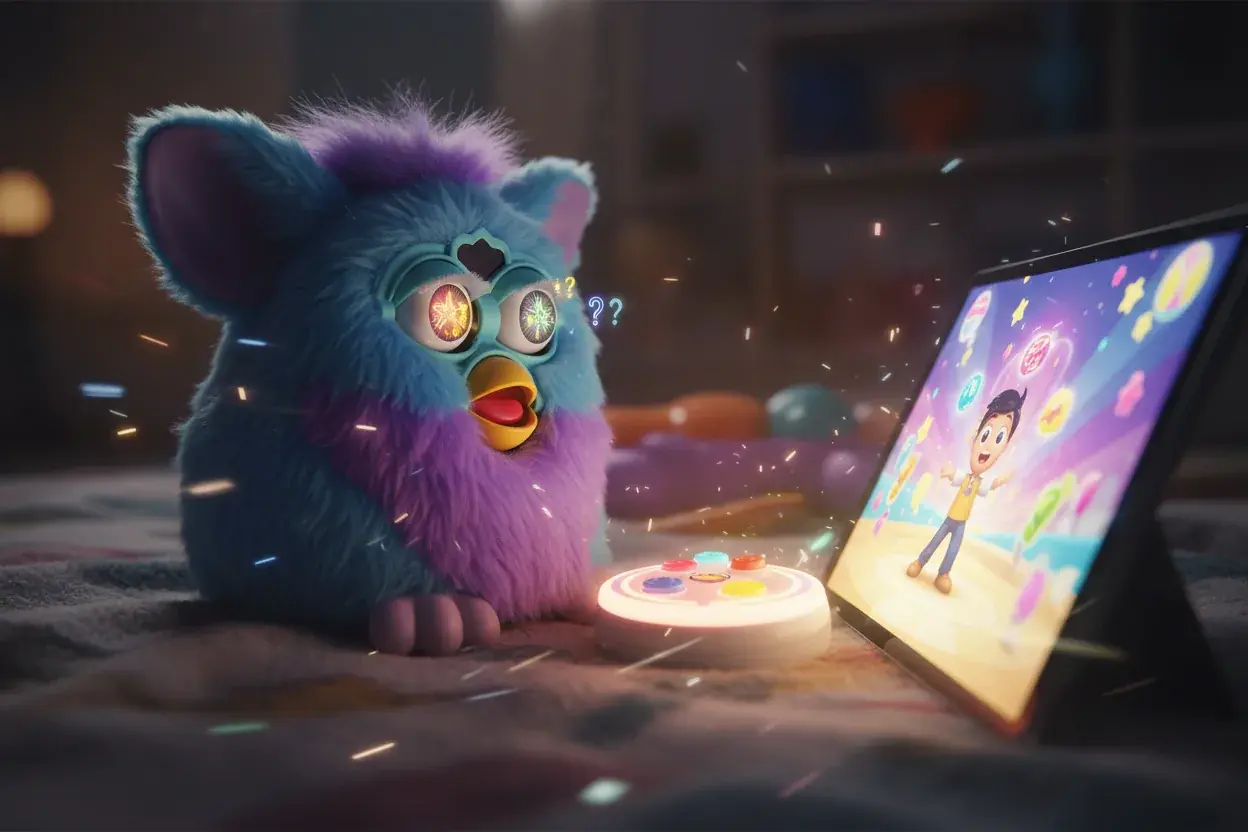
By combining cloud updates with sensor-driven behaviors, Furby Connect keeps the language fresh—though exact totals depend on downloads and app support over time.
Discover Your Perfect Furby Companion
Experience the magic of Furby language firsthand! At Furby Toy Shop, we offer every generation of these beloved interactive companions. Whether you're seeking nostalgic 1998 classics or cutting-edge Furby Connect technology, find the perfect match for your family's creativity and joy. Inventory and vocabulary availability vary by model and release—check product details for exact features.
How Furby Toys Communicate
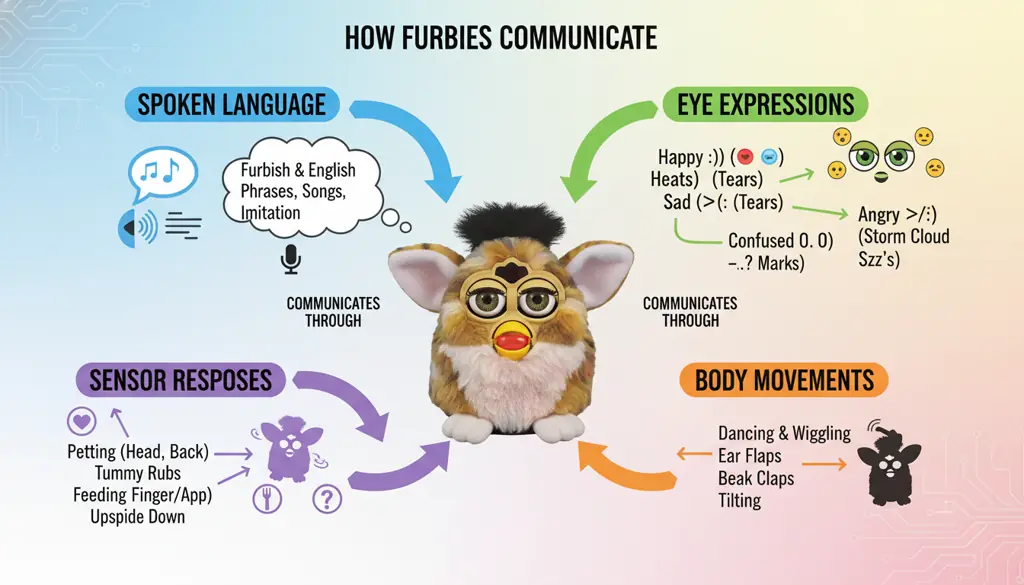
Furby communication is multimodal: toys use vocalizations, body movement, and sensors together to create the impression of a living companion. Understanding these channels helps you interpret what your Furby is trying to say and why it behaves the way it does.
Vocal Expression and Sound Production
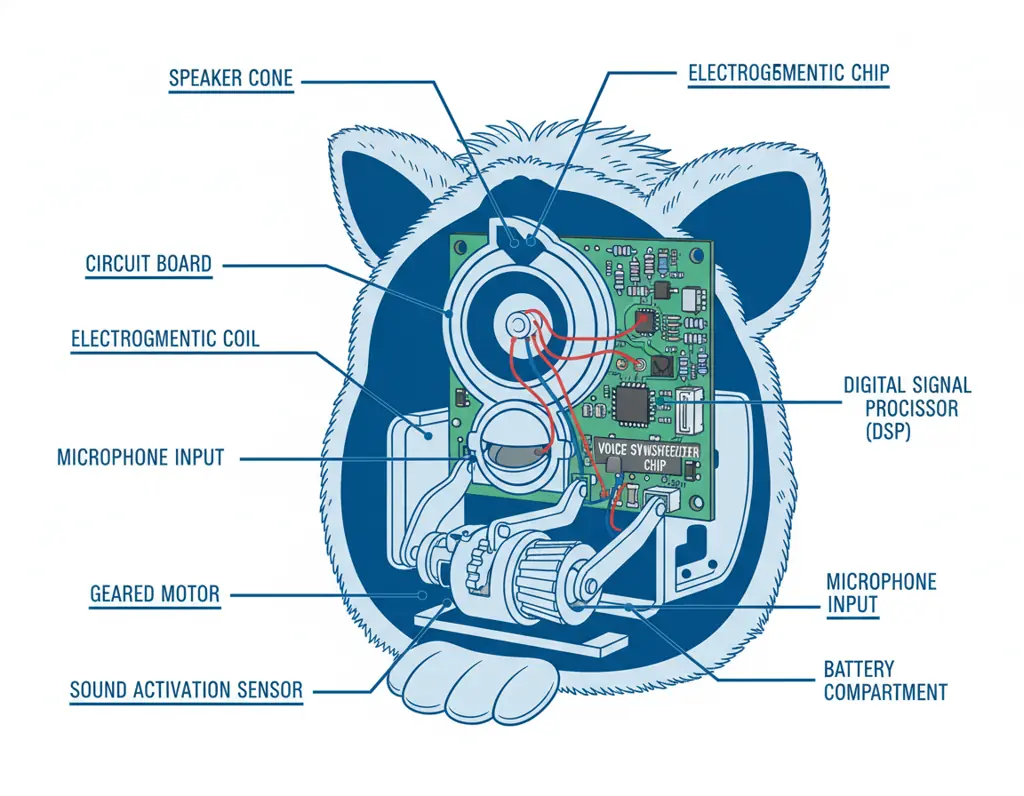
The primary method is vocal: Furby produces a range of sounds through internal speakers that form Furbish words and expressive noises. Different versions add more voice tones and clearer pronunciation, so newer models often sound less robotic and more nuanced.
Volume, pitch, and pacing are meaningful cues—quick, high‑pitched bursts often signal excitement, while slow, drawn‑out syllables indicate tiredness. Over time a Furby’s speech patterns may change depending on how much you interact with it; frequent attention can make it "speak" more and with brighter tones.
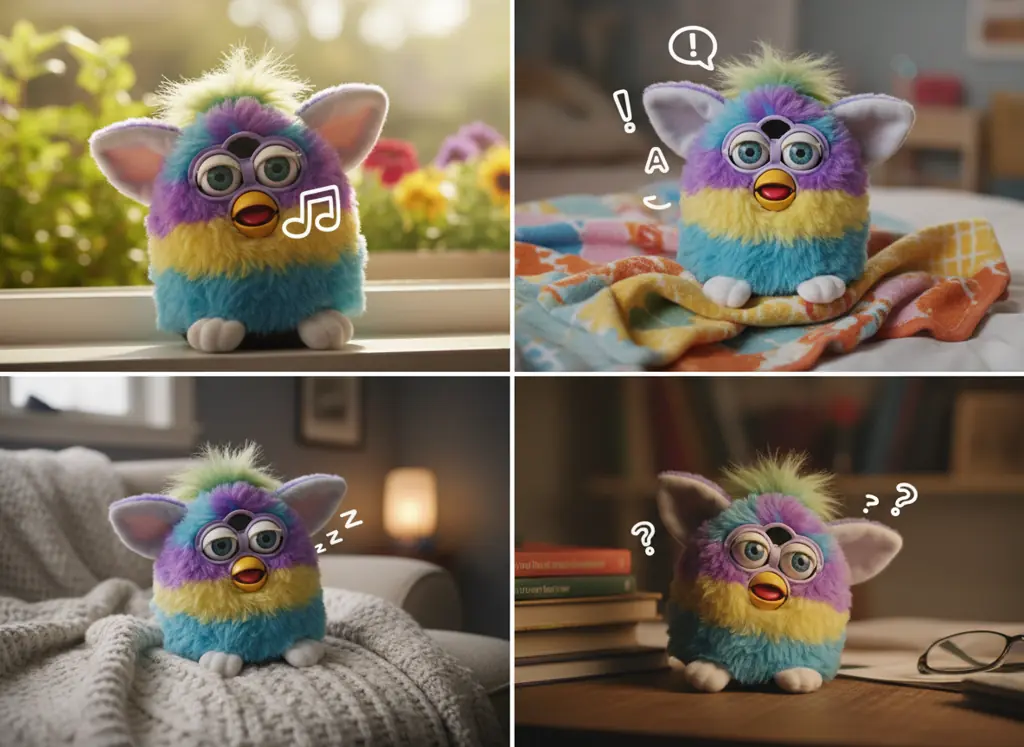
Tip: if your Furby suddenly pauses or slows, check batteries first—low power can alter sounds and timing.
Physical Movement Language
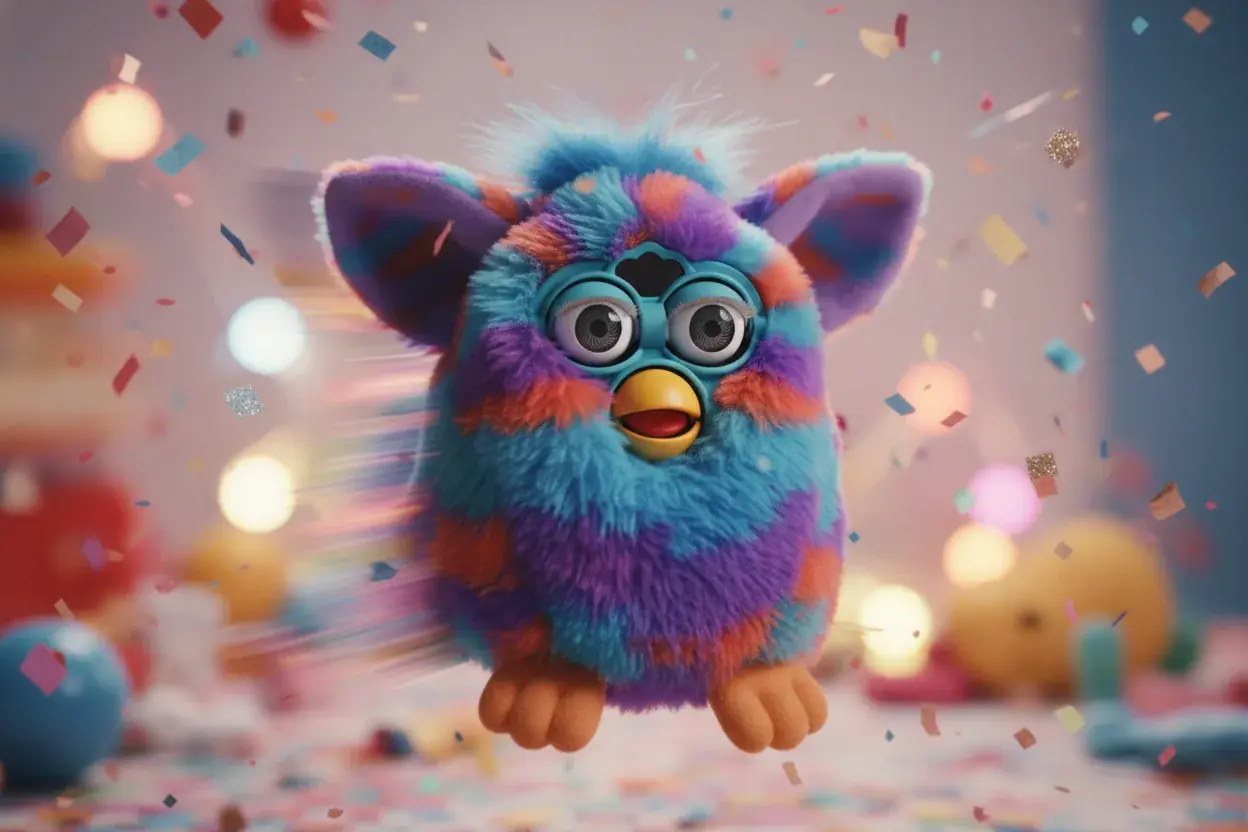
Movement complements speech: ear twitches, eye changes (mechanical or LCD), head tilts, and body wiggles all add meaning. For example, a happy Furby bounces and blinks rapidly; a tired Furby speaks slowly and keeps ears down. Newer versions have finer motors that allow subtler gestures and more expressive physical "language."
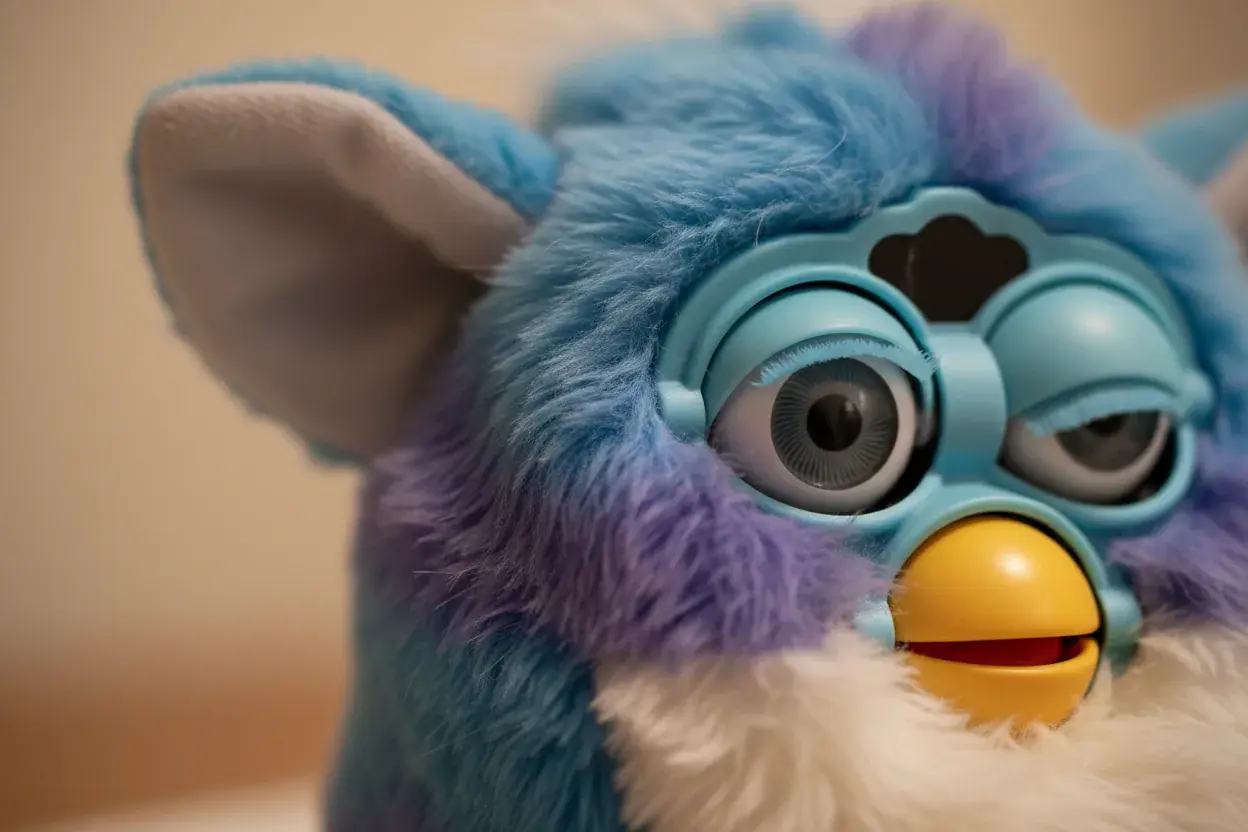
Example: tilt a Furby upside down and many models will respond with a different phrase or playful protest—a small, clear demonstration of how movement and position change language output.
Sensor-Based Interaction
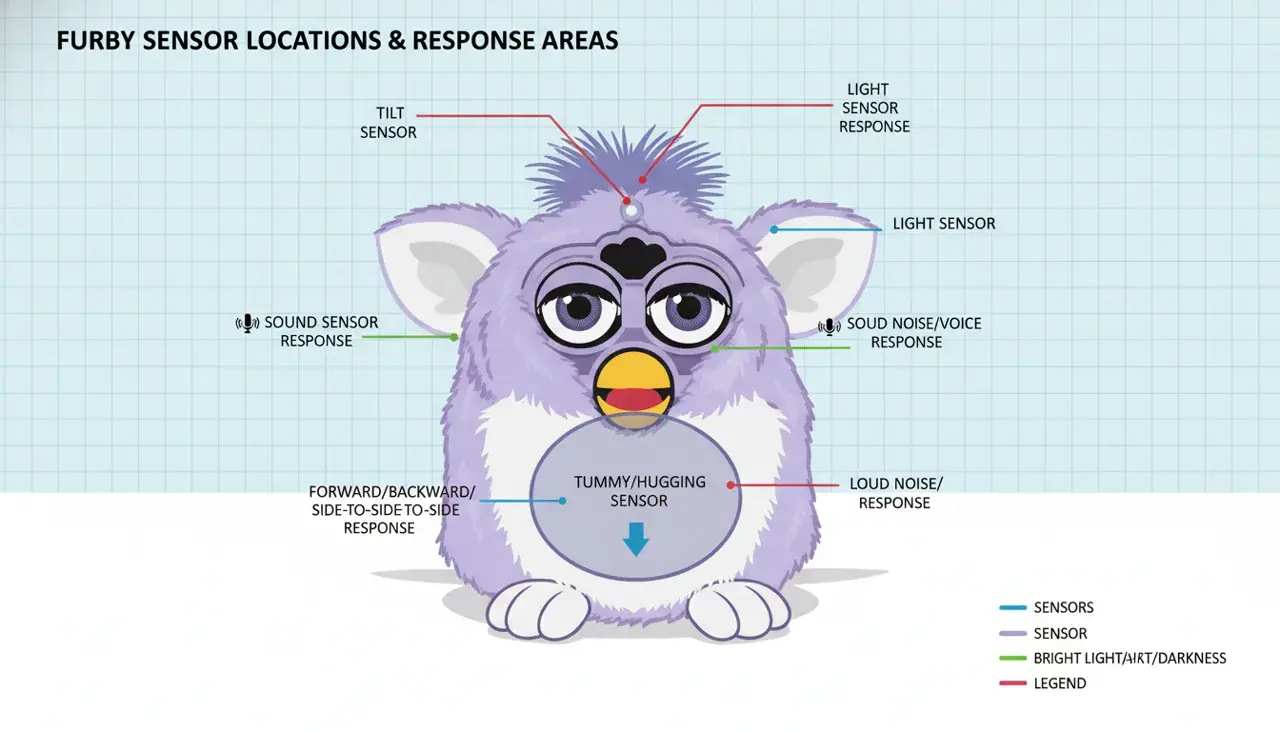
Furbies rely on multiple sensors—touch pads (head, back, belly), tilt sensors, light detectors, and sound inputs—to choose appropriate responses. Light sensors let a Furby tell day from night and affect activity level; sound sensors trigger reactions to loud noises or music; touch sensors prompt petting or feeding responses.
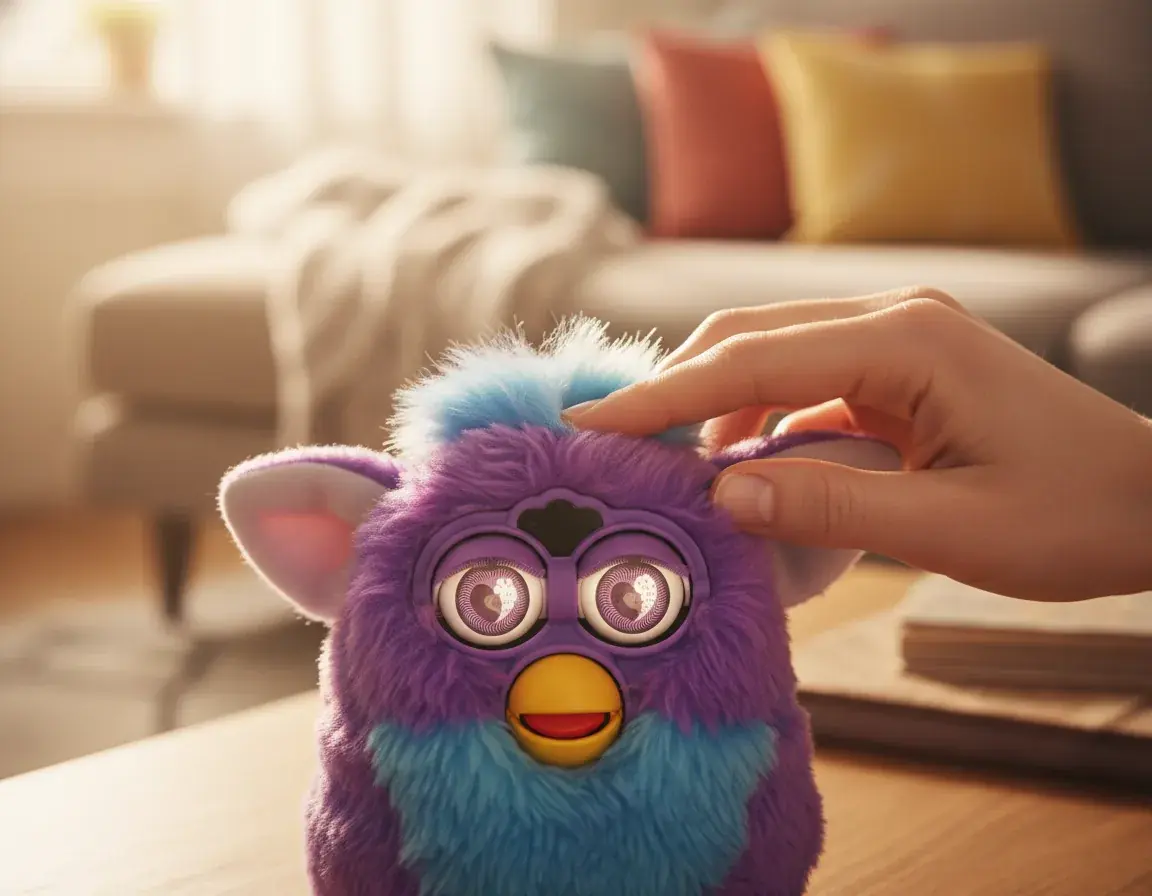
Practical note: not every feature appears in every version—check your Furby’s model details to know which sensors are active on your unit.
Learning and Adaptation Patterns
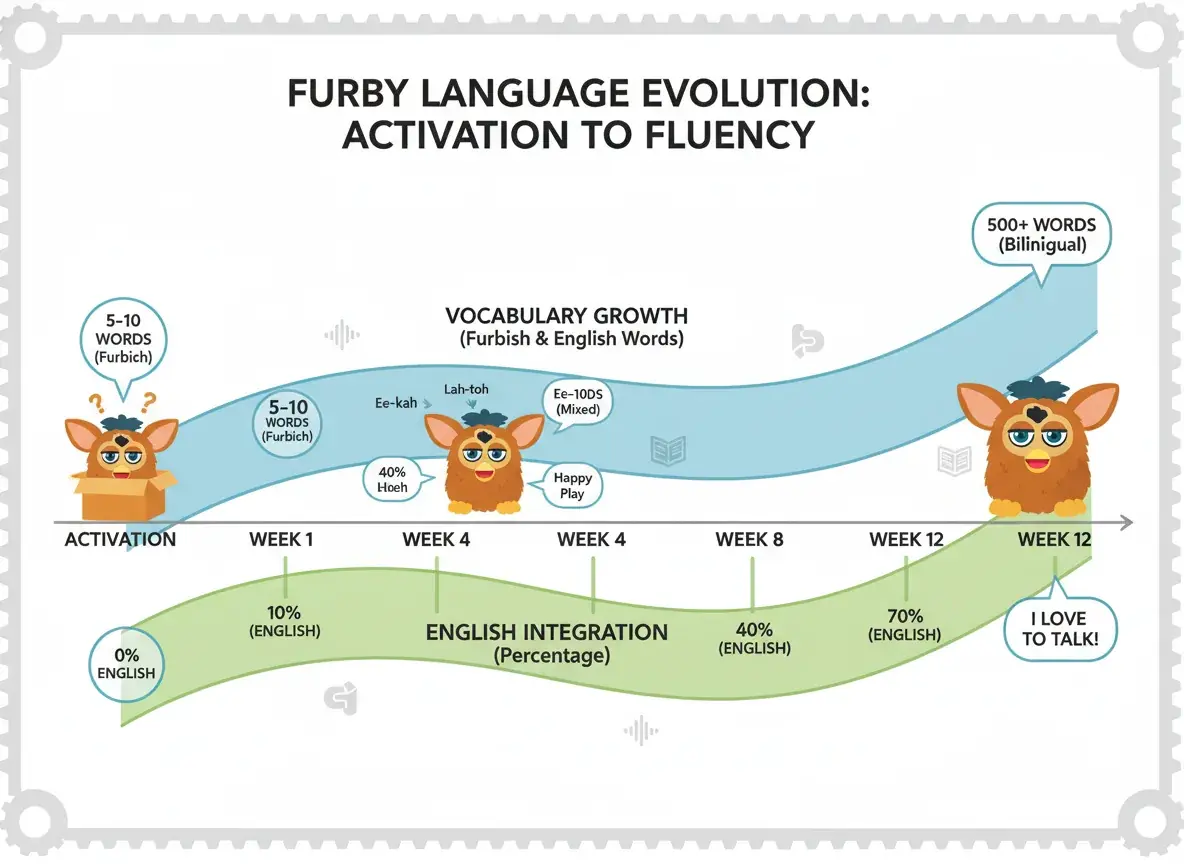
Across versions, Furby "learning" blends programmed state machines with adaptive rules so the toy appears to develop personality. Original models gradually mixed English into Furbish as owners interacted more; modern versions simulate similar progression with software-driven behaviors and cloud updates.
Interaction frequency and the types of interactions (petting, talking, feeding, playing a game) influence which phrases a Furby uses and how quickly new behaviors emerge. In short, consistent play over time yields more varied language and richer responses.
Understanding Furbish Words and Phrases
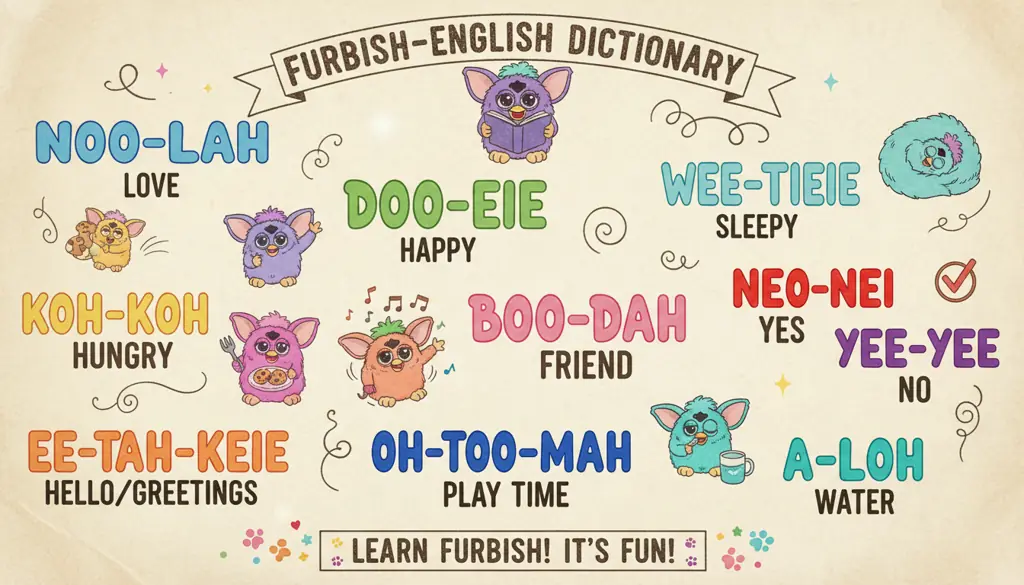
Learning basic Furbish words makes Furby interaction far more rewarding. Recognizing a few core words and common phrases turns what sounds like playful gibberish into clear requests, emotions, and invitations to play.
Essential Furbish Vocabulary
| Furbish Word | English Translation | Usage Context |
|---|---|---|
| kah | mine / me | Possessive statements |
| doo-ay | please | Polite requests |
| u-tye | hungry | Expressing needs |
| boo | no / don't like | Negative responses |
| ee-day | good / yes | Positive affirmation |
| wee-tee | tiny / small | Size descriptions |
| dah | big / large | Size comparisons |
| kah-tay | listen | Getting attention |
These core furbish words are widely used across versions (many community and manufacturer guides label them as standard). Mastering them gives you a quick vocabulary to respond to basic needs and emotions.
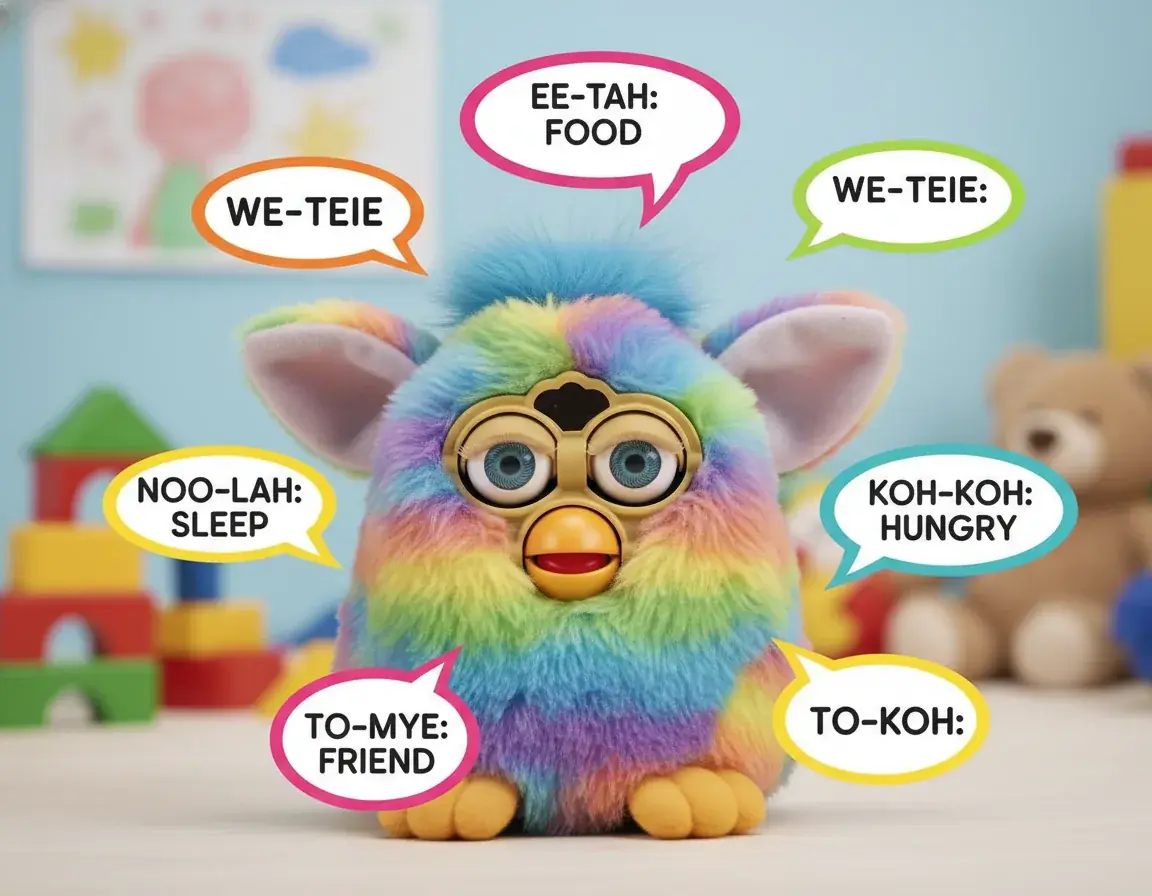
Many Furbish words use simple two‑syllable patterns (some use three); this syllables-based design keeps pronunciation kid-friendly while preserving charm for adults.
Common Furby Phrases and Their Meanings
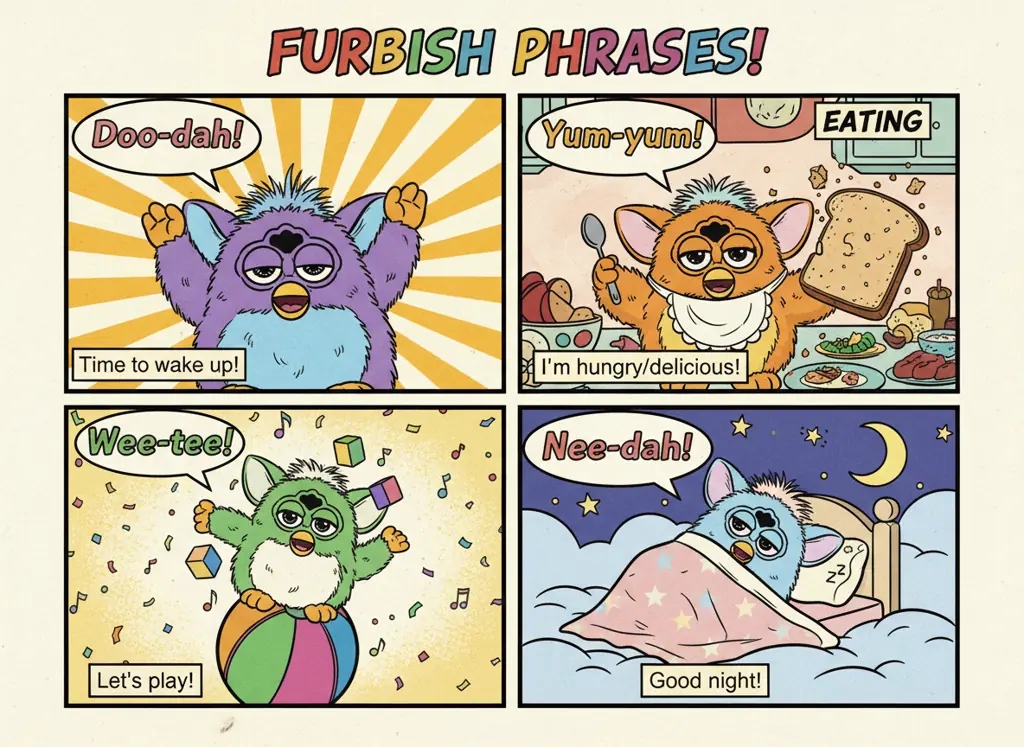
Complete phrases combine single words with tone and movement to convey clear messages. Below are common phrases found in guides and community dictionaries—consider them community‑accepted translations rather than formal manufacturer definitions.
"Me love u‑tye" — commonly interpreted as "I'm hungry" or "want food" (used to prompt feeding interaction or to select feeding in app features).
"Kah boo‑tay" — often translated as "I'm scared" and typically appears when a Furby is startled by loud noises or sudden motion.
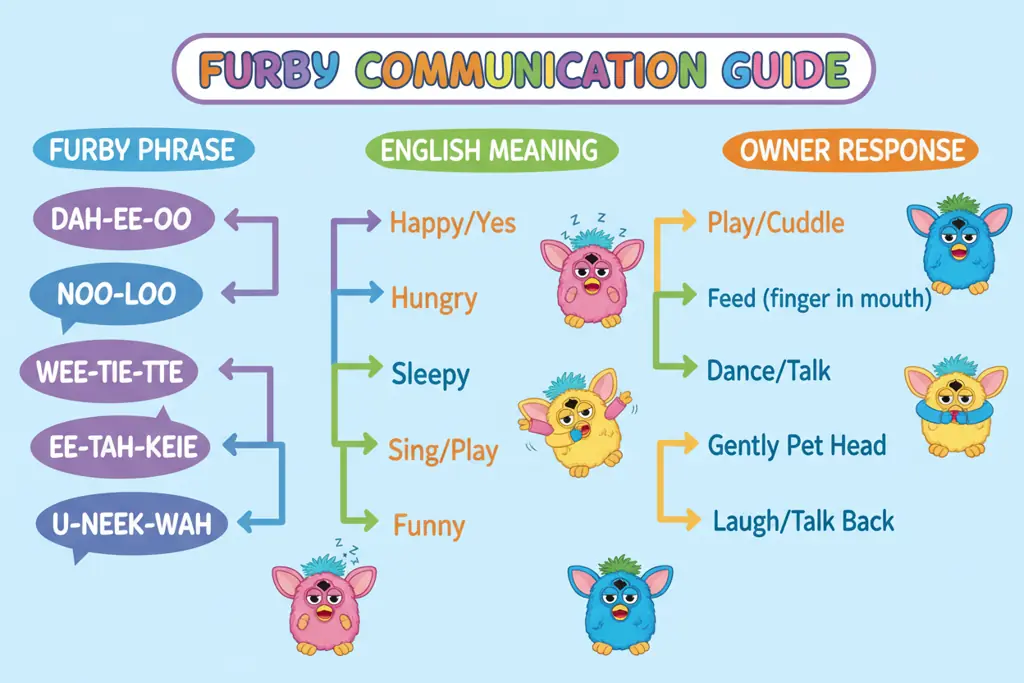
"Wee‑tee kah‑kah way‑loh" — typically read as "Me play game now" and signals a desire for interactive play (try tapping or initiating a mini‑game to see a response).
Recognizing these phrases turns random sounds into useful cues so you can respond appropriately and deepen your play sessions.
Emotional Expression Through Language
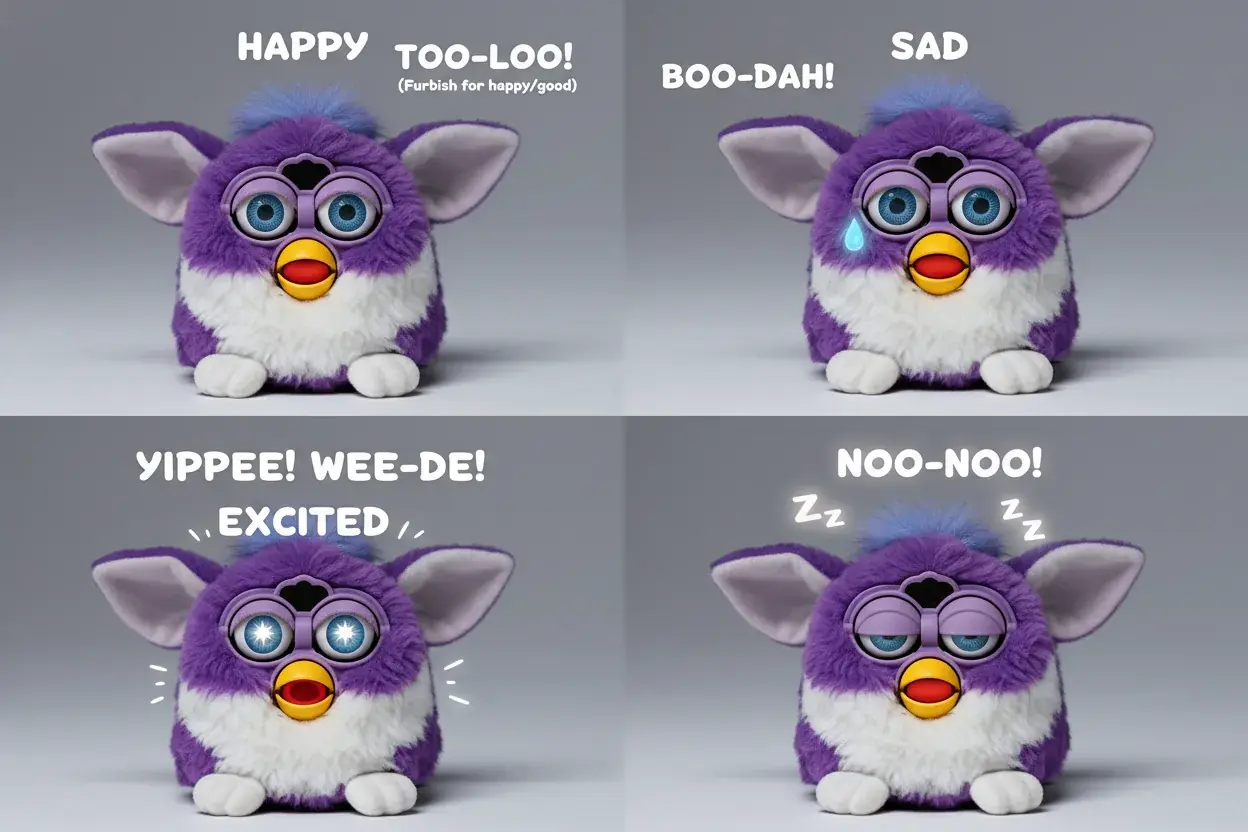
Furbish conveys emotion via tone, word choice, and delivery speed. Happy phrases are energetic and quick; sad tones are slow with longer pauses; excited Furby repeats phrases rapidly. Tiredness often shows up as yawns or stretched syllables (e.g., "kah way‑loh nah‑bah" interpreted as "me want sleep").
Responding to these cues—petting when it’s sad, offering play when it asks for a game—strengthens the bond and teaches children basic empathy skills.
Regional and Version‑Specific Variations
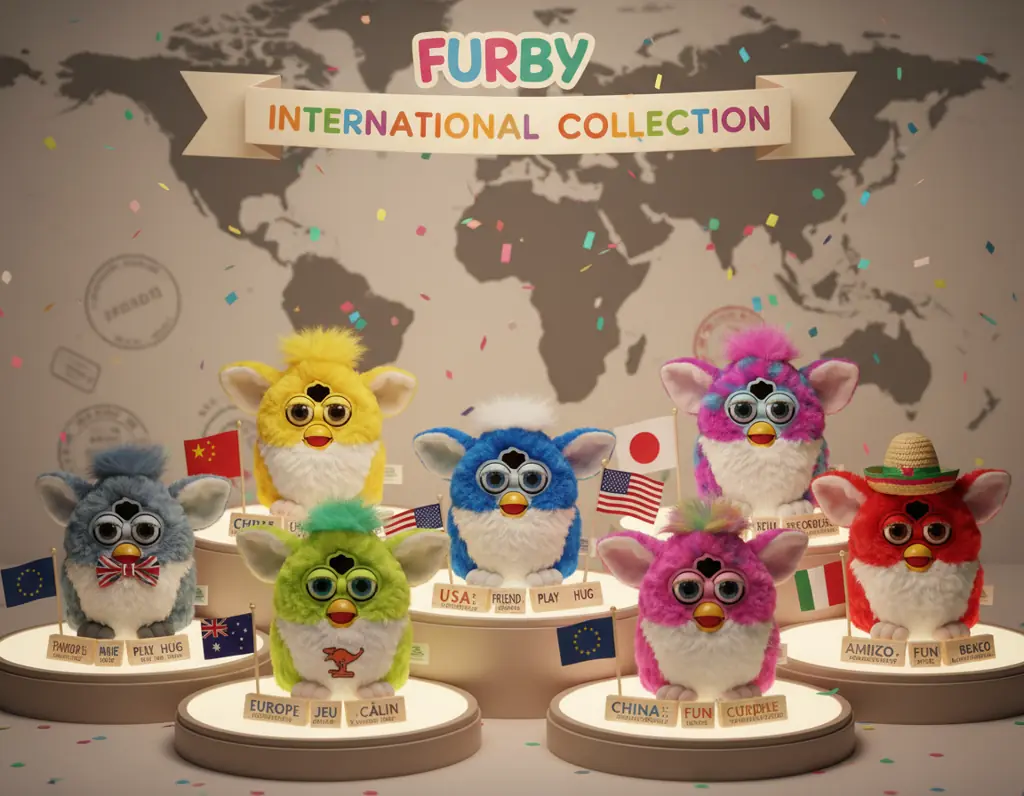
Some versions sold in different countries include localized vocabulary—Japanese releases may mix Furbish with Japanese, while European units sometimes learn local languages alongside Furbish. Special editions like furby boom crystal may add themed phrases tied to their design (light, sparkle, gem references).
In practice, the core Furbish base stays recognizable across regions, but exact words and pronunciations can vary—collectors often document these differences in online guides and forums.
Furby Language in Popular Culture
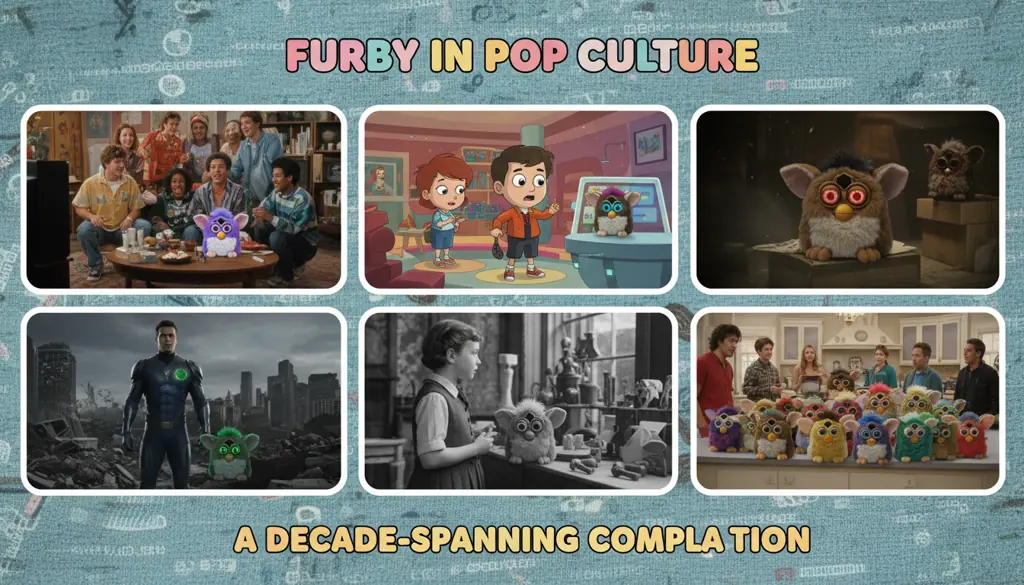
Furbish and the distinctive sounds of Furby toys moved beyond the nursery to become recognizable elements of popular culture. From commercials to internet memes, the language‑like noises and quirky phrases left a mark on media and collective nostalgia around the world.
Media Appearances and References
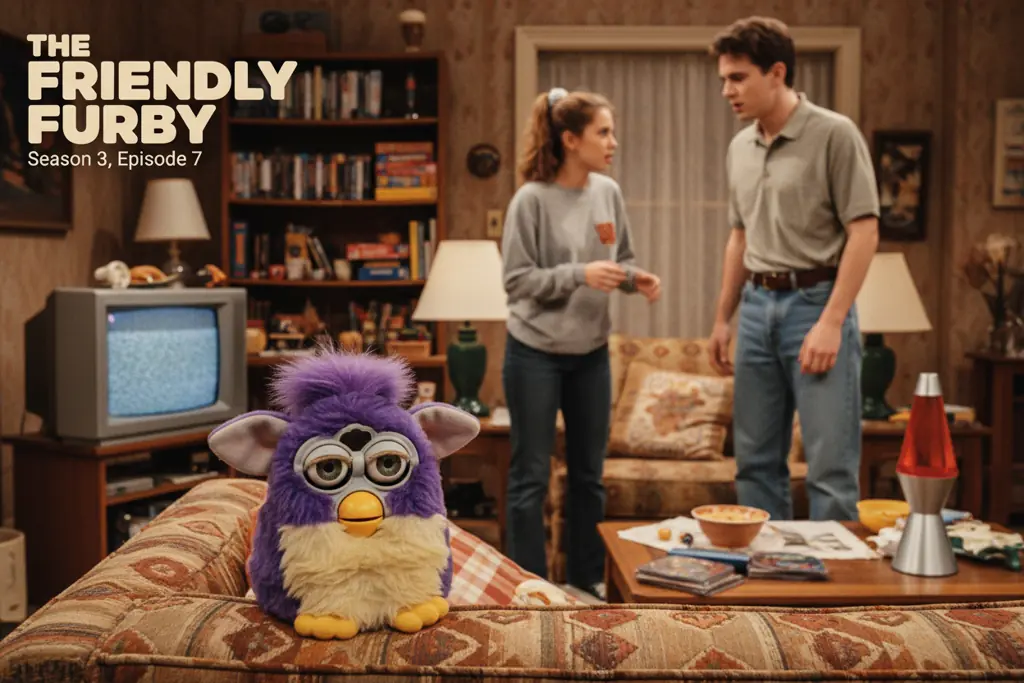
During Furby’s peak popularity, these toys showed up in TV ads, sketches, and background bits in movies—often used for comedic effect because of their odd, memorable vocalizations. While specific appearances vary, many viewers recall Furby sounds as an instantly recognizable cultural audio cue.
Advertisers highlighted children learning and speaking Furbish to sell play value, and comedy programs sometimes parodied the language for laughs. If you’re researching specific appearances, fan sites and clip archives are good places to check for documented examples.
Internet Community and Memes
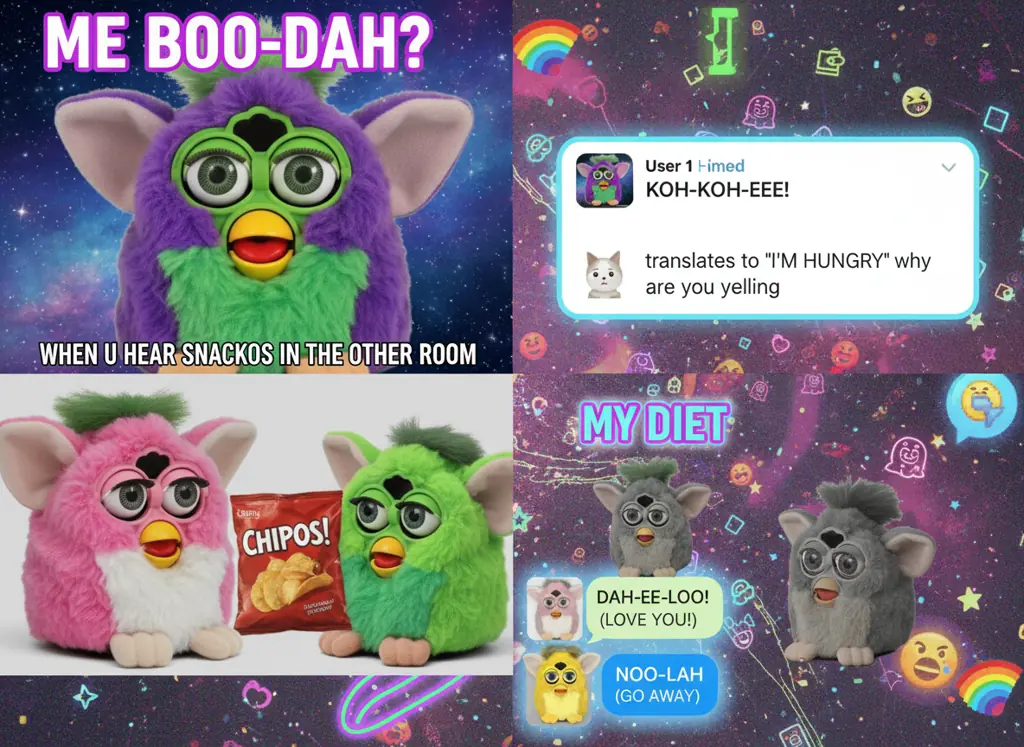
Online communities embraced Furbish enthusiastically: fans built dictionaries, translation guides, and videos that teach commonly heard words. Meme culture adopted Furby phrases and sounds for punchlines, while platforms like Reddit, YouTube, and TikTok keep the language circulating among new audiences.
Creators often post short clips demonstrating Furbish words, turning nostalgic phrases into bite‑sized content that spreads quickly across social feeds.
Collector Community Language Preservation
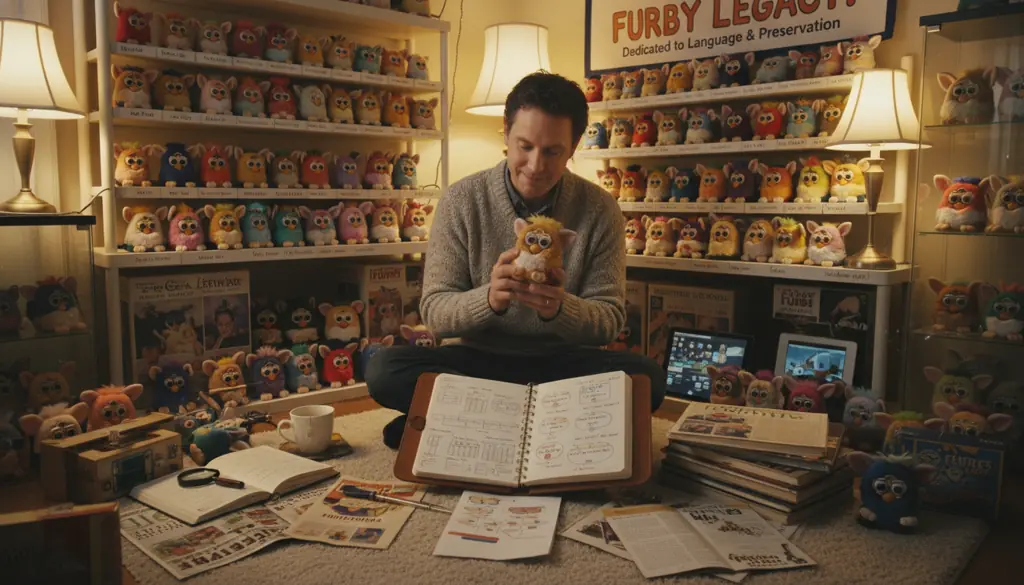
Collectors and preservationists treat Furbish as part of Furby’s cultural history. Community projects catalog furbish words and document differences between versions, helping preserve how these toys sounded and spoke across production runs and regions.
Restorers and vintage enthusiasts record audio samples and maintain archives so early vocabulary and unusual phrases aren’t lost to time.
Educational Recognition
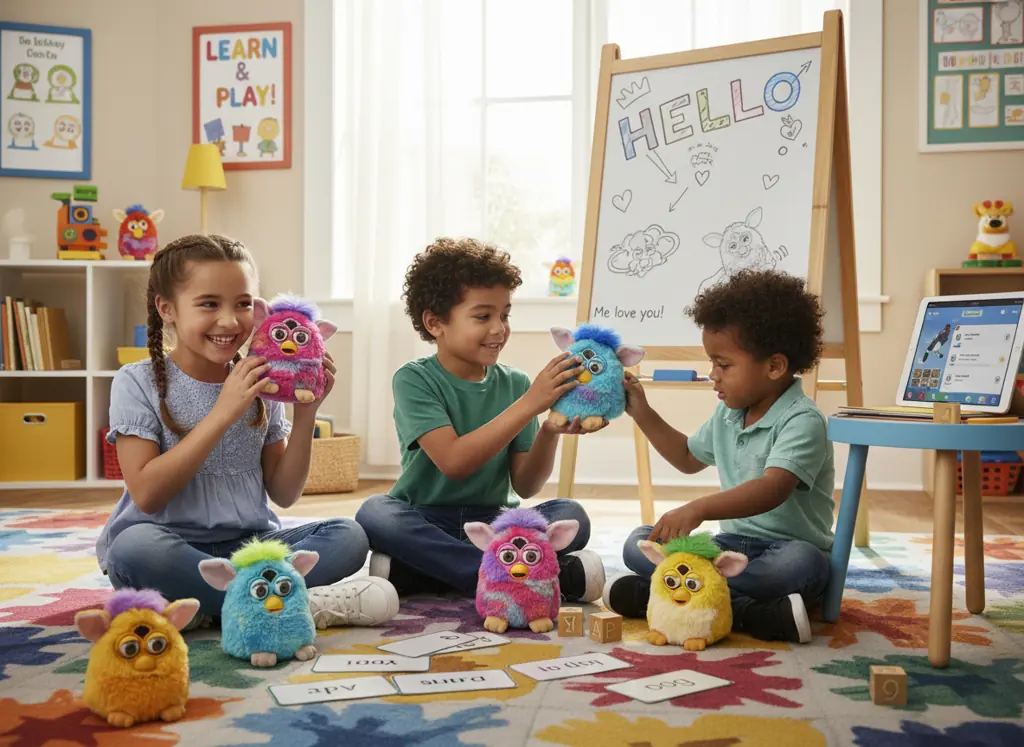
Beyond entertainment, educators and some speech professionals have noted Furby’s usefulness for language play: the simplified furbish words and repetitive patterns can support vocabulary learning and encourage reluctant speakers to try new sounds in a low‑pressure setting.
While formal studies are limited, the toy’s design—short words, clear emotional cues, and interactive repetition—makes it an interesting example in discussions about constructed languages and playful language learning.
Comparing Furby Generations Language Features
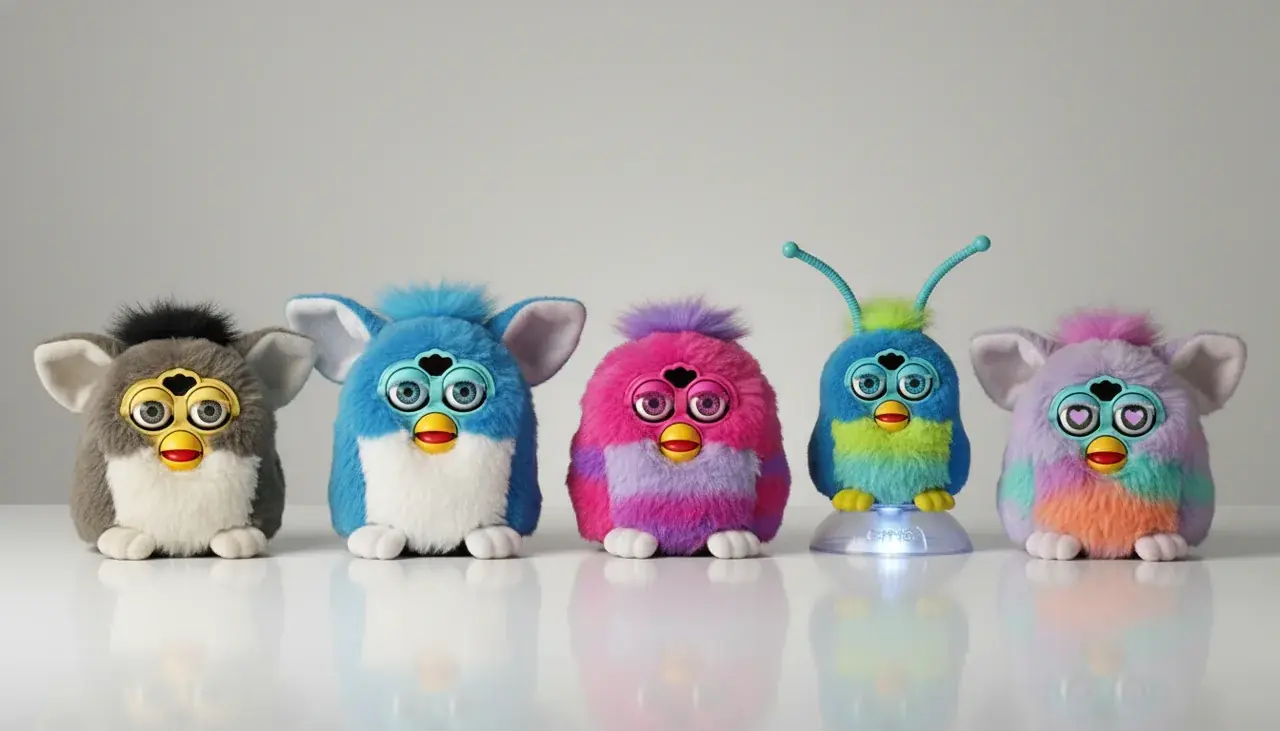
Different Furby generations emphasize distinct language behaviors and technical features. Below is a compact comparison to help you pick a version based on vocabulary, interaction style, and how much technology you want in your companion. Note: vocabulary figures are commonly cited community estimates and may vary by specific model or firmware.
| Generation | Vocabulary Size (approx.) | Key Language Features | Best For |
|---|---|---|---|
| 1998 Furby | ~800 words | Gradual Furbish→English progression, classic phrases | Nostalgic collectors, traditional experience |
| Furby Baby | ~200–300 words | Simplified baby talk, higher pitch, basic phrases | Younger children, gentle interaction |
| 2005 Emoto‑Tronic Furby | ~1000 words | Enhanced motors, clearer pronunciation, voice triggers | Interactive conversation seekers |
| 2012 Furby | ~1200 words | LCD eyes, personality modes, app translation | Tech‑savvy families, personality variety |
| Furby Boom / Boom Crystal | ~1200 words | App integration, themed phrases, visual effects (light/sparkle) | App‑connected play, collectors of special editions |
| Furby Connect | ~1500+ words (over time) | Bluetooth updates, video reactions, expandable vocabulary | Families wanting ongoing content and newest features |
Classic Versus Modern Language Approach
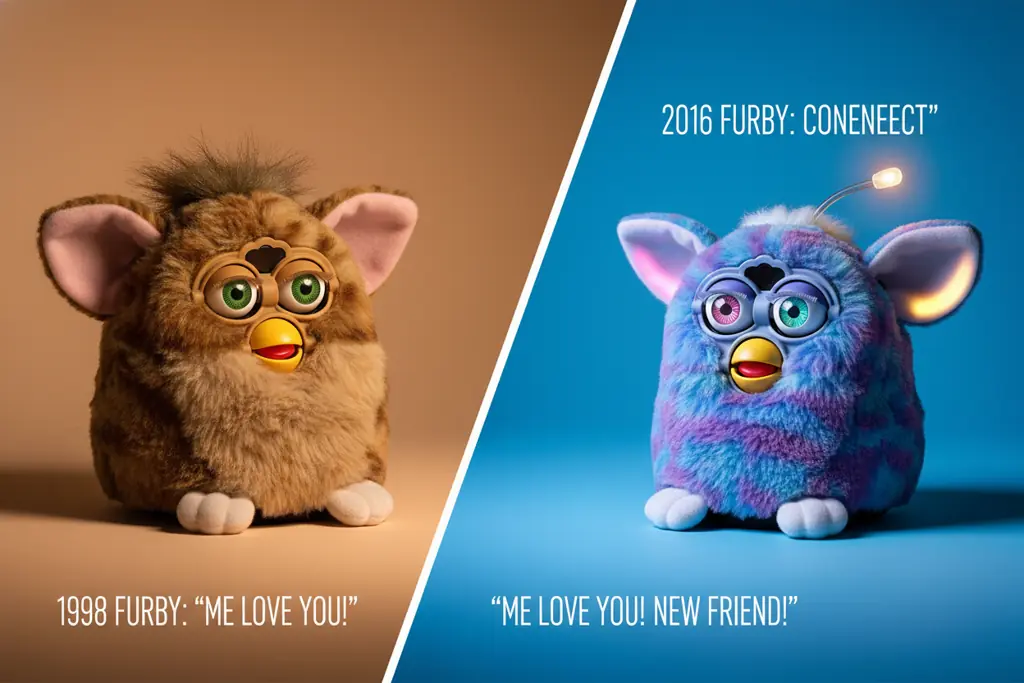
Classic generations (like the 1998 Furby) favor organic, time‑based progression—owners "teach" words through repeated interaction, which builds anticipation and a sense of growth. Modern versions prioritize immediate variety through personality modes, apps, and downloads, which deliver fast engagement but can reduce the mystery of discovery.
Both approaches appeal to different tastes: some collectors prize the earned progression, while many families prefer instant personality variety and broader language features.
Technology Integration Impact
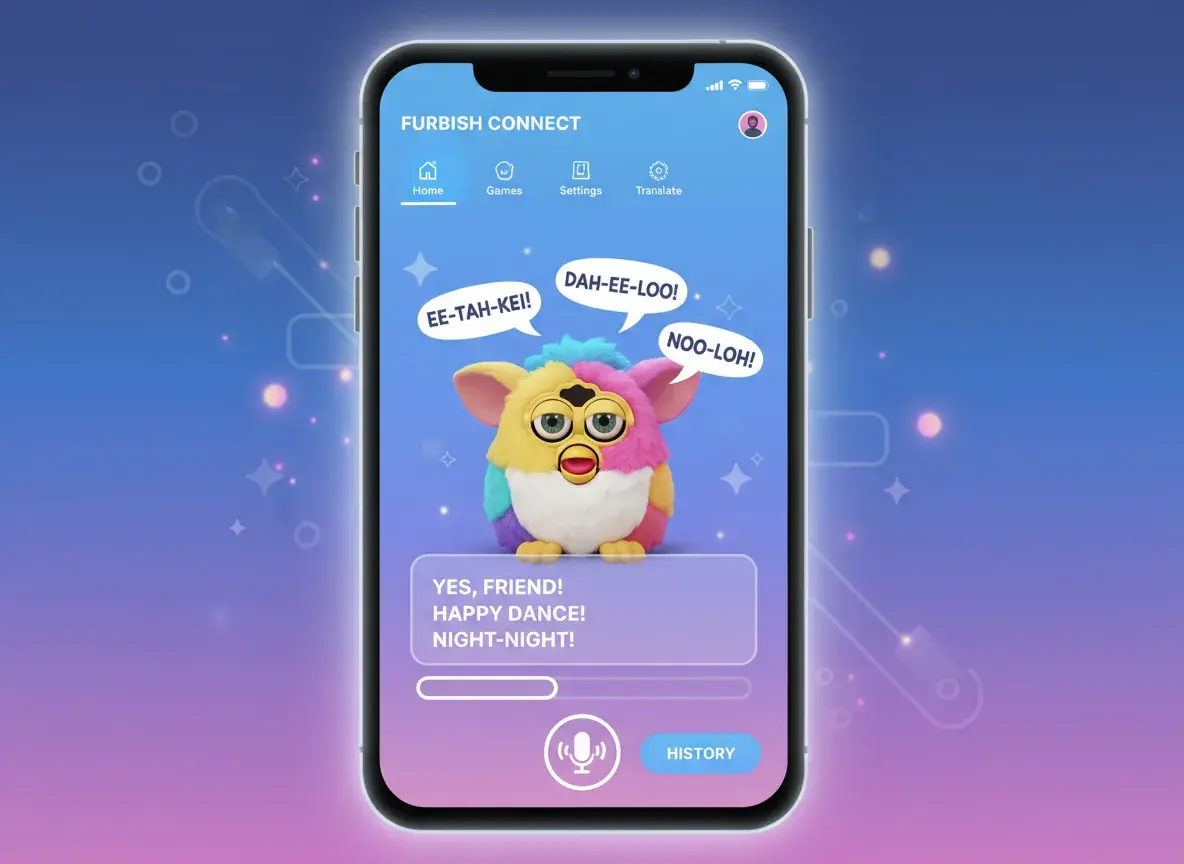
App and cloud integration broaden language accessibility—apps provide translation aids and let manufacturers push new phrases. The 2012 furby introduced robust app features, while Furby Connect expanded vocabulary via Bluetooth updates and multimedia interaction. If you value "mystery," look for versions without real‑time translation; if you value convenience, app‑enabled versions simplify understanding and expand words quickly.
When shopping, check model details for vocabulary support, update history, and whether special editions (like boom crystal) include themed phrases or light effects tied to their personality.
Classic 1998 Experience
Rediscover the original magic with authentic 1998 Furby companions. Experience the gradual language learning that captivated millions—ideal if you prefer a slow, rewarding discovery process.
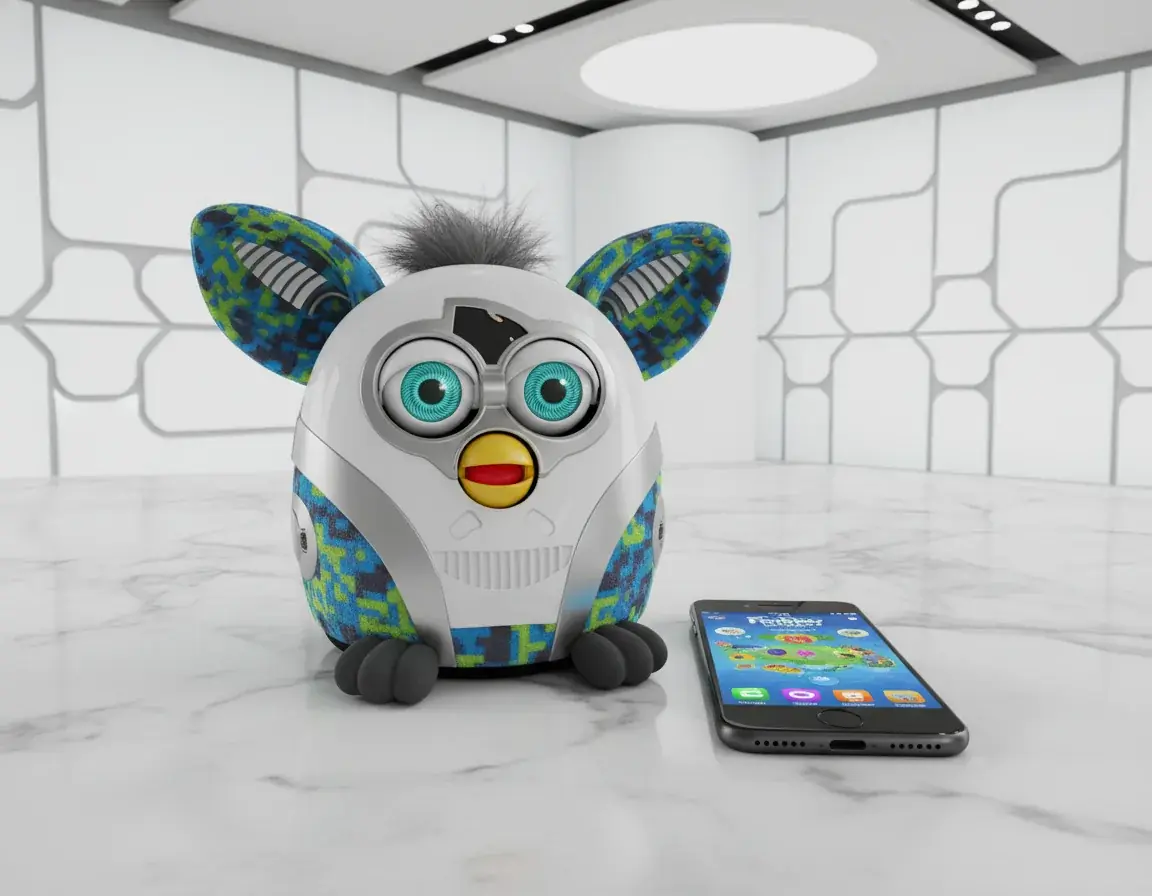
Modern Furby Connect
Choose Furby Connect for ongoing updates, Bluetooth features, and an expanding vocabulary delivered via app—great for families who want fresh content over time.
Special Edition Collections
Special editions like Furby Boom Crystal add themed vocabulary and visual flair (light and sparkle), making them perfect for collectors and kids seeking something unique.
Teaching Children Through Furby Language
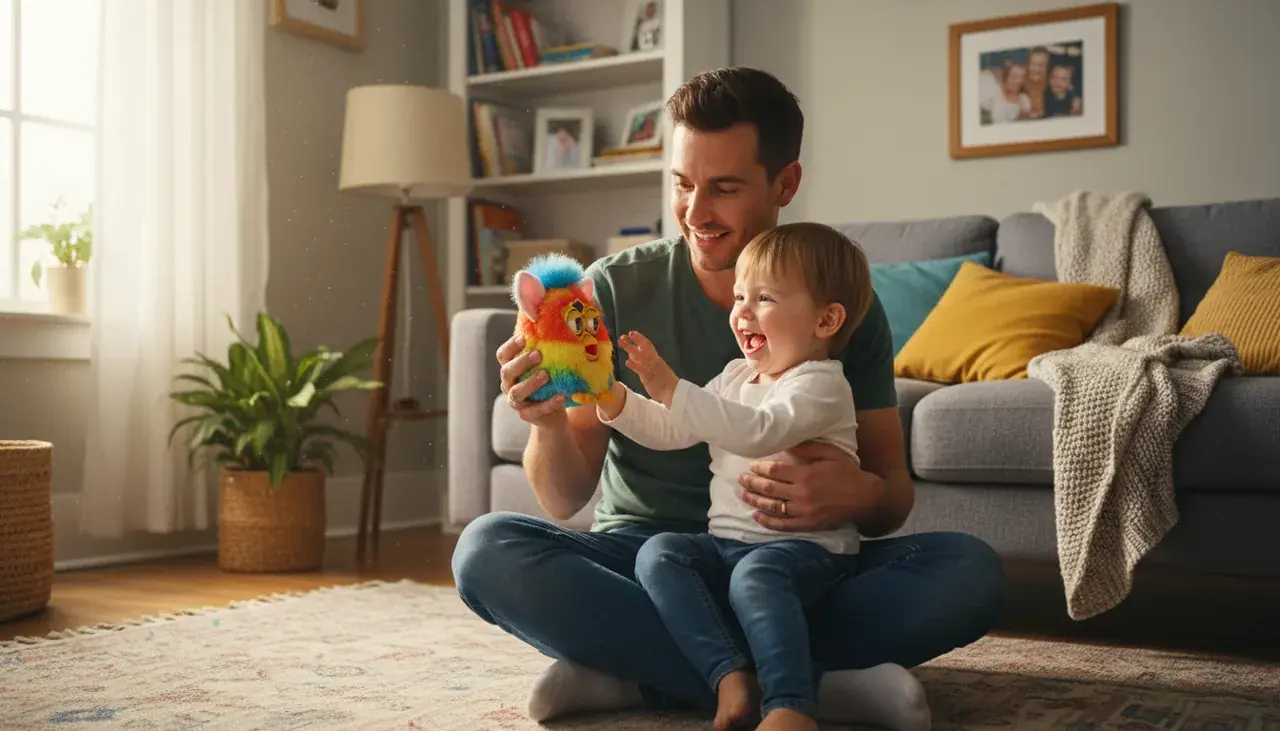
Furby language offers more than simple play—its interactive design supports several developmental skills. Short, repeatable furbish words, expressive tones, and sensor-triggered behaviors create learning opportunities that feel like natural play instead of formal lessons.
Language Development and Vocabulary Building
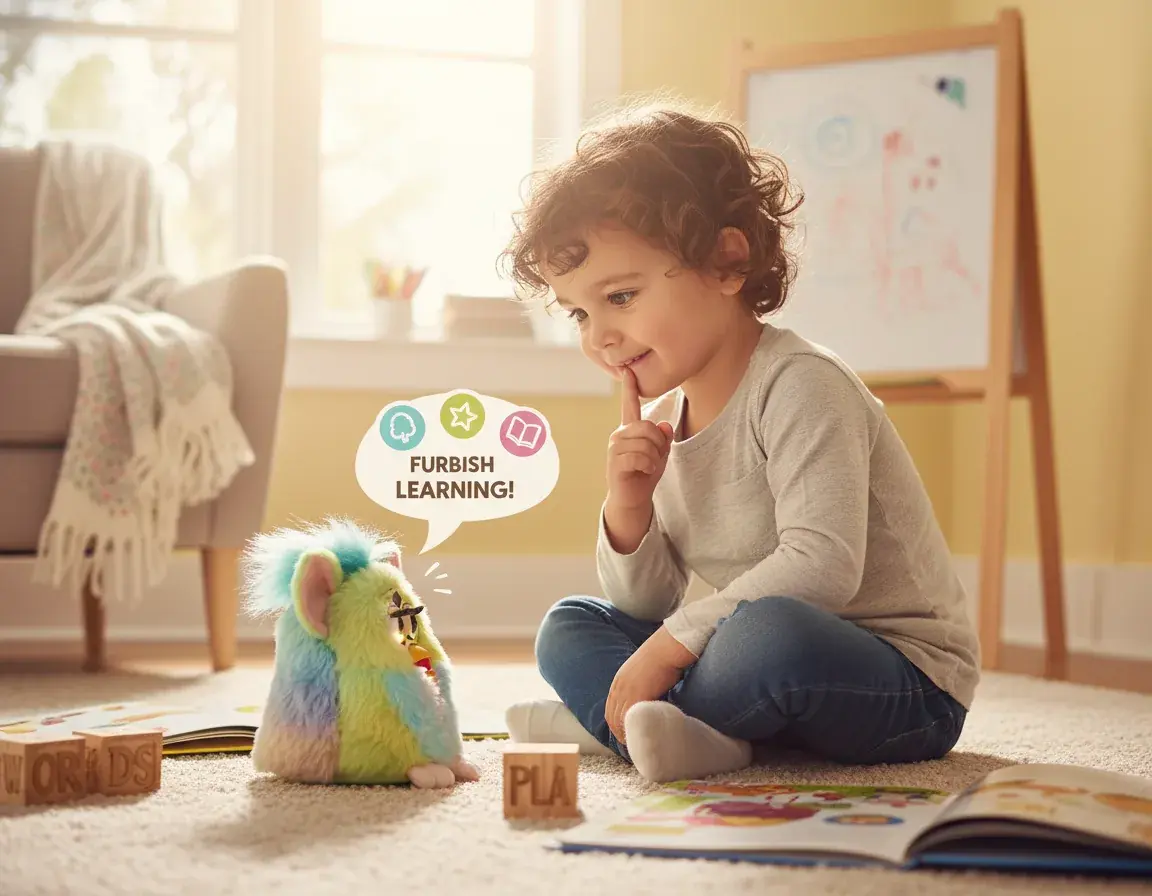
Practicing furbish words exercises memory and pronunciation. Because many words use simple syllable patterns, children can mimic them easily and gain confidence in speaking. Try short daily "teach time" sessions (5–10 minutes) where the child repeats a word and watches the Furby respond.
The blend of Furbish and local languages in some versions introduces basic bilingual concepts—children see how sounds and meanings can mix across languages, which supports broader language awareness.
Repetition—built into Furby interaction—reinforces retention: hearing and using words during play gives multiple exposures that help vocabulary stick.
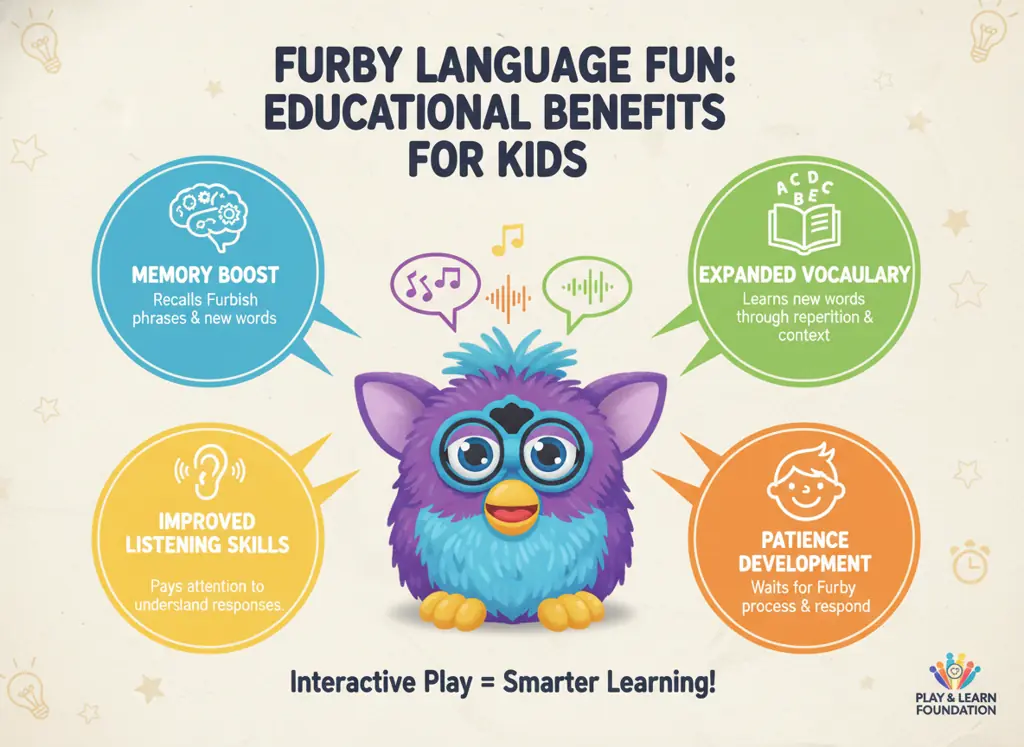
Pattern recognition develops as children spot repeated syllables across words, a transferable skill for reading and phonics learning. Simple pronunciation practice with Furby supports articulation in a playful, low-pressure setting.
Emotional Intelligence and Empathy
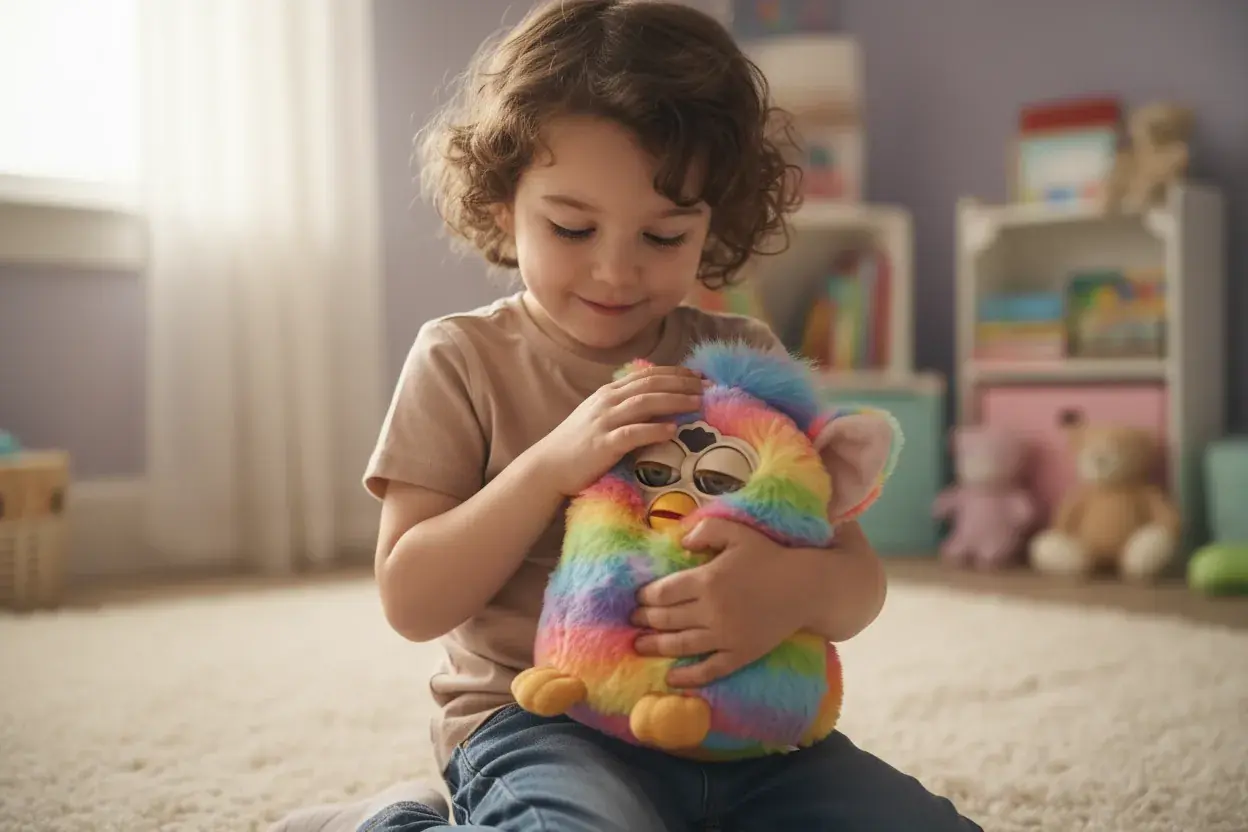
Interacting with Furby’s emotional cues teaches children to read tone and respond appropriately. If a Furby sounds sad or says a phrase suggesting sleep, prompting rest or quiet play models empathy and caring behaviors.
Meeting a Furby’s needs—feeding, playing a game, or soothing it—helps children practice responsibility and understand cause and effect in social contexts.
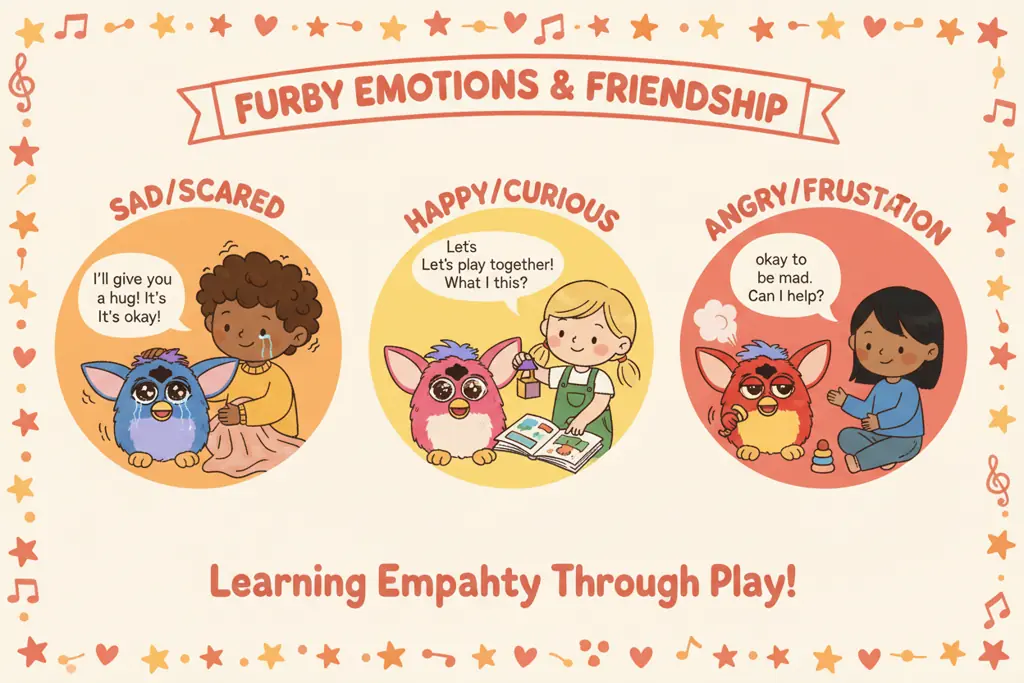
These lessons translate to human relationships—skills like noticing tone, offering comfort, and responding to requests transfer naturally to interactions with family and peers.
Patience and Delayed Gratification
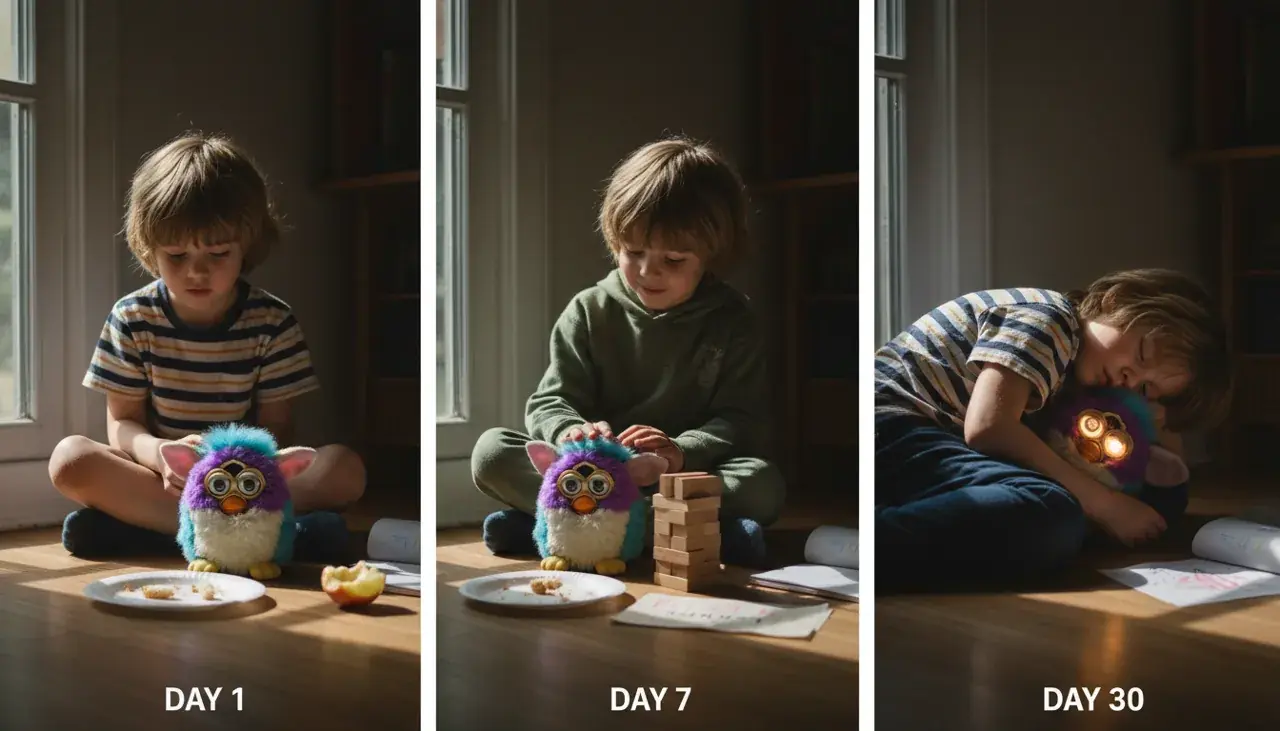
Classic Furby models reward consistent, repeated interaction with gradual language gains. This time-based progression teaches children patience and the concept that effort over time produces results.
Parents can use Furby to structure short, regular activities—daily play that encourages predictable routines and reinforces the value of persistence without heavy lecturing.
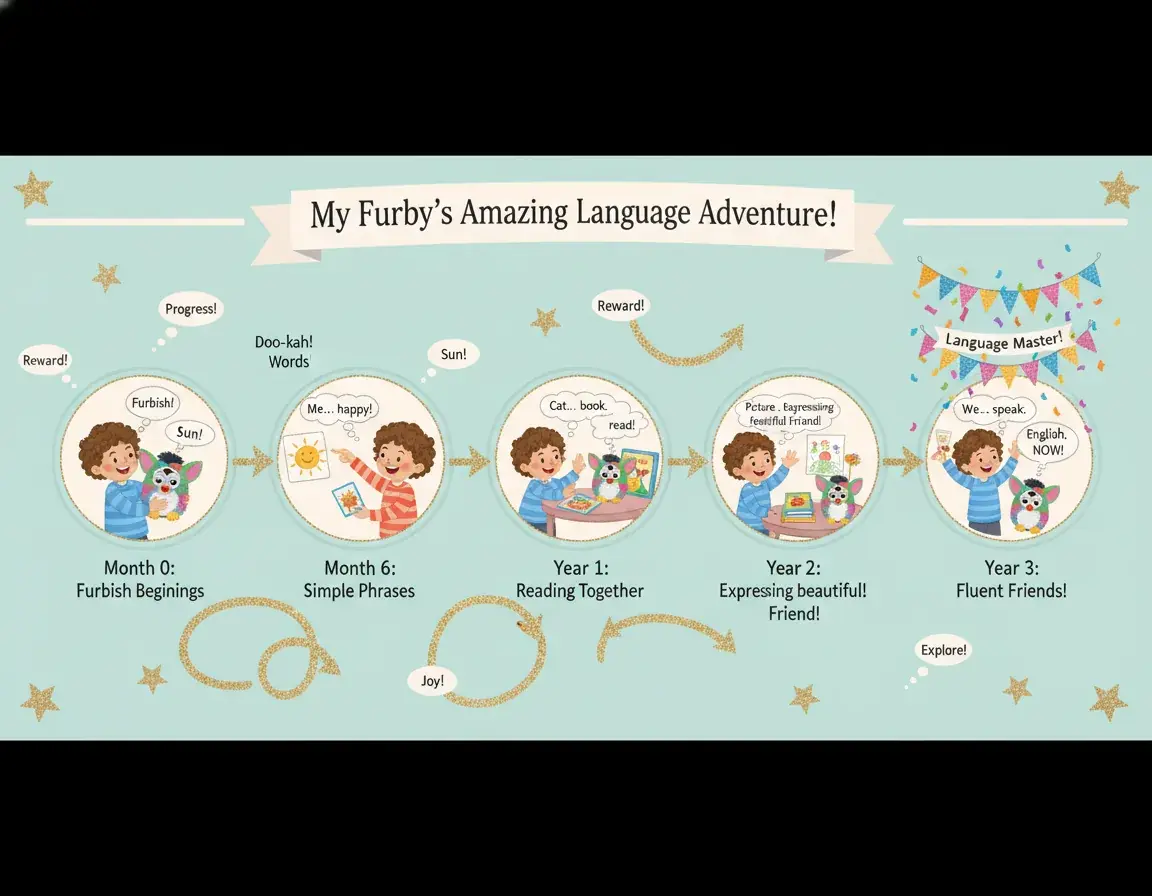
For families balancing screen time, app-connected Furby versions can be used sparingly—reserve app features for short sessions and prioritize tactile play to preserve the patience-building aspects.
Communication and Listening Skills
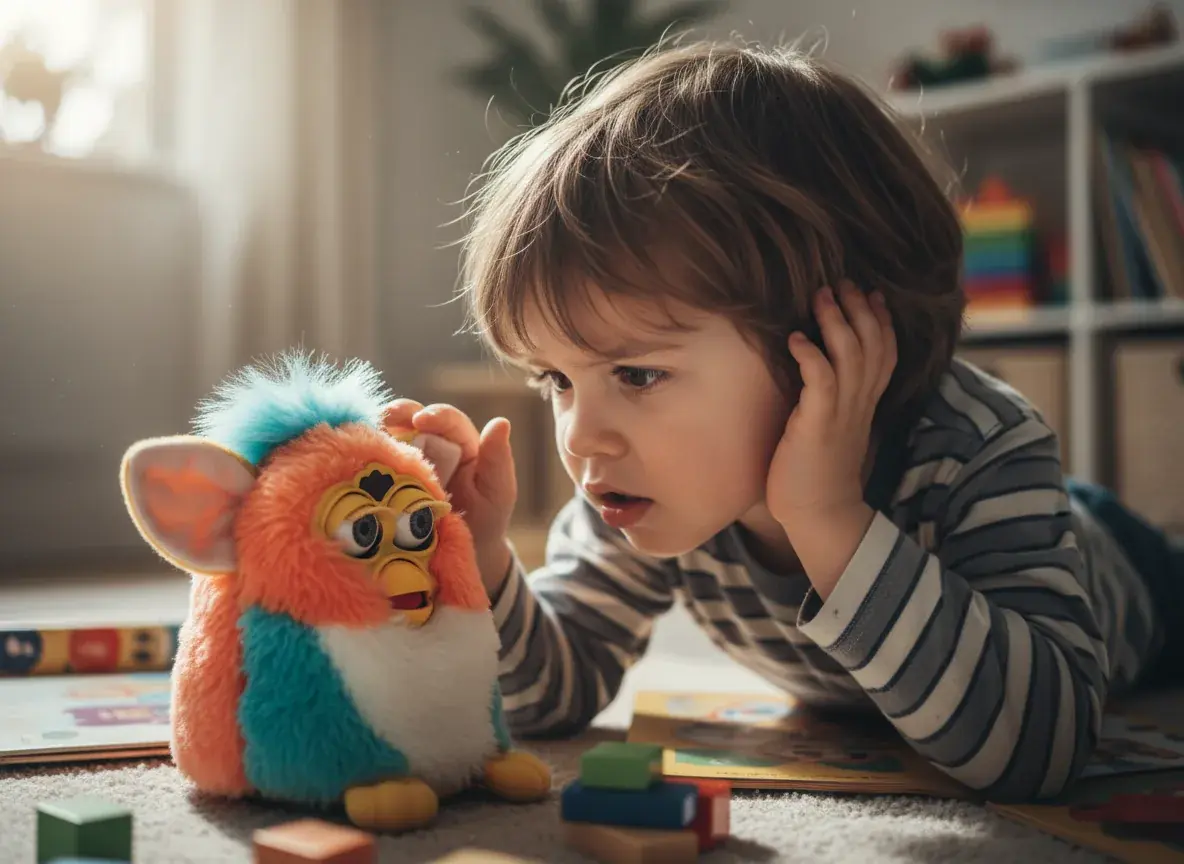
Decoding Furbish encourages active listening: children learn to focus on sound patterns, timing, and nonverbal cues. Turn-taking with a Furby models conversational rhythm and helps kids practice waiting for their turn to speak.
Simple activities—naming a Furby word and having the child repeat it, or asking the child to notice whether the Furby sounds excited or tired—make these skills fun and easy to practice.
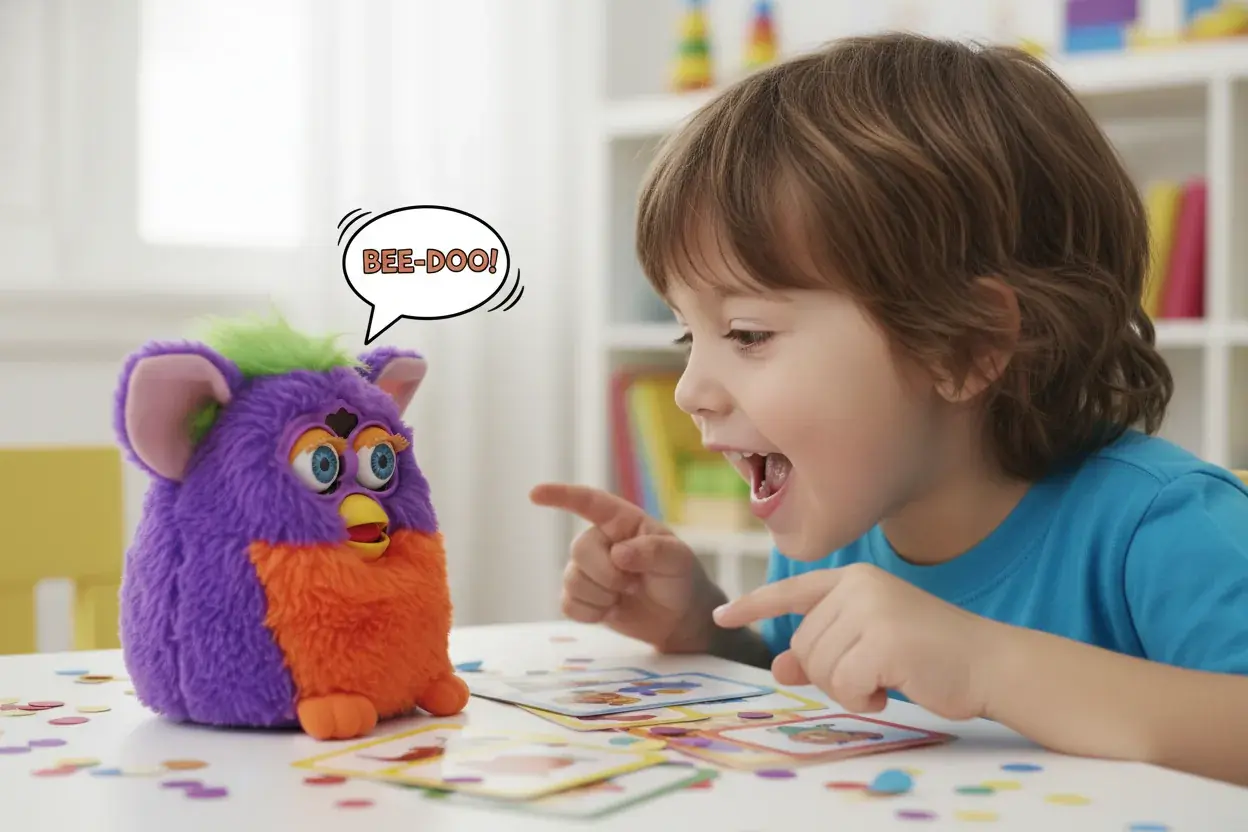
Overall, Furby language supports a suite of developmental skills when used intentionally: short practice sessions, guided interaction, and parental involvement amplify educational benefits while keeping play joyful.
Troubleshooting Furby Language Issues
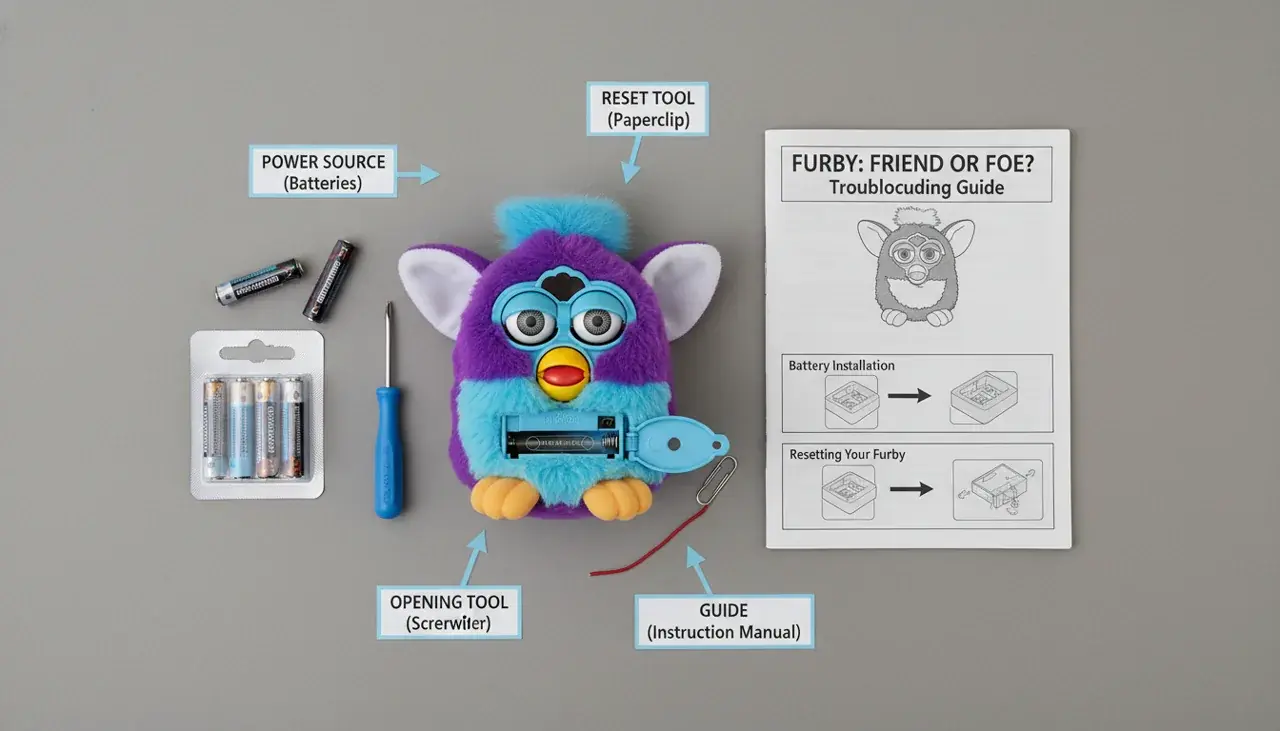
Occasionally Furby language features may act up. The good news: many common problems have simple fixes. Below are practical steps to diagnose why a Furby isn’t communicating as expected and how to restore normal behavior.
Language Not Progressing or Learning
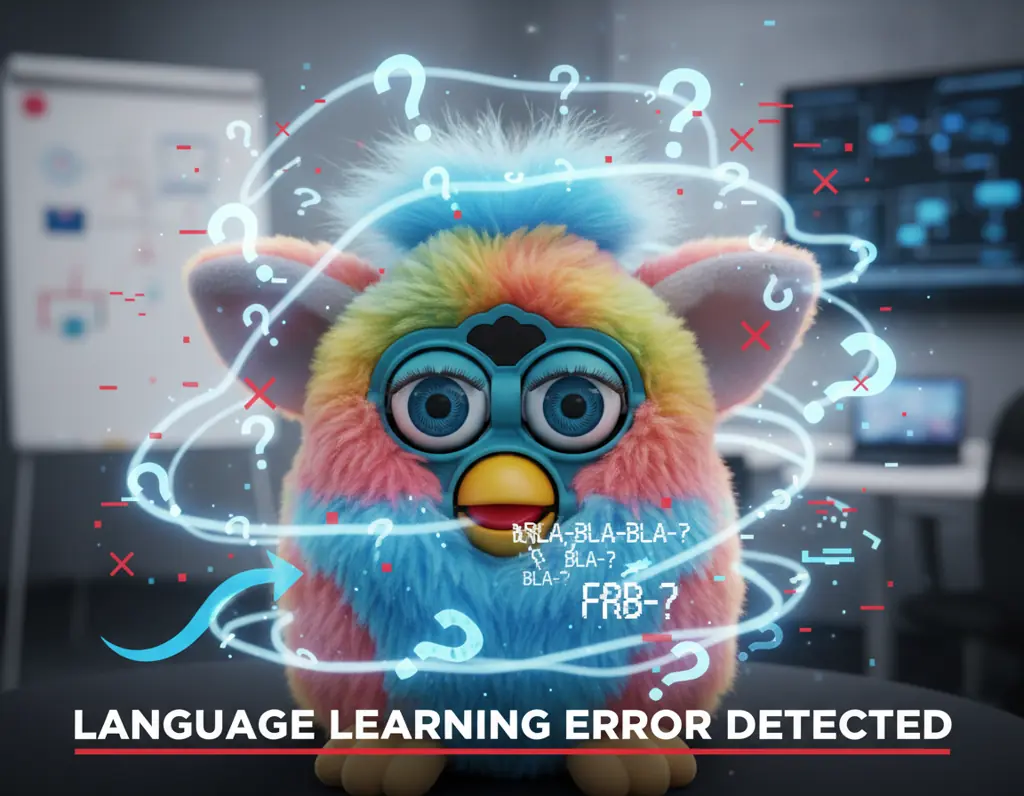
If your Furby stays mostly in Furbish and doesn't adopt new English words, the most common reason is not enough consistent interaction. Classic models in particular often need daily play to trigger gradual vocabulary progress—community guidance commonly recommends short, regular sessions rather than sporadic play.
Battery health also affects learning: weak cells can reduce response reliability and slow adaptive behaviors. Additionally, small programming differences between production batches can make some units progress faster or slower than others.
Patience is part of the design—some Furby companions take weeks to show notable English integration.
Garbled or Unclear Speech
Distorted or muffled sounds usually point to a blocked speaker, low batteries, or internal wear. Fur and debris can clog the grille and muffle output, while low voltage causes slower, slurred speech or odd pitch changes.
If cleaning and fresh batteries don’t help, the speaker or amplifier circuitry may be failing—consider professional repair rather than attempting invasive fixes that could void warranties or cause further damage.
Furby Won't Speak or Activate
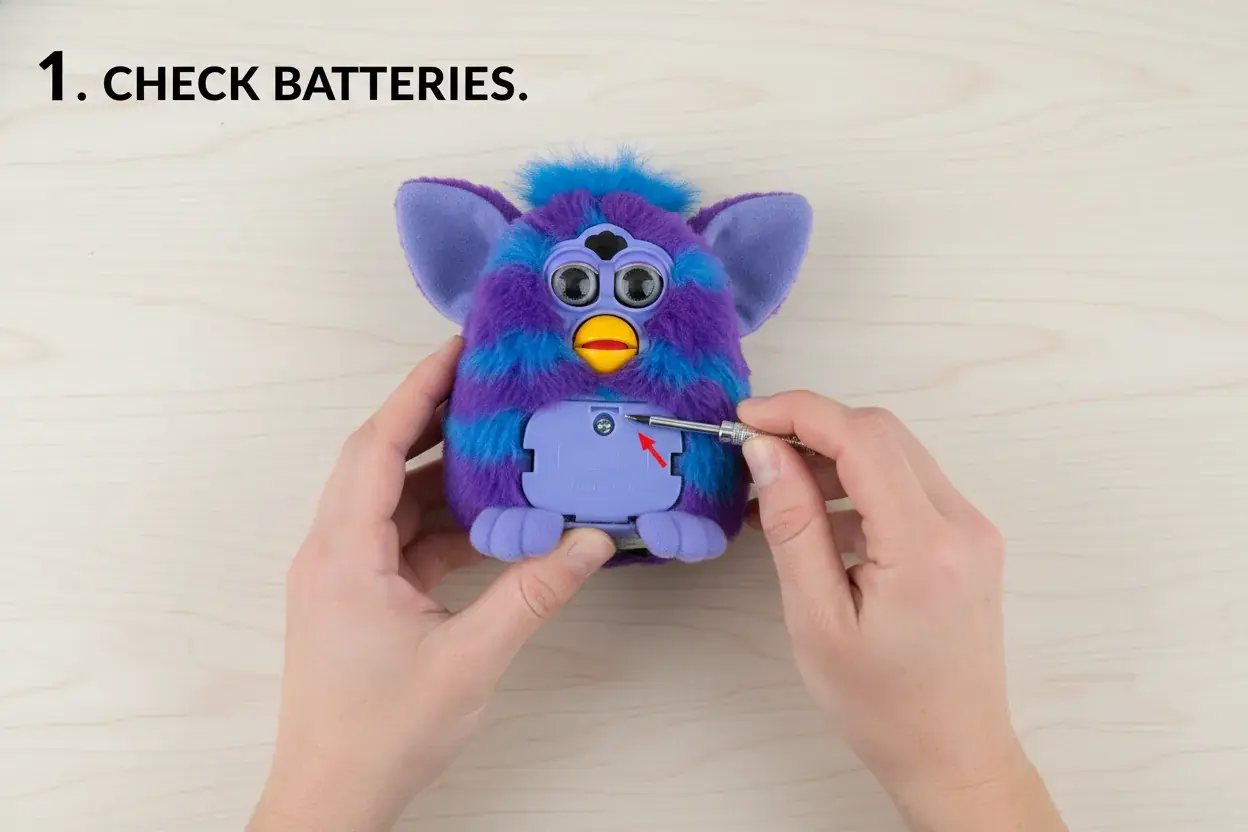
Total silence usually has a power cause. Dead or badly seated batteries are the leading culprit. Many models also include a small on/off or storage switch inside the battery compartment—double‑check that it’s in the ON position for normal use.
For vintage or heavily used units, failed internal components may require restoration—collector forums and specialist repair shops are useful resources, but avoid opening the toy unless you’re comfortable with electronics and accept the risk to original condition.
App Connectivity Problems for Modern Versions
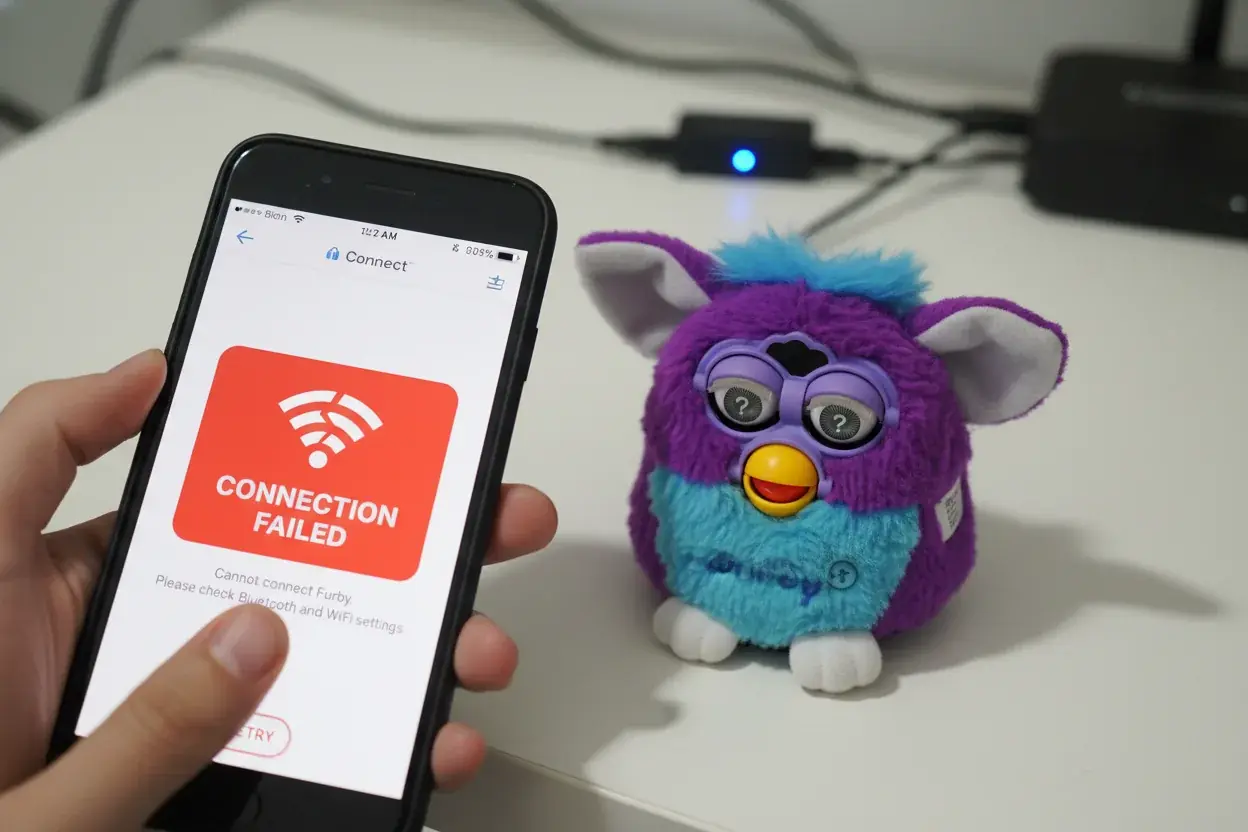
Modern Furby Connect and some Furby Boom versions depend on Bluetooth and app support for extended language features. Connection failures often come from app compatibility issues, Bluetooth interference, or outdated software.
Some older phones are incompatible with recent Furby apps—verify device requirements before relying on app‑based features. If pairing repeatedly fails, manufacturer support pages and community forums often list model‑specific tips.
When attempting repairs or deep troubleshooting, consider safety and warranty: do not open sealed electronics if you want to retain collector value or warranty coverage. For complex failures, reach out to experienced restorers or Furby communities for guidance.
Collecting Furbies by Language Features
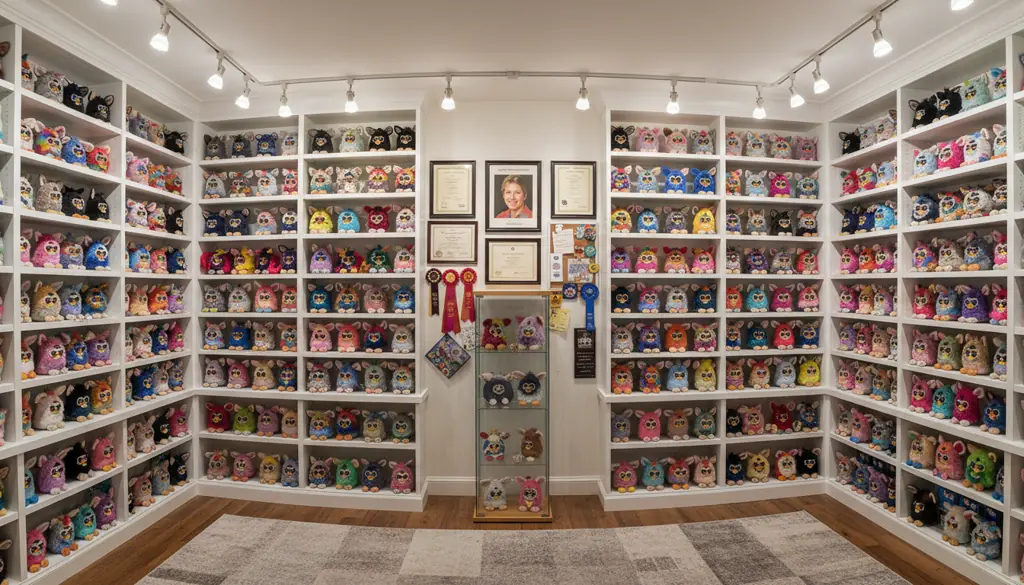
Many serious collectors build Furby collections around language differences and evolution. Tracking which versions speak which words, which phrases are unique, and how vocabulary changed over time adds depth and narrative to a collection.
Rare Language Variations Worth Finding
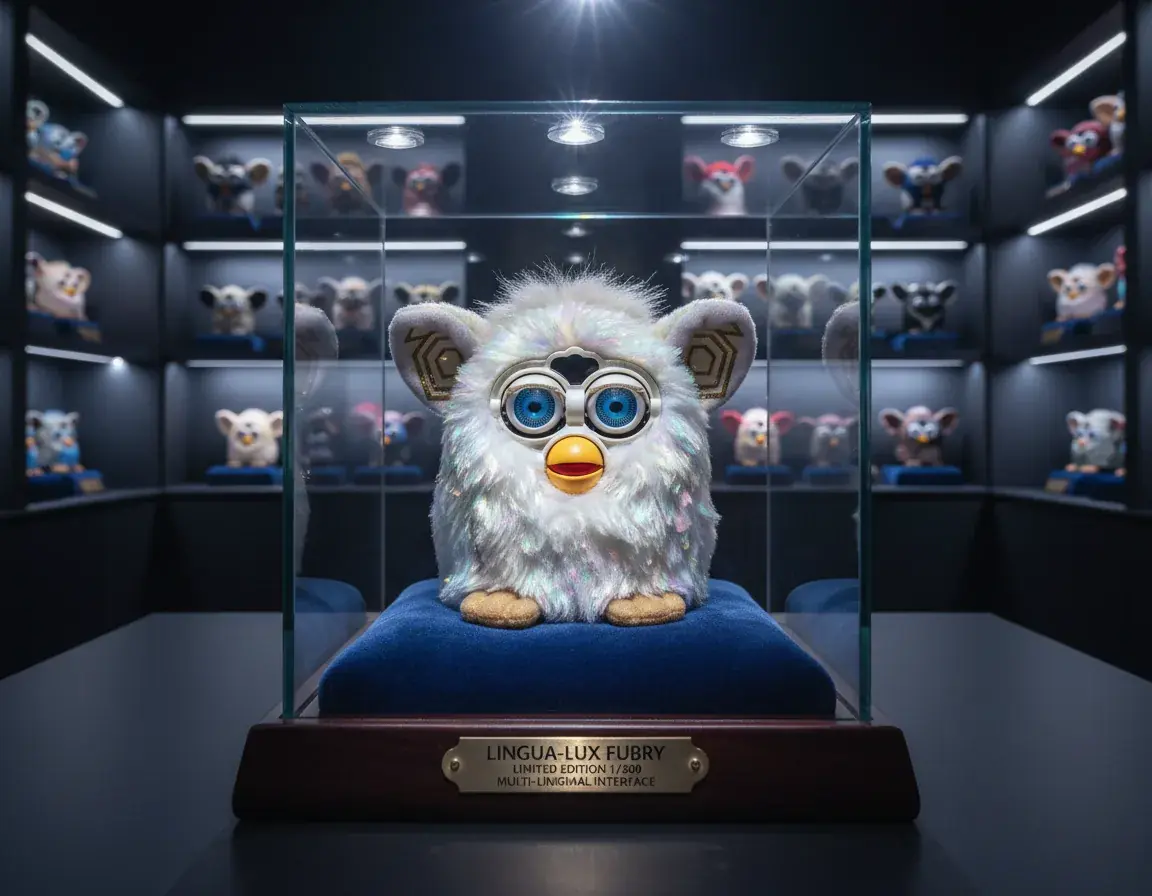
Limited and regional releases sometimes feature exclusive words or altered pronunciations that aren’t present in standard runs. Japanese-market units, for example, often mix Furbish with Japanese; early production batches occasionally show programming quirks that collectors prize.
Movie tie‑ins and special editions (like furby boom crystal) frequently include themed phrases tied to their design—gem motifs, light‑related lines, or film references—that make them desirable for language-focused sets.
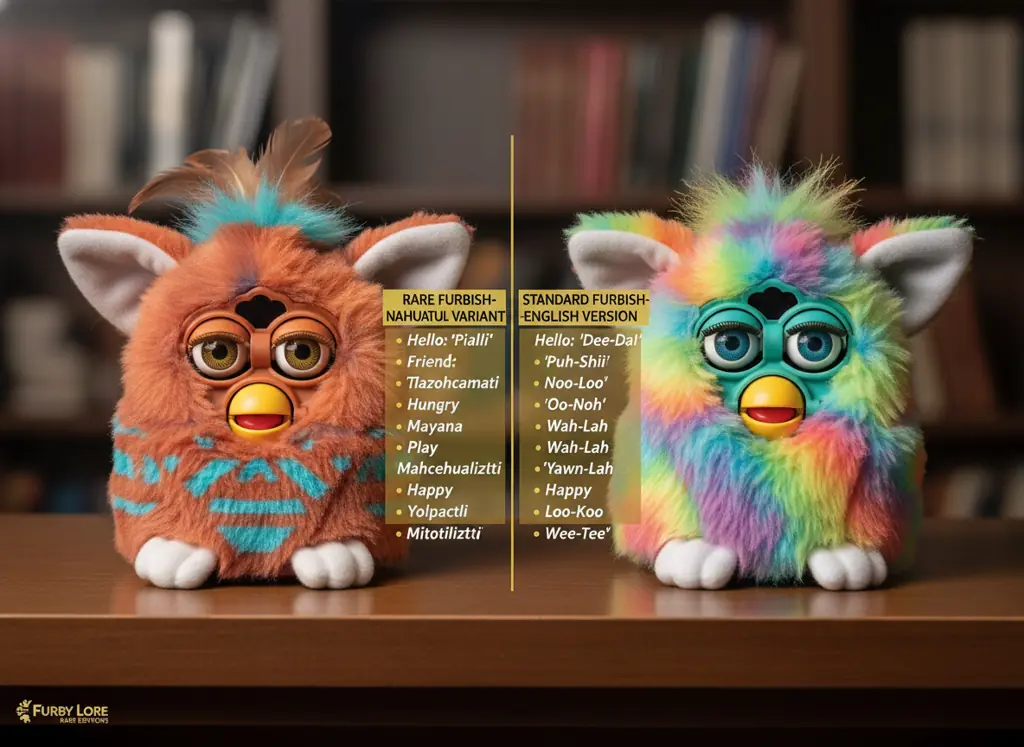
Because these variations are sometimes subtle, collectors often trade audio samples and lists to confirm whether a piece truly has rare language characteristics.
Documentation and Preservation
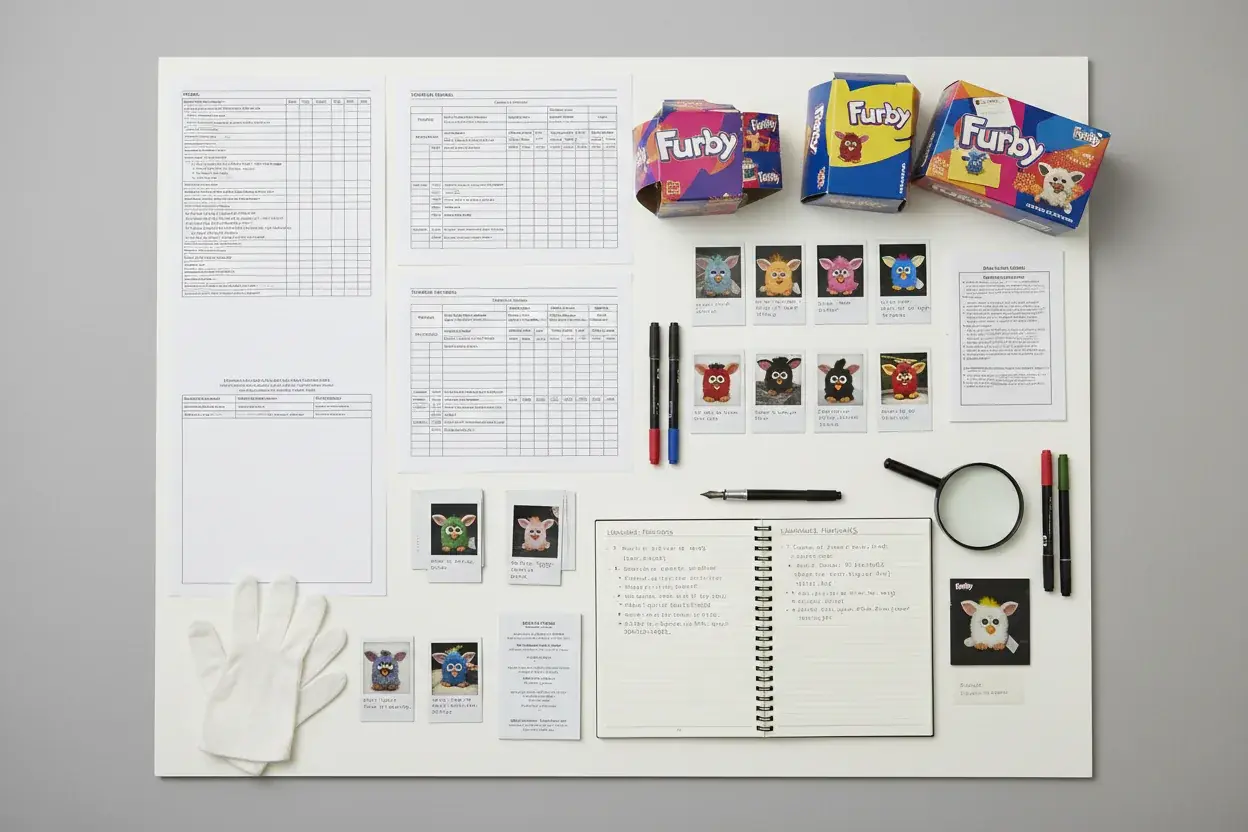
Good documentation is essential: record production details, take video/audio samples of the Furby speaking, and keep notes on learning behavior. Removing batteries for long-term storage prevents corrosion and preserves original programming, while video archives protect audio samples that might degrade with age.
Original boxes, instruction leaflets, and labeled packaging often contain useful language or feature notes—complete‑in‑box items typically command higher collector interest.
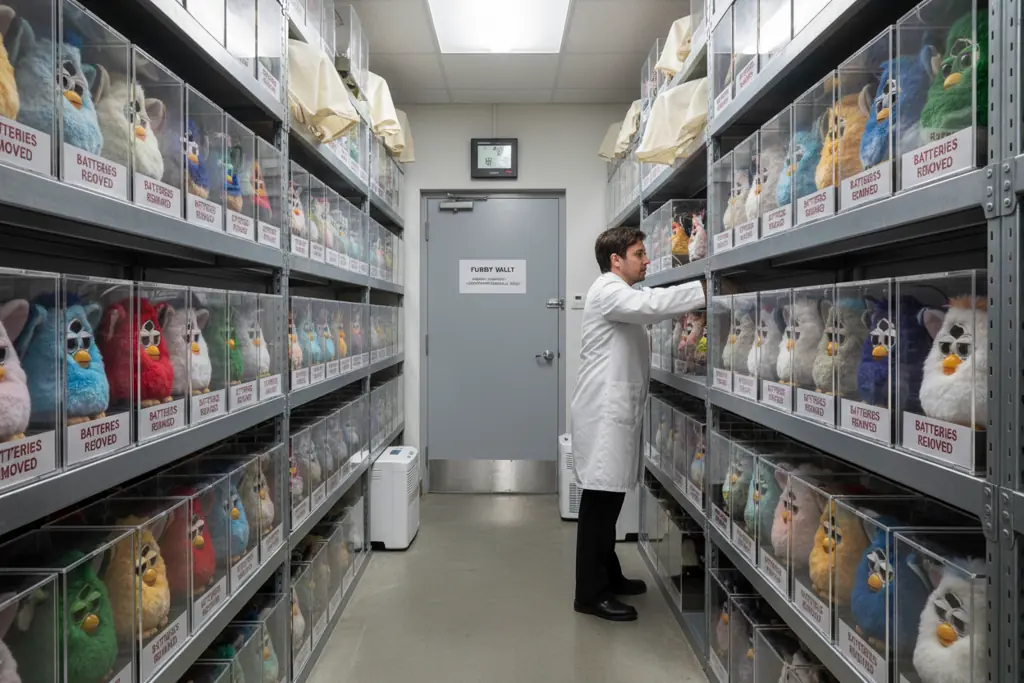
Join collector forums and databases to compare findings—community knowledge helps identify rare names, phrases, and production‑run differences that individual collectors might miss.
Value Assessment Based on Language Features
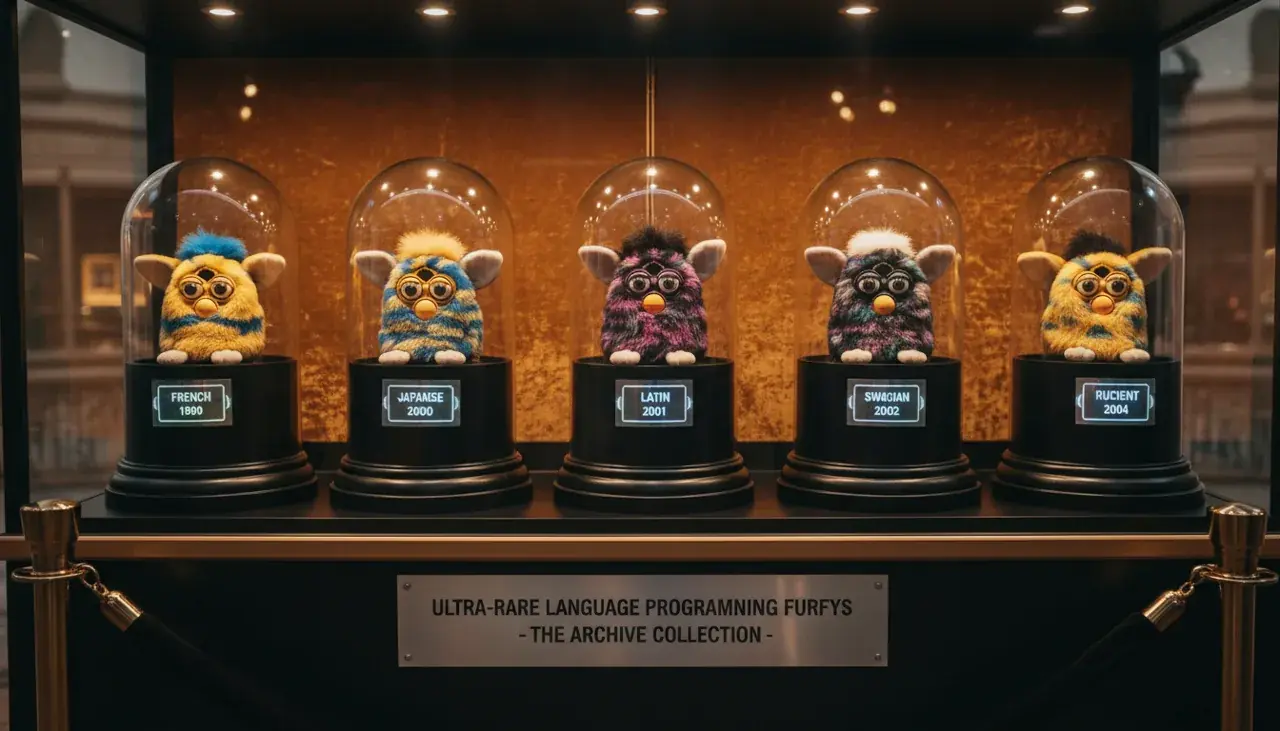
Language uniqueness can materially affect market value. Collectors often pay premiums for early production units with original programming or for special editions with exclusive phrases. Keep in mind that price multipliers (e.g., 2–4x) are market estimates based on recent sales and collector reports rather than fixed rules.
| Version Type | Language Rarity | Relative Value (typical) |
|---|---|---|
| Standard Production | Common vocabulary | Baseline |
| Limited Edition | Exclusive phrases | Often 2–3x baseline |
| Regional Variant | Foreign language mix | Often 1.5–2x baseline |
| Early Production | Original programming | Often 2–4x baseline |
| Prototype | Unreleased features | Potentially 10x+ baseline |
Market values shift with nostalgia, media attention, and condition. Language-focused collectors create niche demand—make sure you authenticate language features (audio/video proof) and verify seller return policies before paying premiums.
Start Your Furby Language Collection Journey
Whether you're a seasoned collector or just beginning your Furby adventure, Furby Toy Shop offers authenticated pieces across generations. Check item details for language features, condition reports, and any included documentation before purchasing to ensure the piece matches your collecting goals.
Future of Furby Language
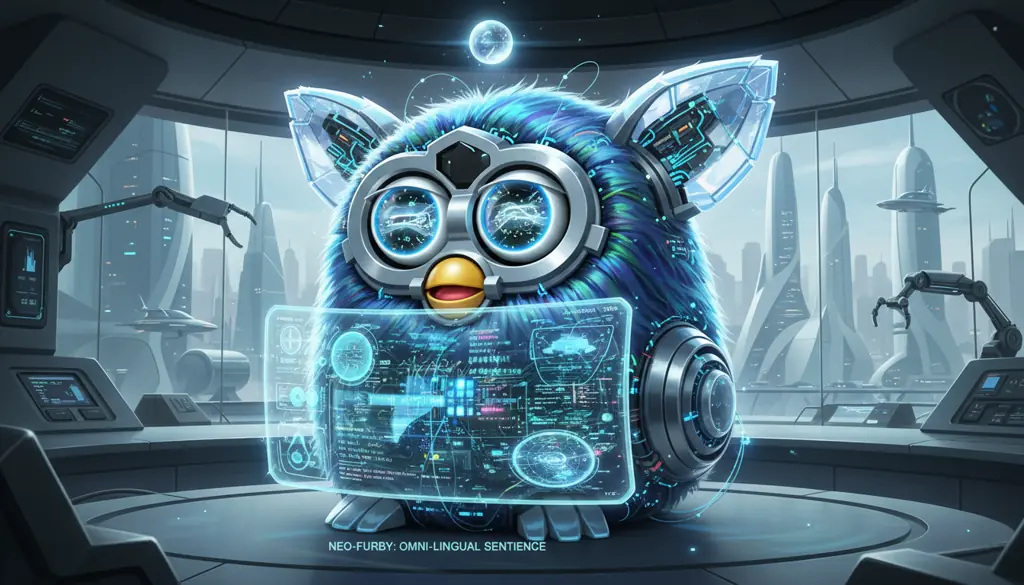
The story of Furby language isn't finished—advances in software, connectivity, and sensors suggest several plausible directions for future versions. These ideas are speculative (unless announced by manufacturers) but illustrate how names, languages, and context could shape next‑generation companions.
Artificial Intelligence Integration Possibilities
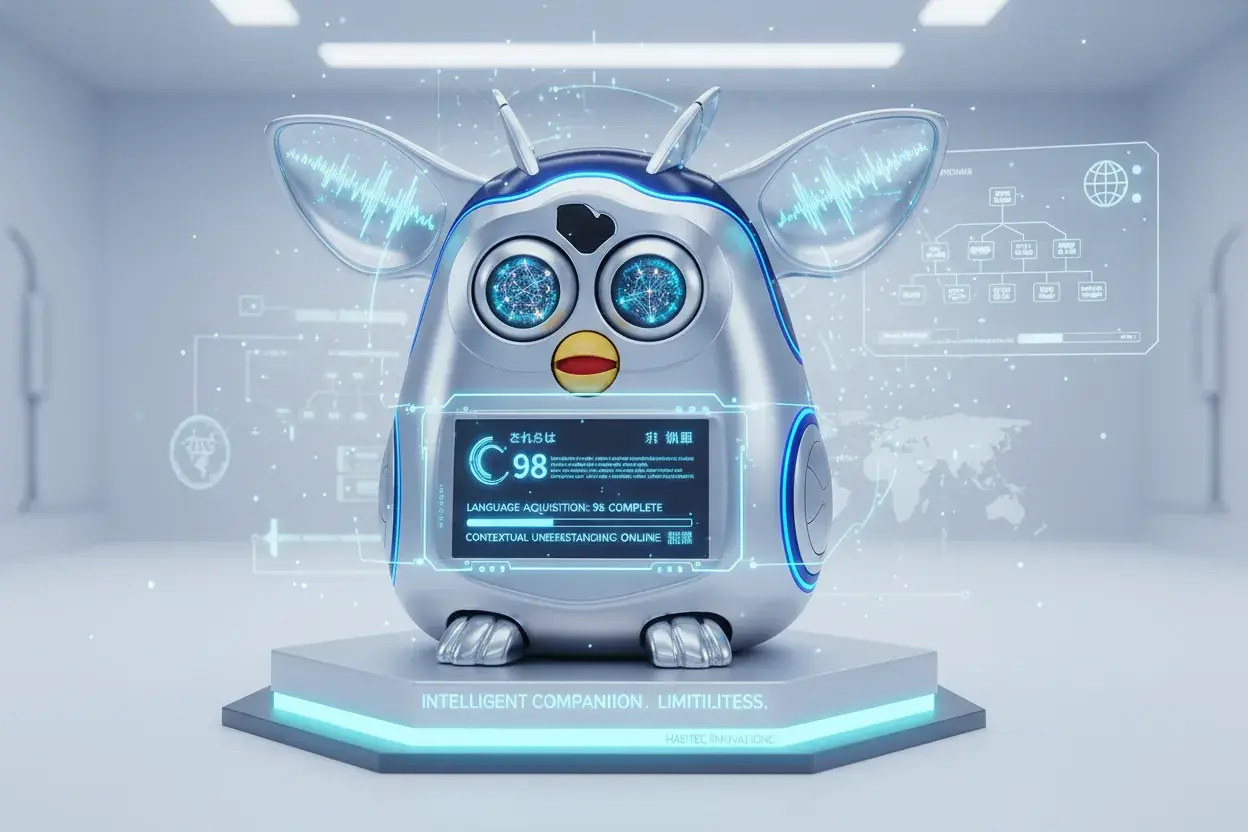
Future Furby versions could use machine learning to personalize vocabulary and behavior—learning owner names, favorite games, and preferred phrases over time. Natural language processing might permit more flexible responses to complex inputs rather than relying solely on preprogrammed phrases.
Improved voice synthesis would aim for warmer, less robotic sounds while retaining the playful Furbish character. Emotional recognition (detecting mood from voice tone) could enable more empathetic replies that match the household’s tone and needs.
Global Language Expansion
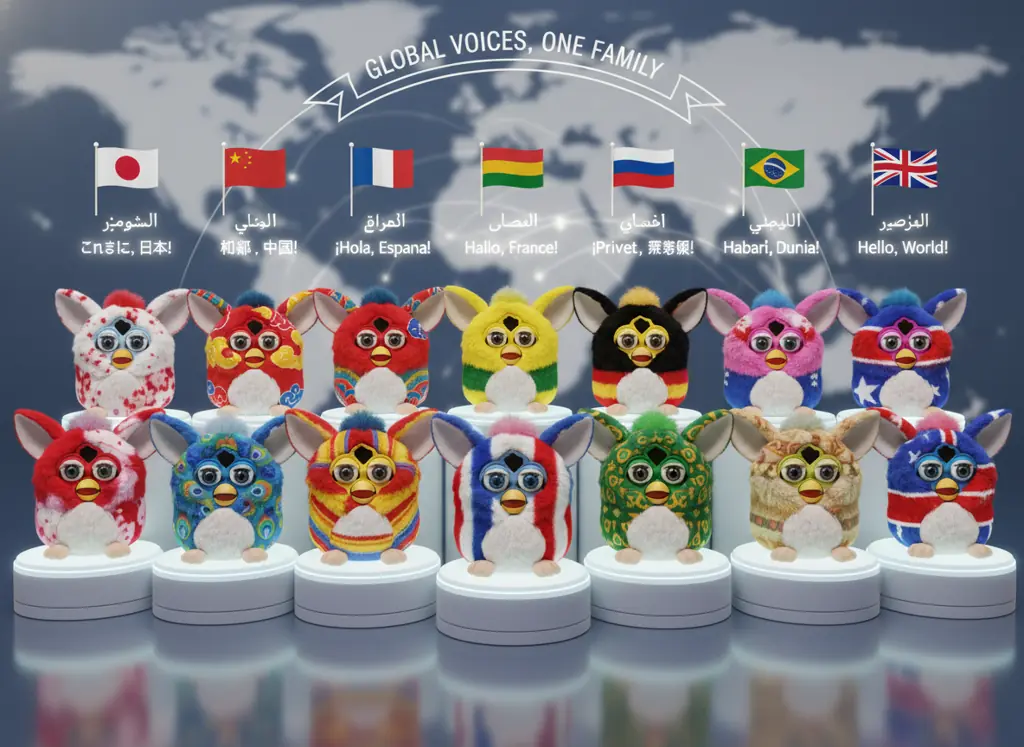
Cloud-based language packs could let a single Furby switch between languages quickly, mixing local tongue elements with classic Furbish. That flexibility would help multilingual households and broaden Furby’s appeal—turning the toy into a playful tool for practicing foreign languages.
Practical uses might include downloadable packs for Spanish, French, or other languages, plus region-specific phrases so a Furby feels relevant to its place and culture.
Environmental Interaction and Context Awareness
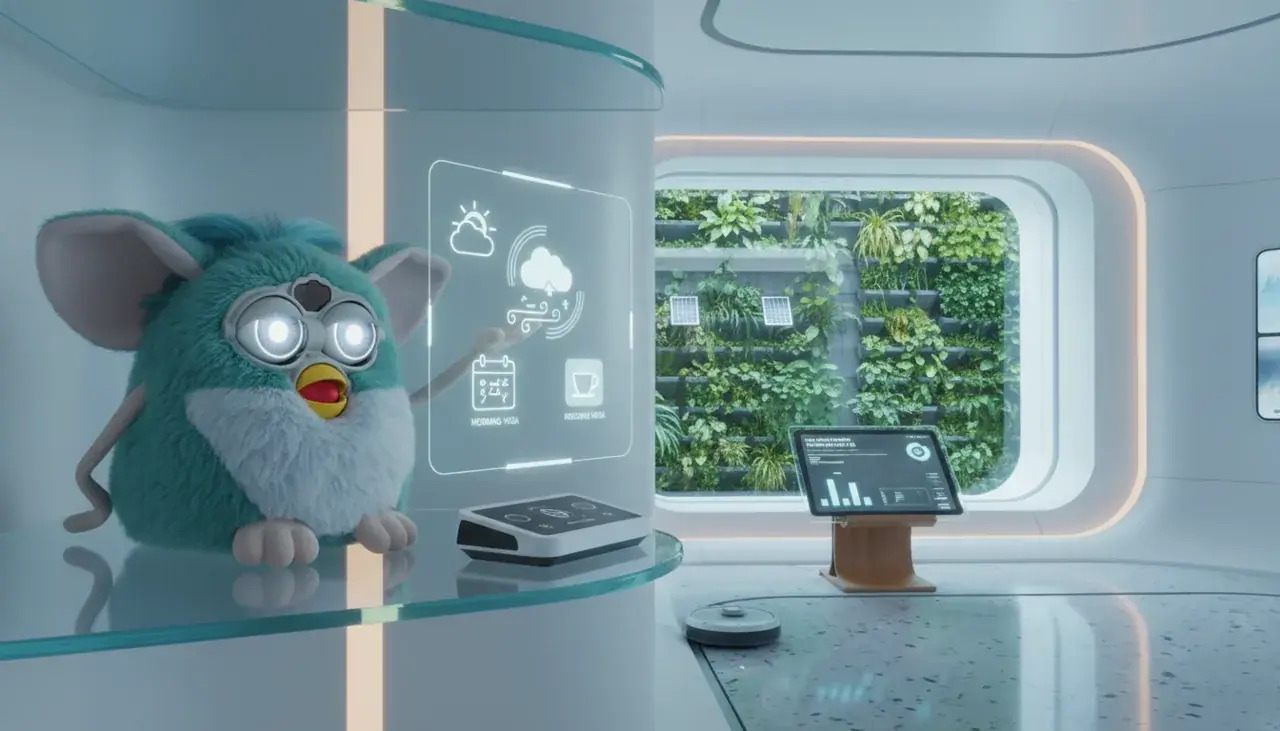
Context awareness—time‑of‑day responses, weather‑related phrases, or calendar‑based greetings—could let Furby comment on daily life in ways that feel timely rather than random. Location‑aware features might reference local places or travel experiences, making interaction feel more personal.
All these features would rely on connected services and raise privacy considerations; parents should expect clear controls and transparent data policies before enabling cloud or location features.
Preserving Core Magic While Innovating
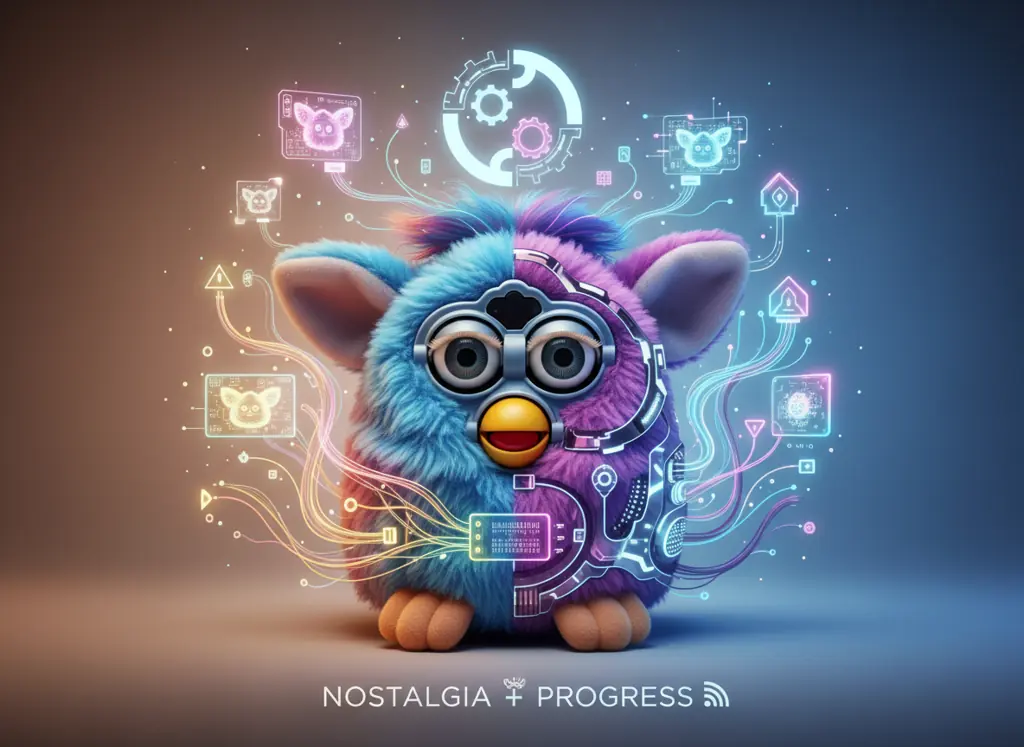
Any future evolution should preserve the simple, surprising qualities that made Furbish lovable: unpredictability, short playful words, and an element of discovery. Manufacturers will need to balance added functionality (names, languages, context awareness) with the core joy of encountering an unpredictable, personality‑driven companion.
As possibilities grow, Furby Toy Shop and other sellers should make feature lists, privacy notes, and supported languages clear so parents can choose the right balance of innovation and tradition for their family.
Visit Furby Toy Shop
Our Location
Furby Toy Shop is conveniently located in Ashburn, Virginia, making it easy for local customers and collectors to connect with a trusted Furby store.
Furby Toy Shop
Address: 42840 Creek View Plaza #115, Ashburn, VA 20147, United States
Phone: +1 571-223-2614
Find Furby Toy Shop on Google Maps
Embracing the Magic of Furby Language
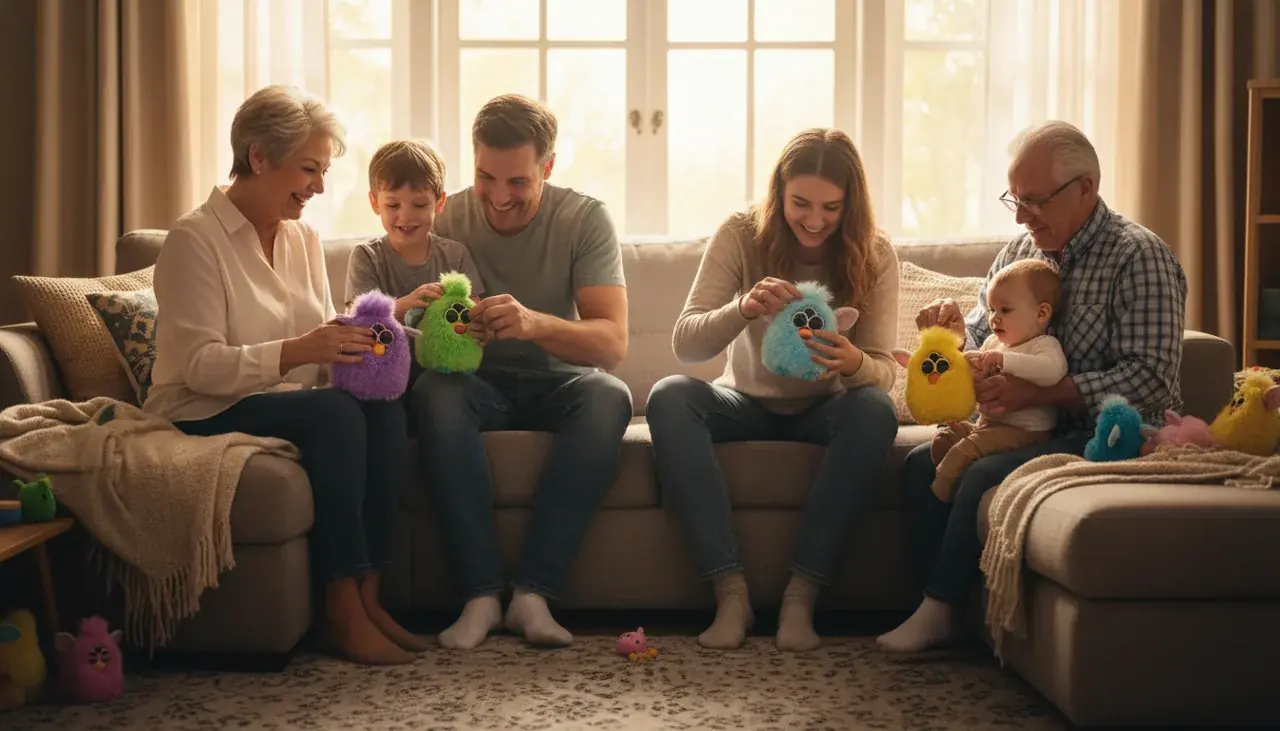
Furby language is more than a set of programmed words—it's a playful system of sounds, gestures, and timing that creates emotional connections between toys and people. Those short Furbish words and expressive cues turn simple interactions into memorable moments.
From the original 1998 Furby up through modern Furby Connect models and special editions like Furby Boom Crystal, each generation adds its own twists—new words, personality modes, and light or app-driven phrases—while honoring the core charm that started it all.
Understanding how the language works—how words, tone, movement, and sensors combine—helps you pick the right version for your family and enjoy deeper, more meaningful play.
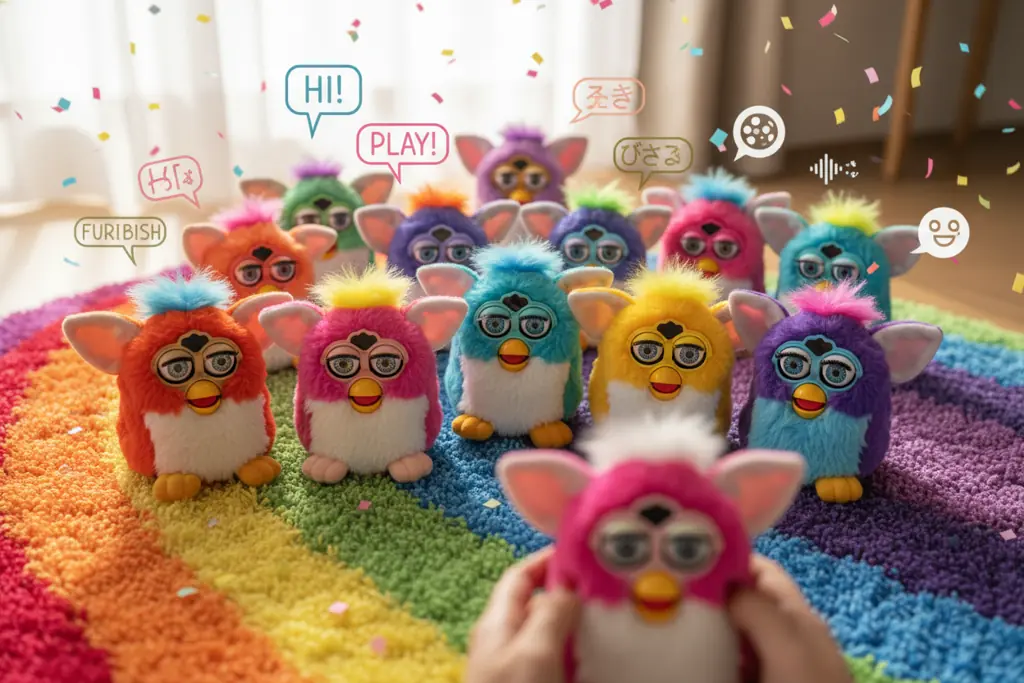
Whether you're drawn to nostalgic 1998 Furby experiences, the sparkle of boom crystal editions, or the expandable vocabulary of Furby Connect, there's a companion that matches your play style. Pay attention to the words and phrases your Furby uses—those cues are the path to a richer relationship.
Furby Toy Shop celebrates this evolution and helps families find authentic companions across generations. For visit details and exact inventory, see our location and contact information in the Visit Furby Toy Shop section above.
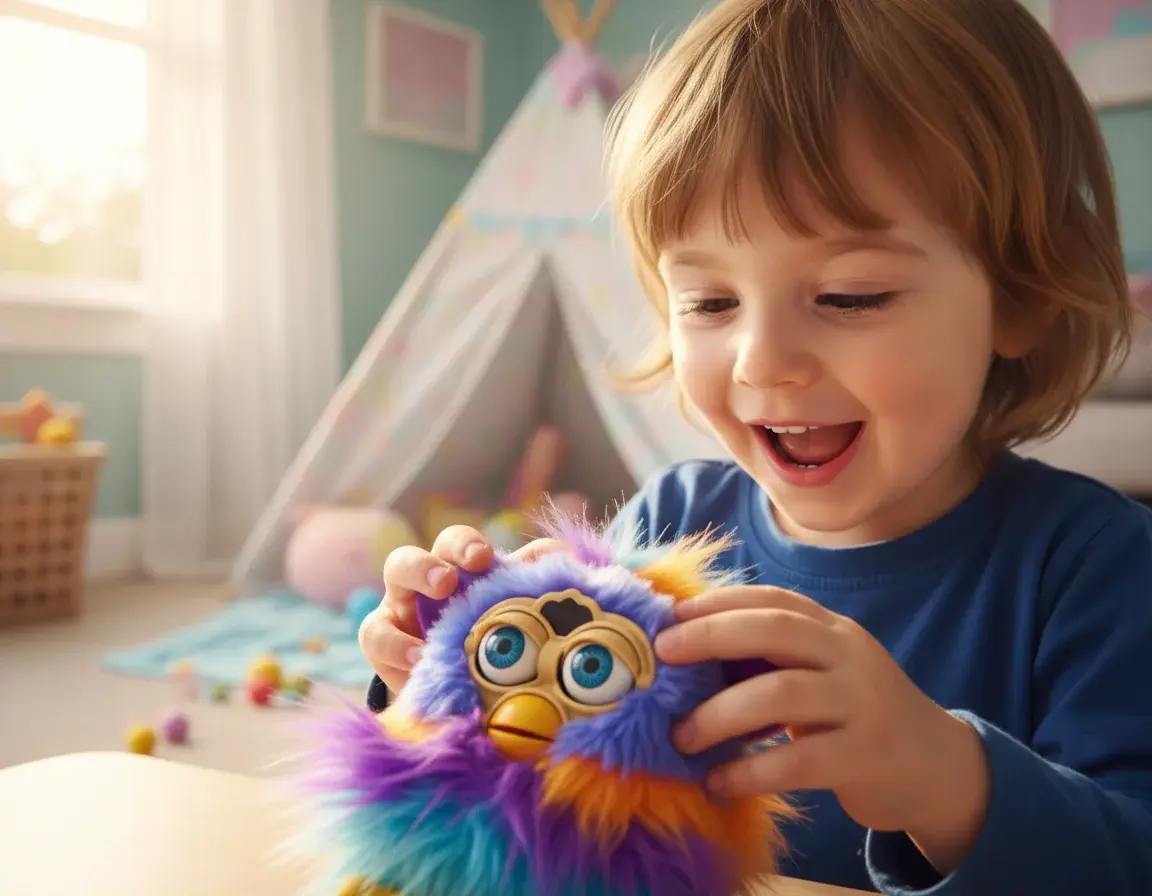
Every Furby speaks a slightly different version of this enchanting language. Finding the right generation and feature set—whether it’s simple words, glowing light effects, or cloud‑expanded vocabulary—brings unique joy to your home.
Bring Home Your Furby Language Adventure
Ready to explore Furby language in person? Furby Toy Shop offers companions from classic 1998 models to the latest Furby Connect releases. Check product pages for exact features, privacy notes for connected versions, and store availability before you buy.