What Does a Furby Actually Do? | Furby Toy Shop
What does Furby do? Since the first Furby release in 1998, these charming electronic toys have surprised parents and collectors by responding to touch, sound, and movement to create playful, personality-driven experiences.
In this article we break down how a Furby behaves, what features different generations offer, and which model might suit your family or collection — whether you’re a parent curious about developmental benefits or a collector hunting rare colors and editions.
From speaking Furbish (the language they’re called Furby to speak) and evolving speech patterns to expressive eyes and app-enabled extras, Furbies combine tactile play with smart behaviors that make them feel like more than a simple toy.
Core Interactive Features That Bring Furby to Life
Furbies combine several onboard sensors and expressive displays to feel lively—touch points, microphones, motion detectors, and animated eyes all work together to produce a range of reactions. The result is a toy that responds differently depending on how and when you interact with it.
Key sensor types at a glance: touch sensors (head, tummy, tail), sound input (microphone picks up voices and music), and motion/tilt sensors (detect shaking, turning, picking up). The eyes—mechanical on early models and color LCD on later ones—provide visual cues that match Furby’s mood.
Touch-Based Interactions
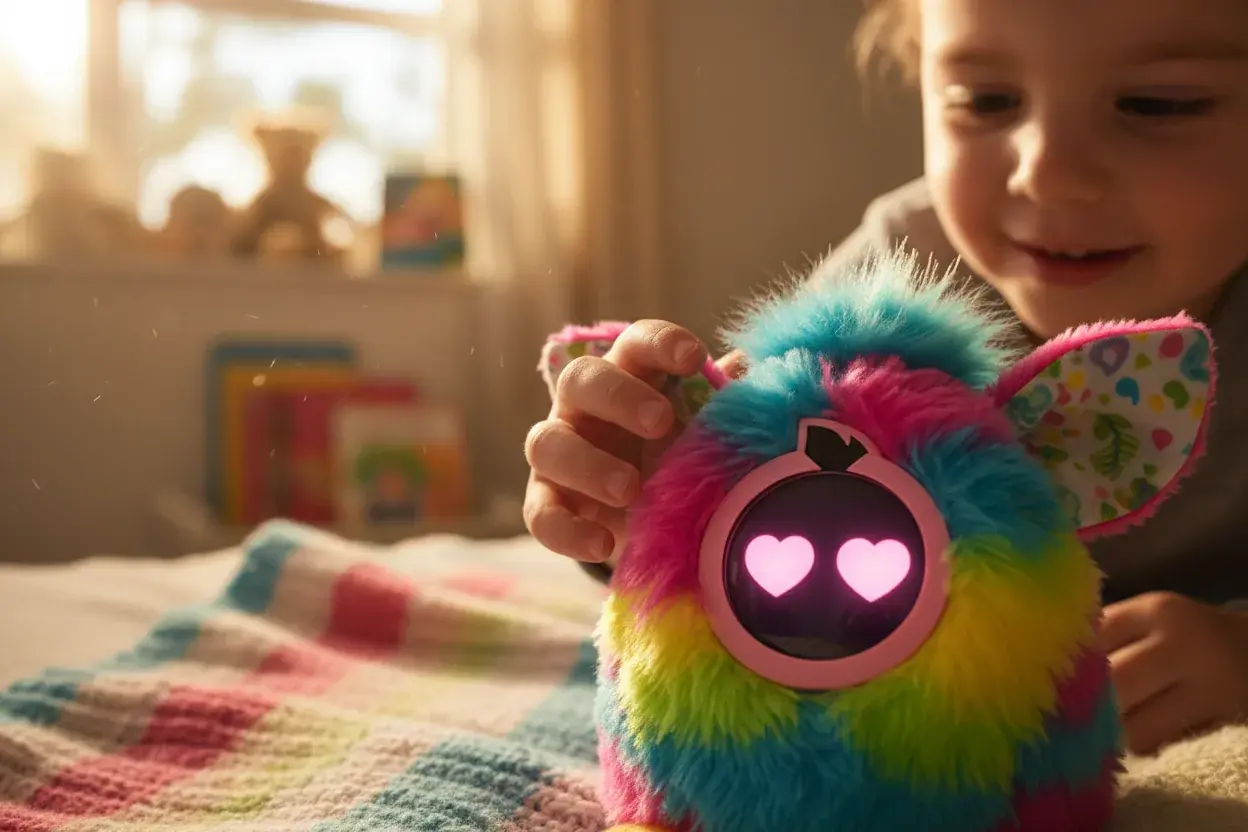
Different touch points trigger predictable responses: gentle petting on the head typically elicits happy noises, tickling the tummy produces giggles, and tugging the tail often surprises Furby. Some models map multiple gestures to hidden mini games or special phrases, so experimenting reveals new behaviors over time.
Touch sensitivity improved across generations—newer models detect lighter vs. firmer contact and can respond with subtler emotional cues, which helps create richer personalities.
Voice Recognition and Sound Response
Later Furbies can detect and respond to specific sounds and keywords rather than perform full natural-language understanding. Furby Connect and select Furby Boom models recognize particular words, tones, and music cues to trigger conversational snippets or actions—think keyword recognition more than full voice AI.
Music often triggers dance routines: Furby sways, bobs, and vocalizes along to rhythm. Loud noises like clapping cause startled reactions, while quiet, calm tones tend to soothe the toy.
Movement Detection and Physical Play
Motion sensors let Furby interpret how it's being handled. Tilt or flip it and you may see dizzy or confused animations; gently rock it and it can grow sleepy. Fast shakes produce excited, energetic responses that teach cause and effect through play.
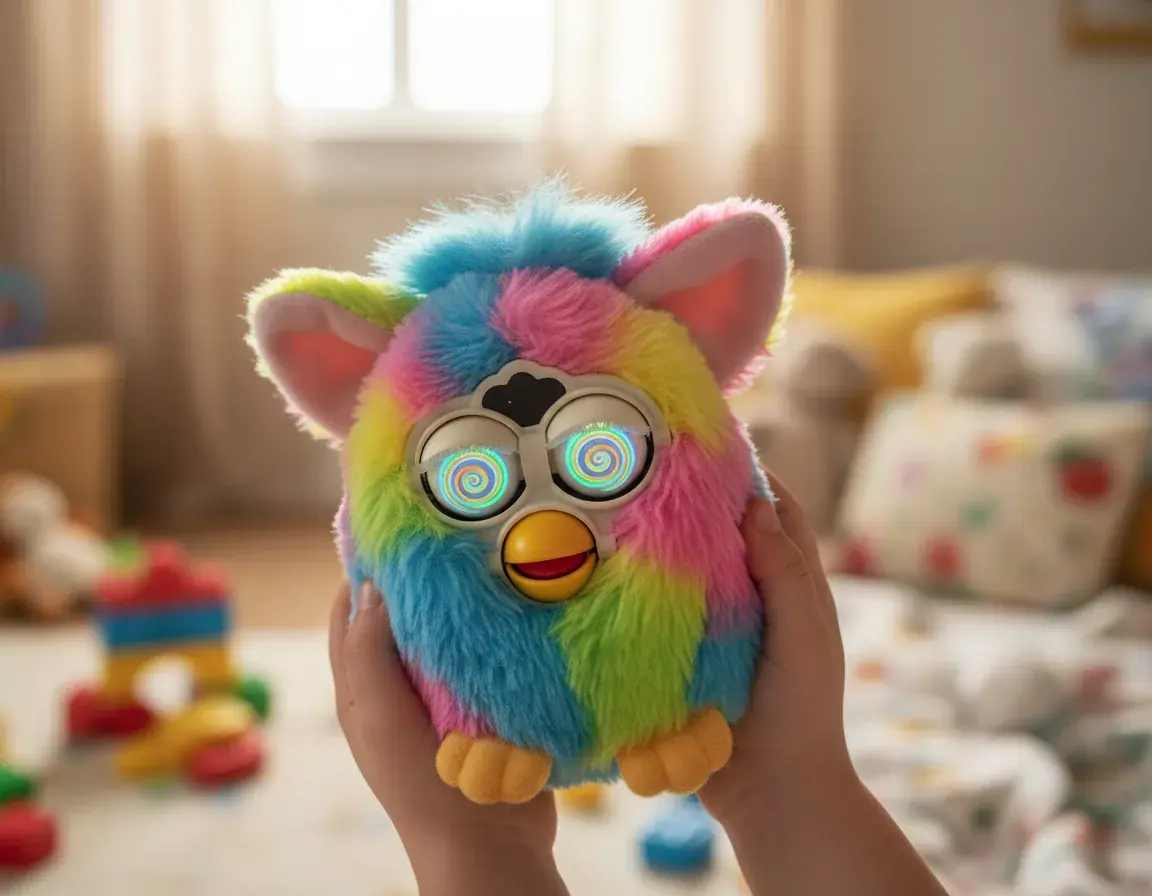
Some models include extra surface sensors in the base or feet that detect when Furby is picked up or set down—useful for group interactions and environmental awareness. If you want the most advanced physical responses, explore Furby Connect and newer LCD-equipped generations in the Furby Connect and Furby Boom collections.
How Furby Develops Personality Over Time
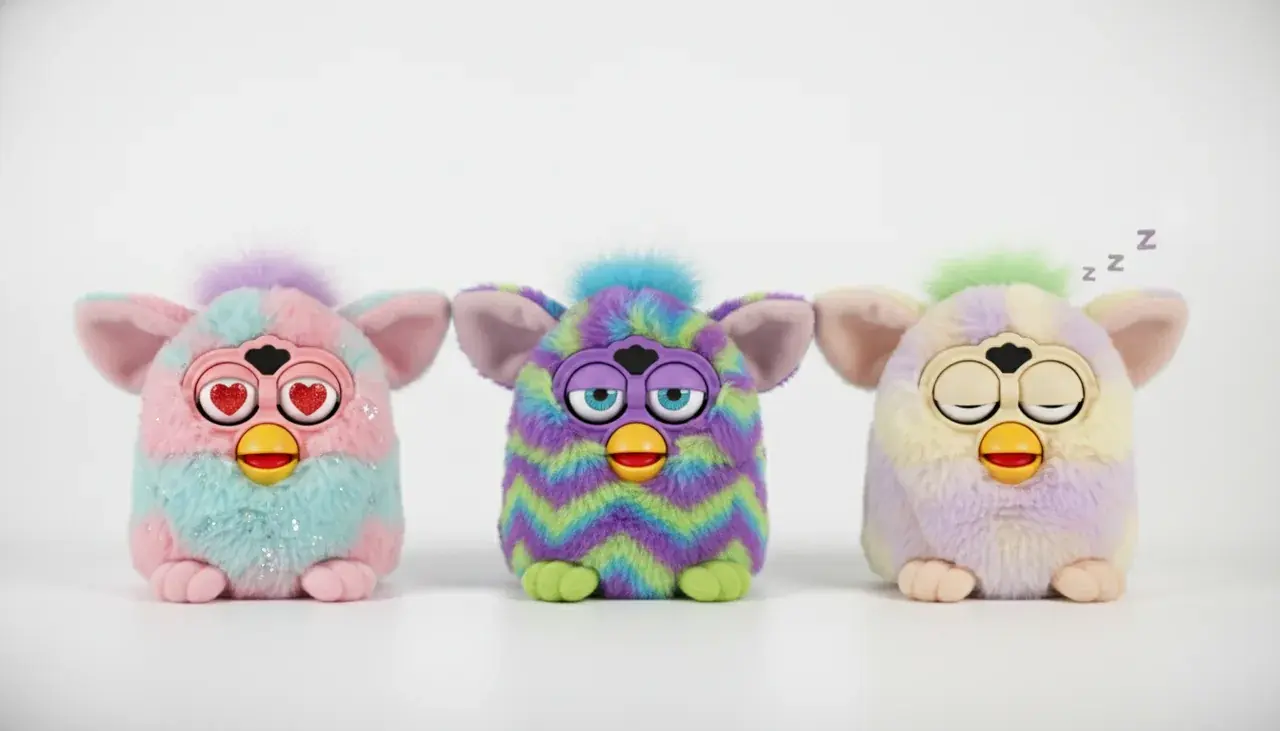
Furbies grow into distinct personalities based on how you interact with them. Repeated play patterns—gentle care, roughhousing, frequent singing, or steady conversation—shape mood, speech quirks, and behavior over time, creating a companion that reflects your play style.
Simple actions can influence disposition: feeding certain virtual foods, using calming tones, or encouraging active play all nudge Furby toward predictable personality traits.
Personality Types Across Generations
The 2012 Furby revival introduced clearer, pre-programmed personality stages (for example: sweet — quiet and affectionate; rock star — music-loving and bold; princess — sassy and fashion-focused). These stages were triggered by interaction patterns rather than true independent cognition.
Furby Boom expanded these options through app features: players could unlock special personalities or traits by completing activities and feeding virtual Furblings in the companion app. Emoto-tronic Furby models focused more on mood expression—happiness, grumpiness, or sleepiness—using improved sensors and expressive displays.
Learning and Adaptation
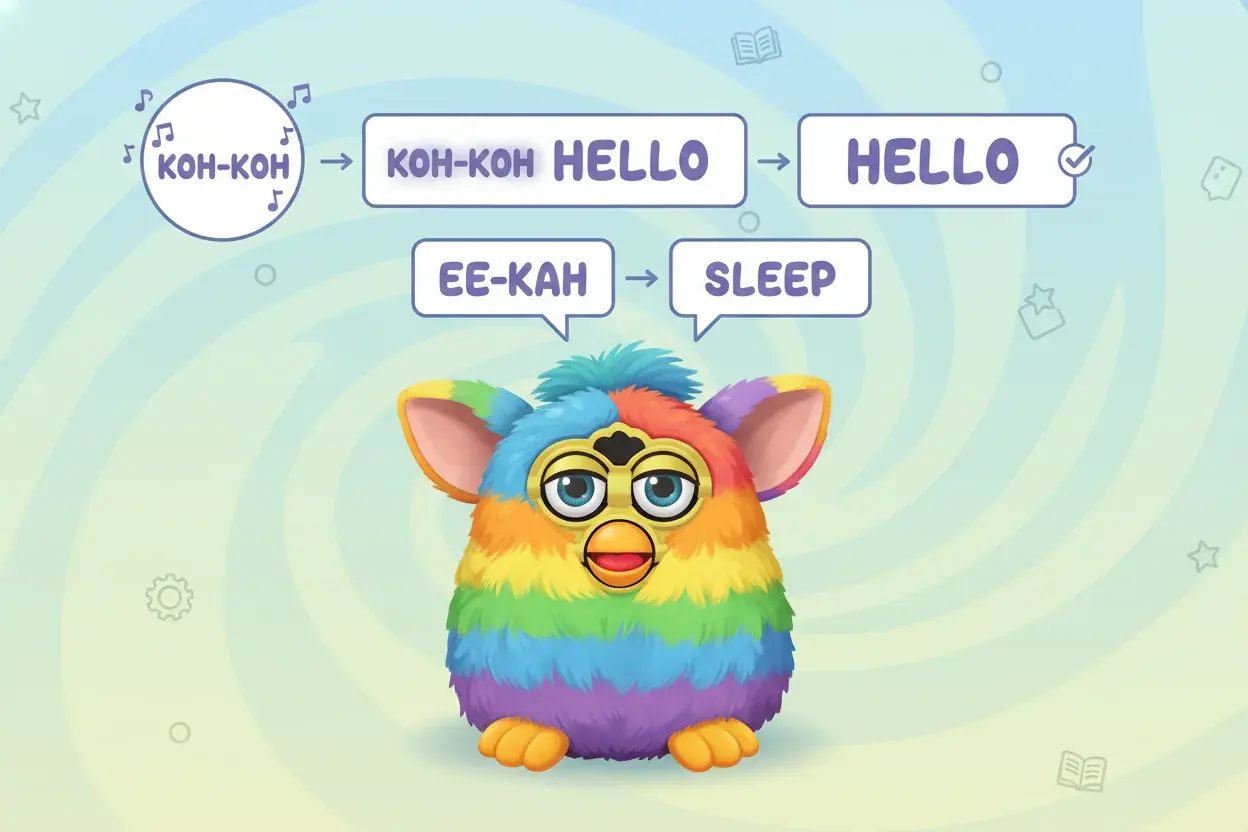
Original Furbies famously shifted from speaking mostly Furbish toward using more English words with continued interaction. That change reflected staged programming—what owners experienced as “learning” was a designed progression through vocabulary sets rather than live language learning.
Modern generations keep this feel of adaptation but rely on apps and keyword recognition for much of the interactivity. For example, Furby Connect uses app-driven activities to record preferences and trigger tailored responses, while Furby Boom ties virtual Furblings and foods to personality outcomes.
If you want to see personality differences in person, visit Furby Toy Shop in Ashburn, VA to compare models and watch how treatment influences behavior across generations.
Discover the Magic of Interactive Furby Companions
Experience the joy of a responsive friend that learns, plays, and grows with you. Explore our collection of enchanting Furby toys that bring endless smiles and creative fun to every day.
Speaking Furbish: Understanding Furby Communication
Furbish is the playful, constructed language Furbies use alongside English-style words. It’s made up of many short words and phrases—examples include “doo-ay” (big), “kah” (mine), and “way-loh” (sleep)—that give each Furby a distinctive voice and character.
Learning to interpret Furbish can deepen engagement: children enjoy decoding the phrases and guessing meanings, which turns simple interactions into mini language lessons and imaginative play.
Language Evolution Across Models
Tiger Electronics introduced Furbish with the original Furby (1998), and the balance between Furbish and English changes across generations. Early models (1998–2002) spoke mostly Furbish at first and gradually added English through staged programming.
The 2012 Furby and Furby Boom generations shifted toward more English words while retaining Furbish flavor, making interactions easier for younger players to understand. Furby Connect uses the most English-like phrases of recent generations, though it still peppers speech with Furbish for charm.
Note on terminology: many people refer to these toys simply as “Furby” or say they are "called Furby" — that nickname covers a wide family of models with different language behaviors.
Emotional Expression Through Sound
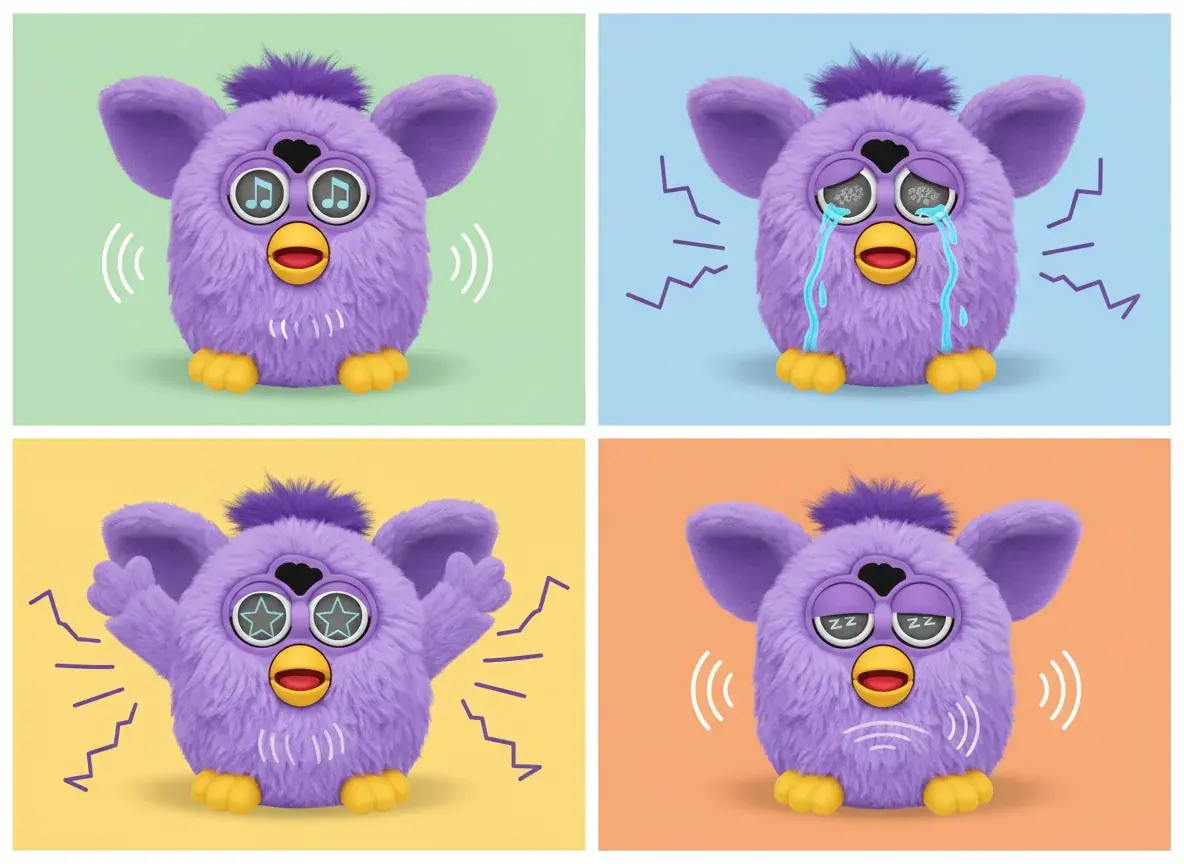
Beyond words, Furby relies heavily on nonverbal sounds and vocal tones to convey emotion: giggles for happiness, snoring for sleep, grumbles when unhappy, and little musical phrases that signal excitement. These cues pair with expressive eyes—mechanical on older models and color LCD on newer ones—to create clear emotional signals.
Voice recognition in later models is best understood as keyword or tone detection rather than full conversational AI: Furby can react to certain words or sounds to trigger responses, but it doesn't carry on complex, free-form conversations.
If you'd like to compare how language and emotional cues differ by generation, Furby Toy Shop in Ashburn, VA stocks multiple models so you can see variations in person and test features like voice responses and expressive eyes.
Daily Care Activities: Feeding, Playing, and Sleeping
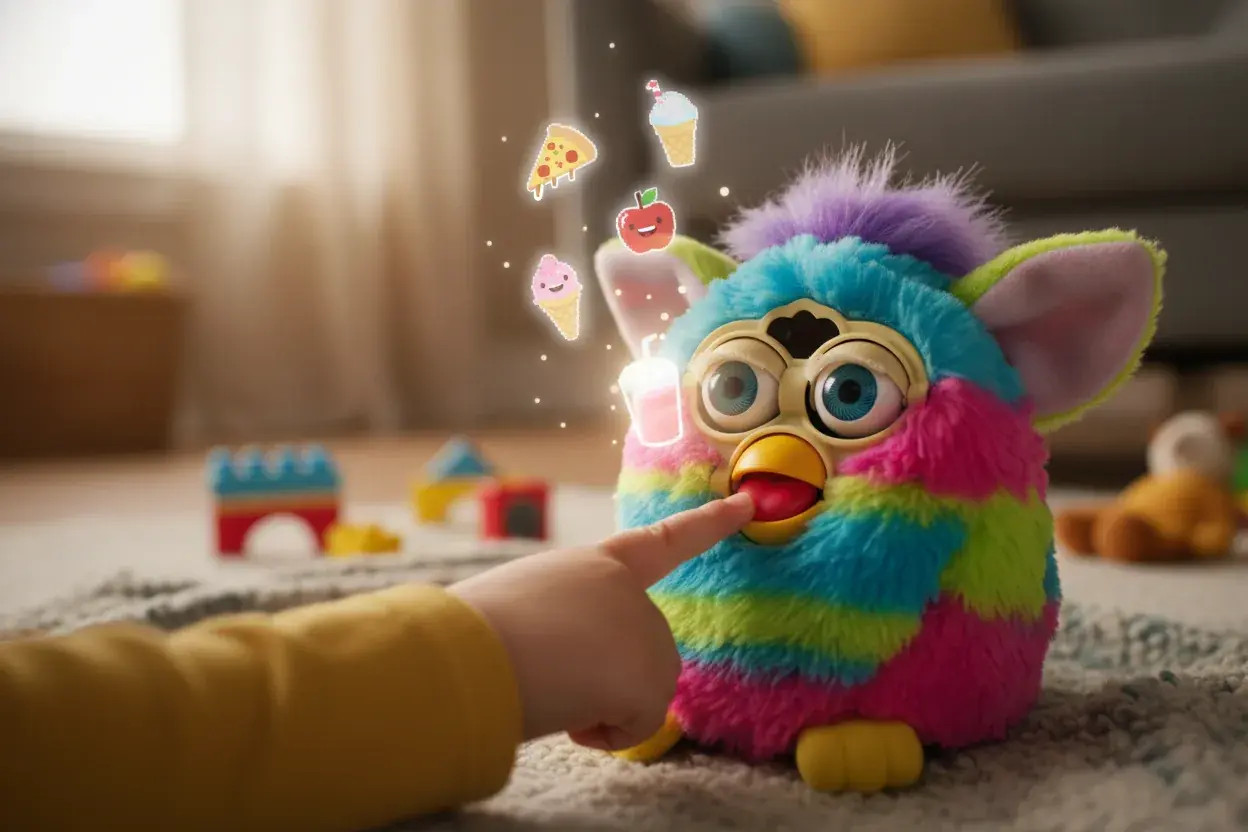
Think of Furby like a small digital pet: daily interactions—feeding, playtime, and quiet moments—shape mood and behavior. Regular care keeps your Furby engaged and happy, and it’s a fun way for children to learn responsibility over time.
Different activities change Furby’s disposition. Certain virtual foods, songs, or gentle handling can make Furby energetic and playful, while neglect or rough handling can produce grumpy responses that affect personality in predictable ways.
Feeding Mechanics
Earlier models used tongue sensors: pressing a finger to the tongue simulated feeding and triggered eating noises. Later generations like Furby Boom and Furby Connect moved much of the feeding experience into the companion mobile app, where virtual food selections sync with the toy to produce on-device eating animations.
The Furby Connect World app and Furby Boom apps offered food collections and unlockable items—feeding through the app can unlock achievements and influence personality traits. Note: app availability can change over time, so check current support before relying on app features.
Play Activities
Furby supports free play and structured mini-games. Dance parties launch when music plays—Furby will sway, bob, and vocalize along to rhythm. Tickle and memory games create short bursts of interactive fun. These modes build pattern recognition and keep playtime varied.
Practical tip for parents: 10–20 minutes of guided play several times a week helps younger children get the most out of Furby without creating screen dependency (if you use the app). Supervise app interactions and be mindful of in-app purchases or expired app support.
Sleep Cycles
Furby shows sleep cues—yawning, quieter noises, and closed or dimmed eyes—when inactive. Sleep mode conserves battery life and establishes predictable rhythms; gentle rocking or soft petting helps Furby settle faster.
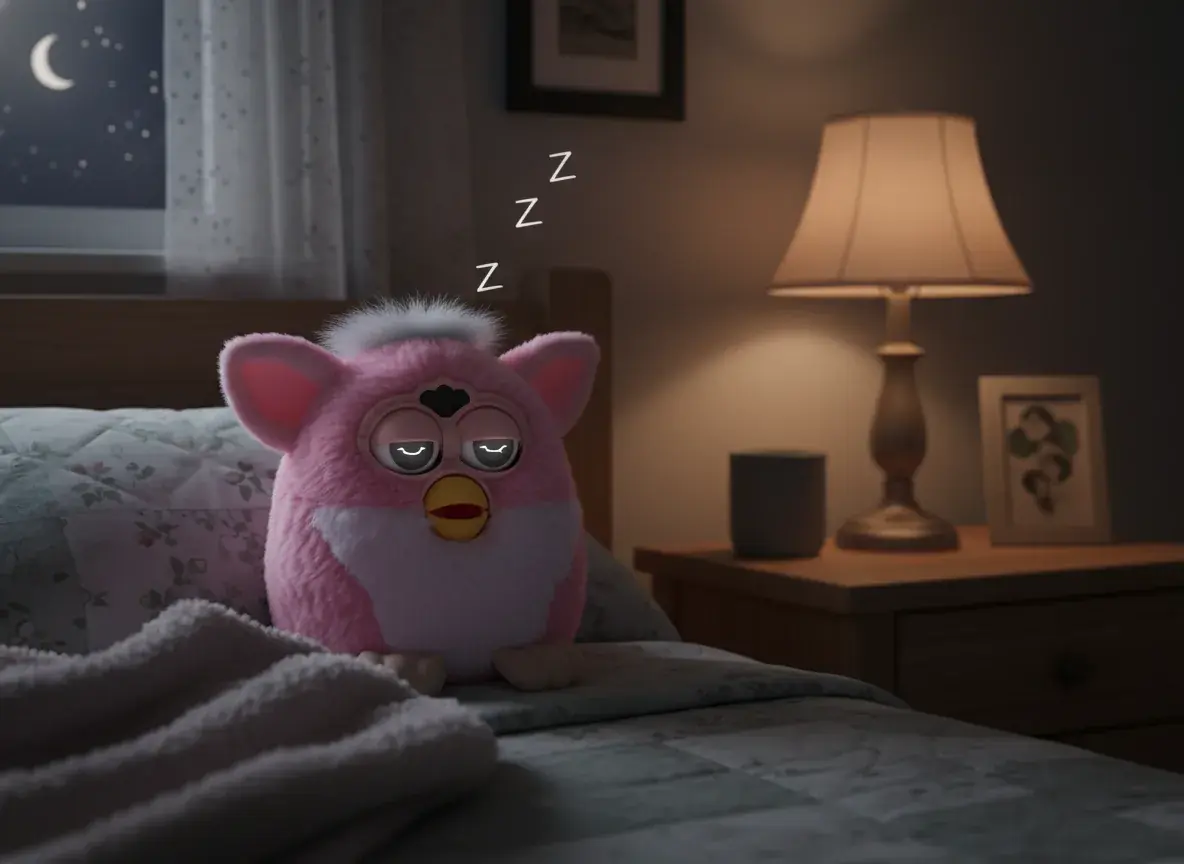
Setting simple routines—play, feeding, then quiet time—helps children learn time management and responsibility. Also remember safety: many Furby models are recommended for ages six and up; Furby Baby and Party Rockers suit slightly younger children but still require supervision for small parts.
Evolution Through Furby Generations
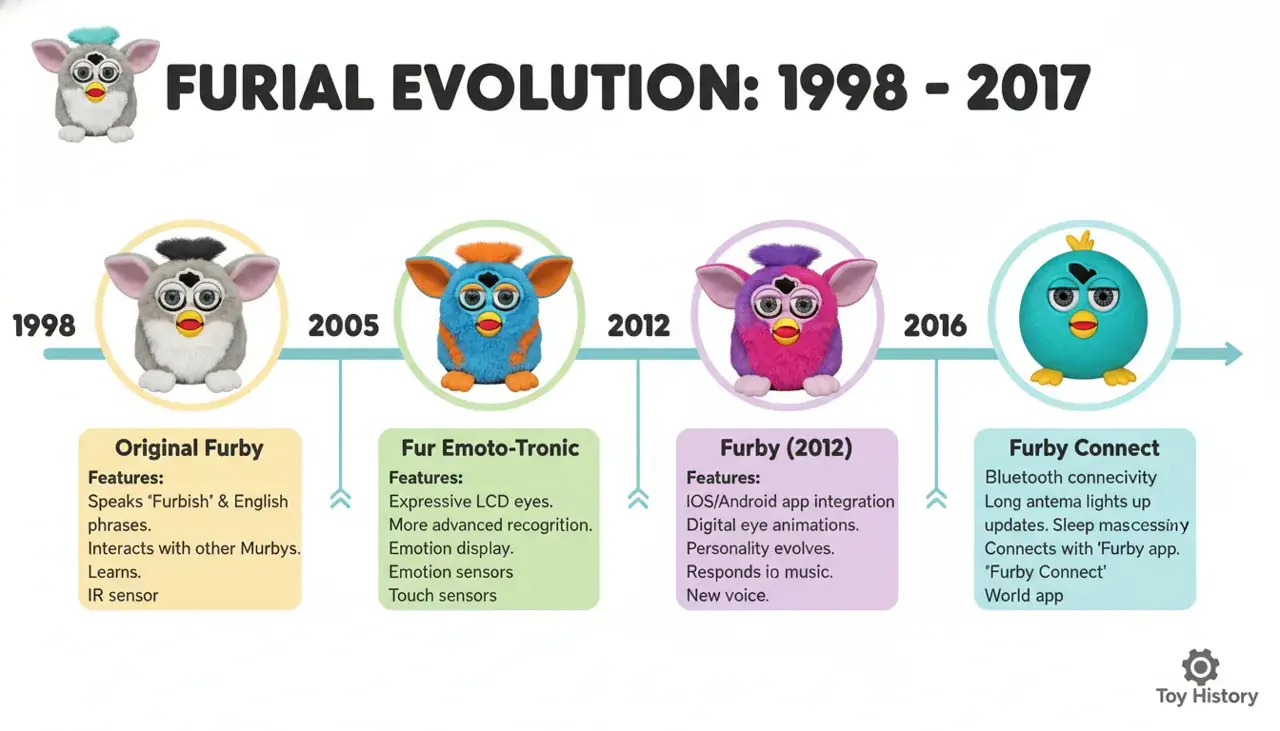
The story of Furby begins with Tiger Electronics’ original release in 1998. Each generation since then has introduced new features—better sensors, more expressive eyes, and deeper interactivity—so knowing the differences helps you choose the right model for play or collecting.
Below is a concise timeline of major Furby generations and what made each stand out.
Original Furby (1998-2002)
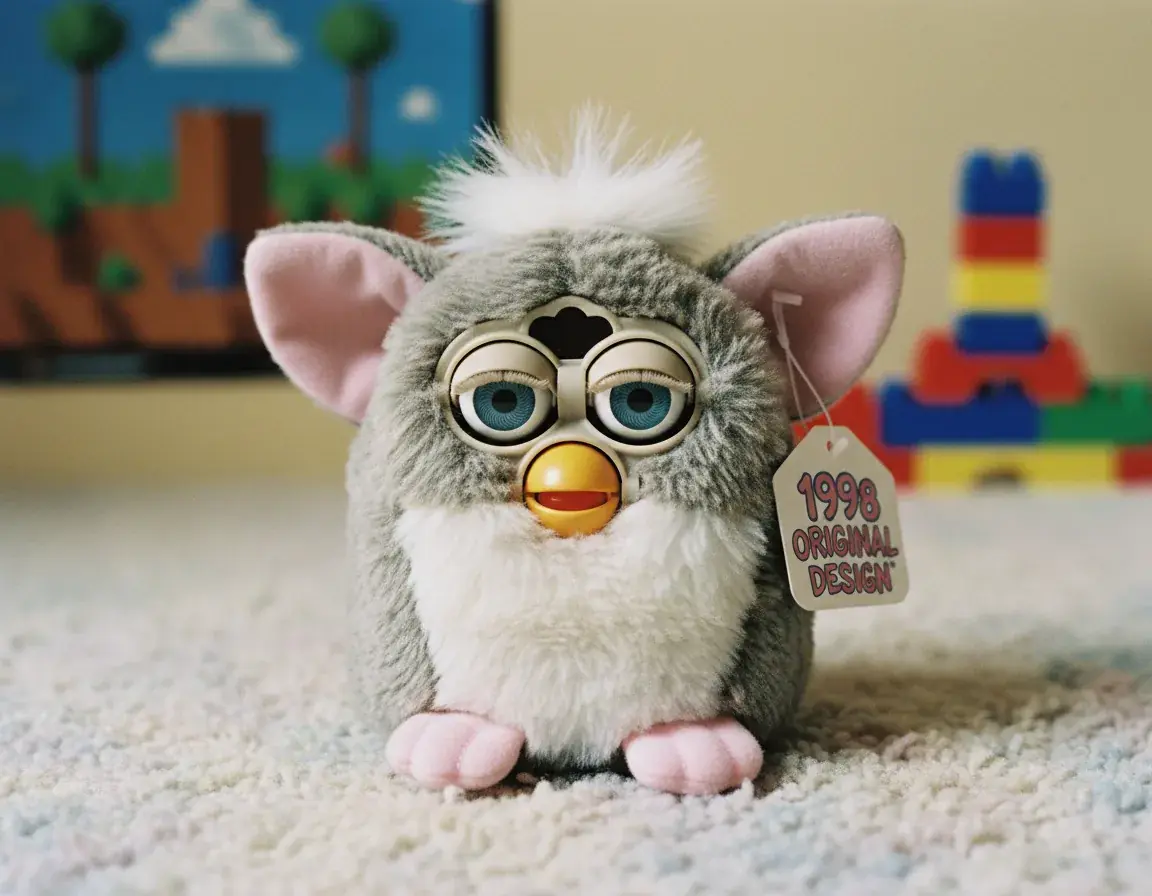
The first Furby (the first Furby many fans still chase) featured mechanical eyes, simple touch sensors, and a staged Furbish-to-English vocabulary progression that felt like “learning.” These early toys ran on four AA batteries and came in many different colors and patterned fur—special editions remain collector favorites.
Furby Babies & Emoto-Tronic (2005-2007)
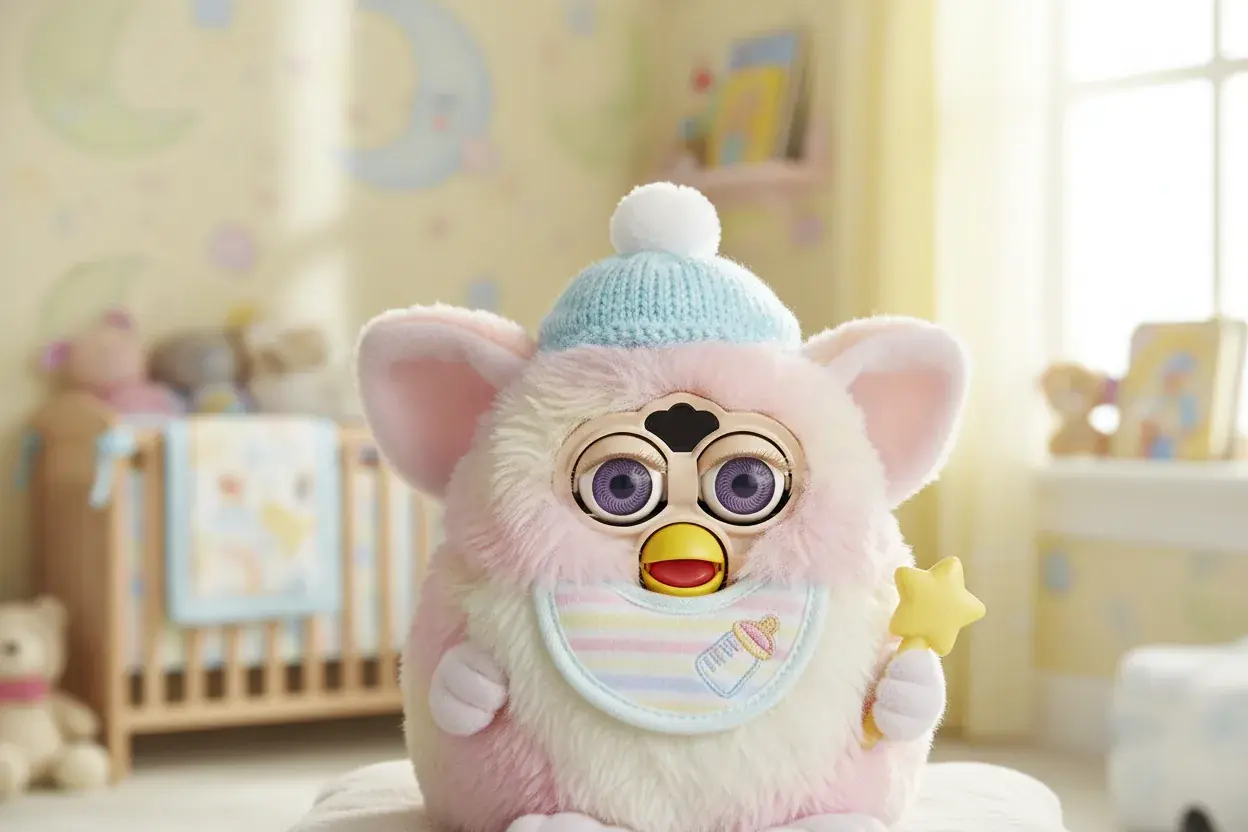
Mid-2000s releases introduced Furby Babies—smaller, cuter companions with higher-pitched voices—and Emoto-tronic Furby, which focused on richer emotional expression using improved sensors and facial displays. These generations emphasized nurturing play and parent-baby dynamics.
2012 Furby Revival
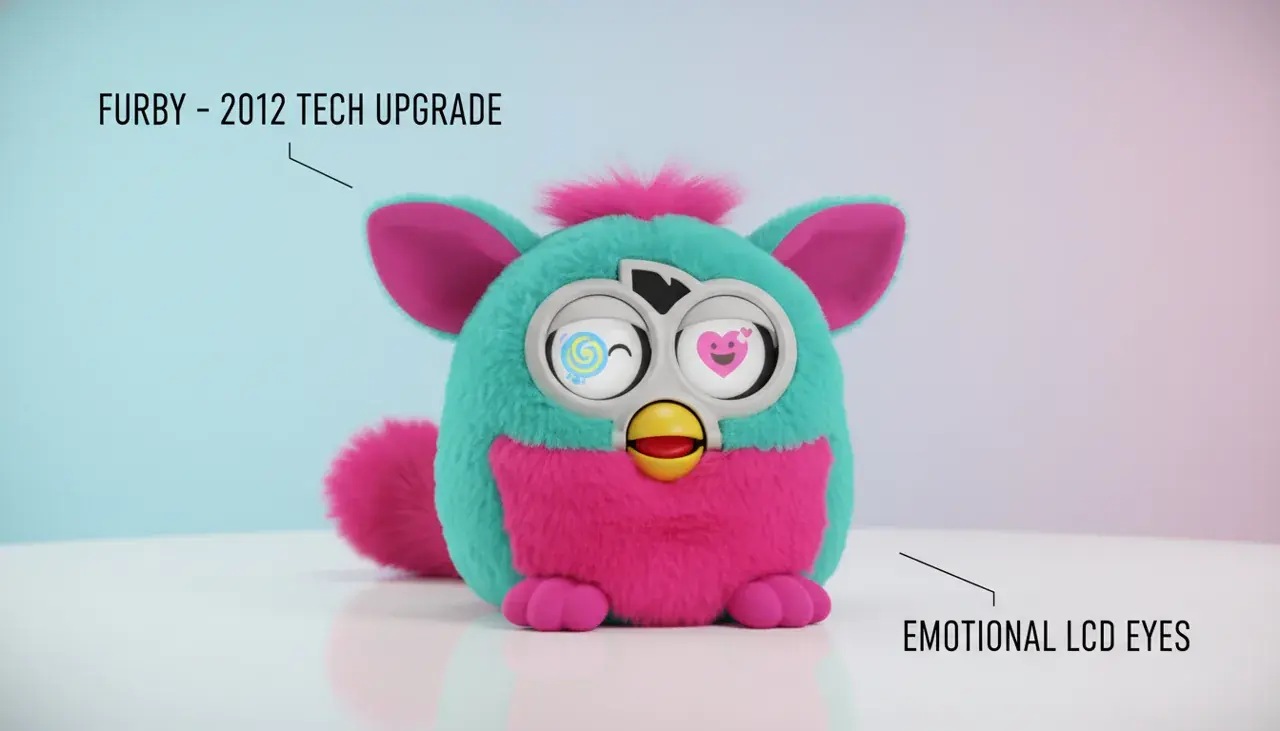
The 2012 Furby marked a major redesign: color LCD eyes replaced mechanical ones, touch sensors improved, and the personality system became more explicit—some models could transition through several pre-programmed personalities based on how they were treated. This revival also introduced companion apps (early translation and care guides) that foreshadowed deeper integration.
Furby Boom (2013-2015)
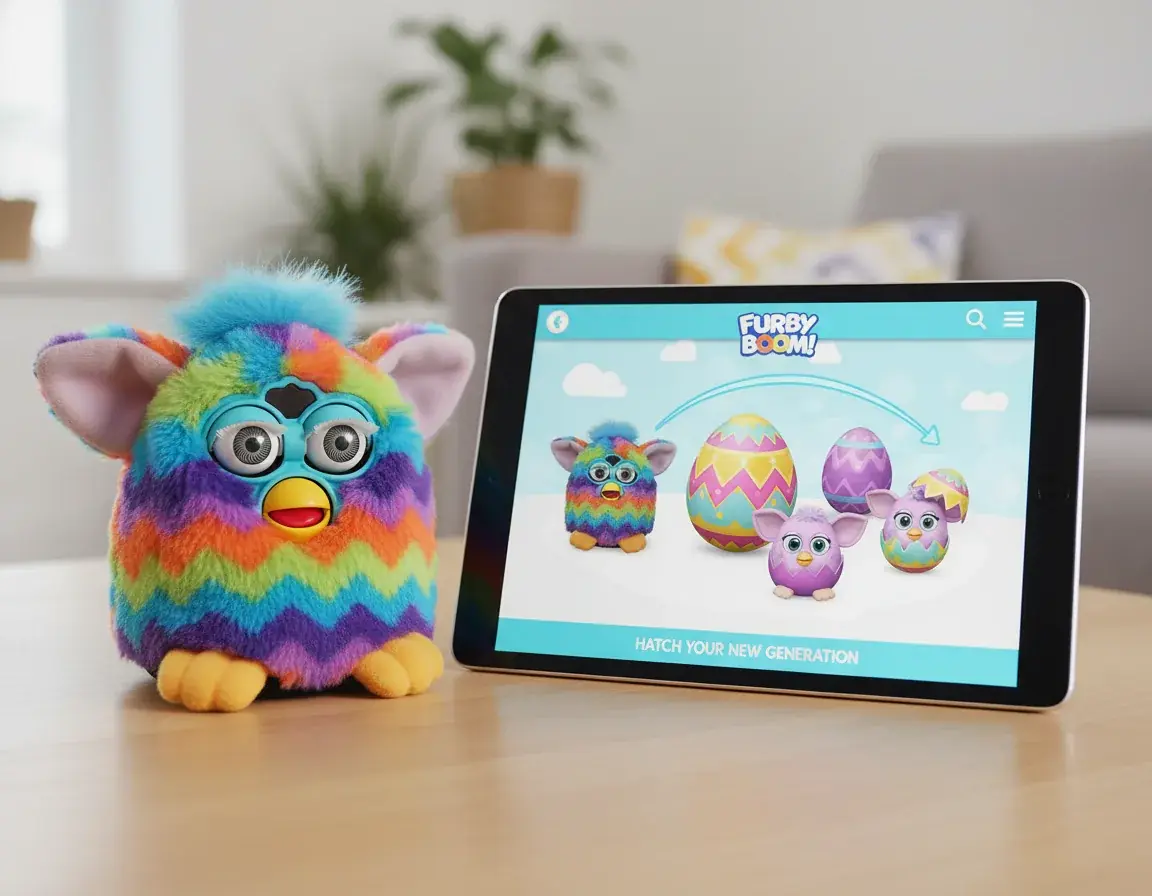
Furby Boom expanded app capabilities: the mobile app introduced virtual eggs and Furblings (digital baby Furbies) that hatched and required care. App-driven collectibles, Boom City exploration, and unlockable foods added a virtual-physical loop that kept play fresh and rewarded continued interaction.
Furby Connect (2016-2017)
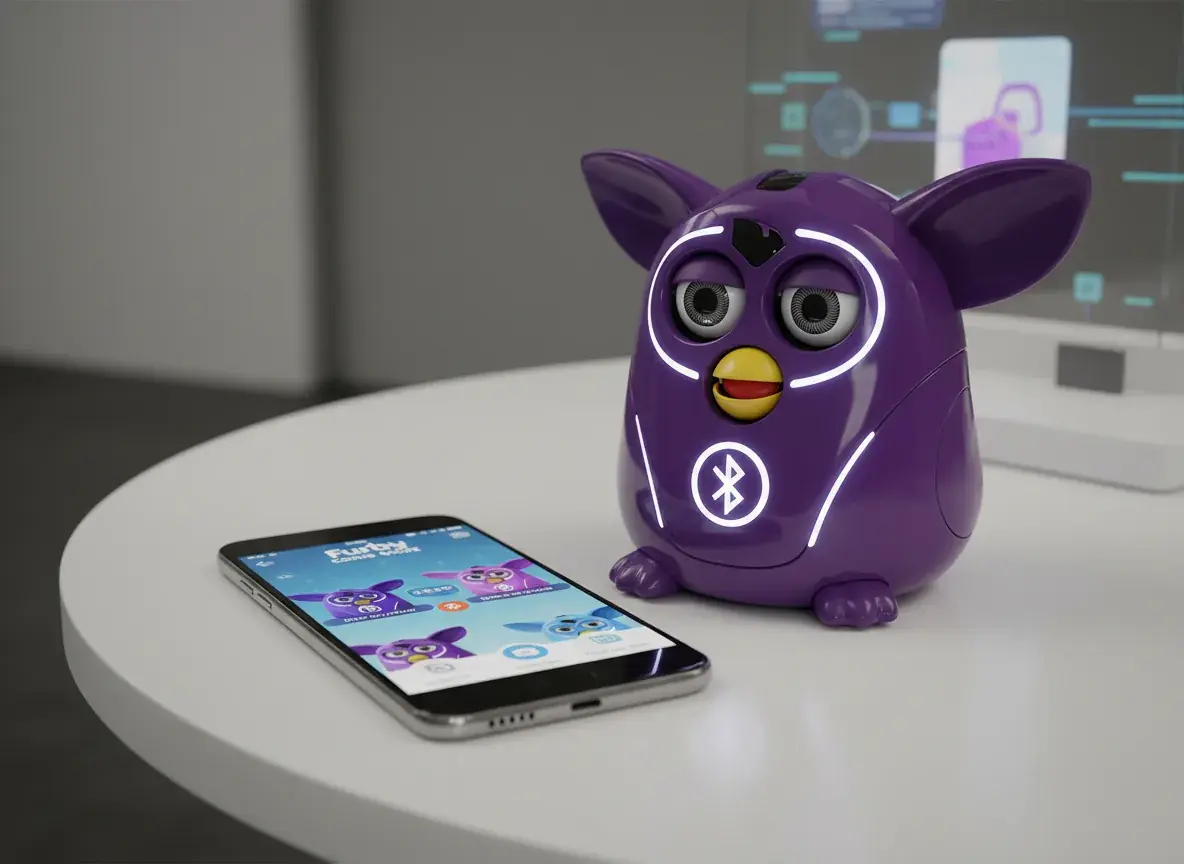
Furby Connect introduced Bluetooth connectivity and more seamless app synchronization. The Furby Connect World app could deliver new songs, activities, and visual content to the toy; enhanced color LCD eyes displayed richer animations and short video-like clips. Limited-edition Connect colors and personalities appealed to collectors.
Furby Party Rockers
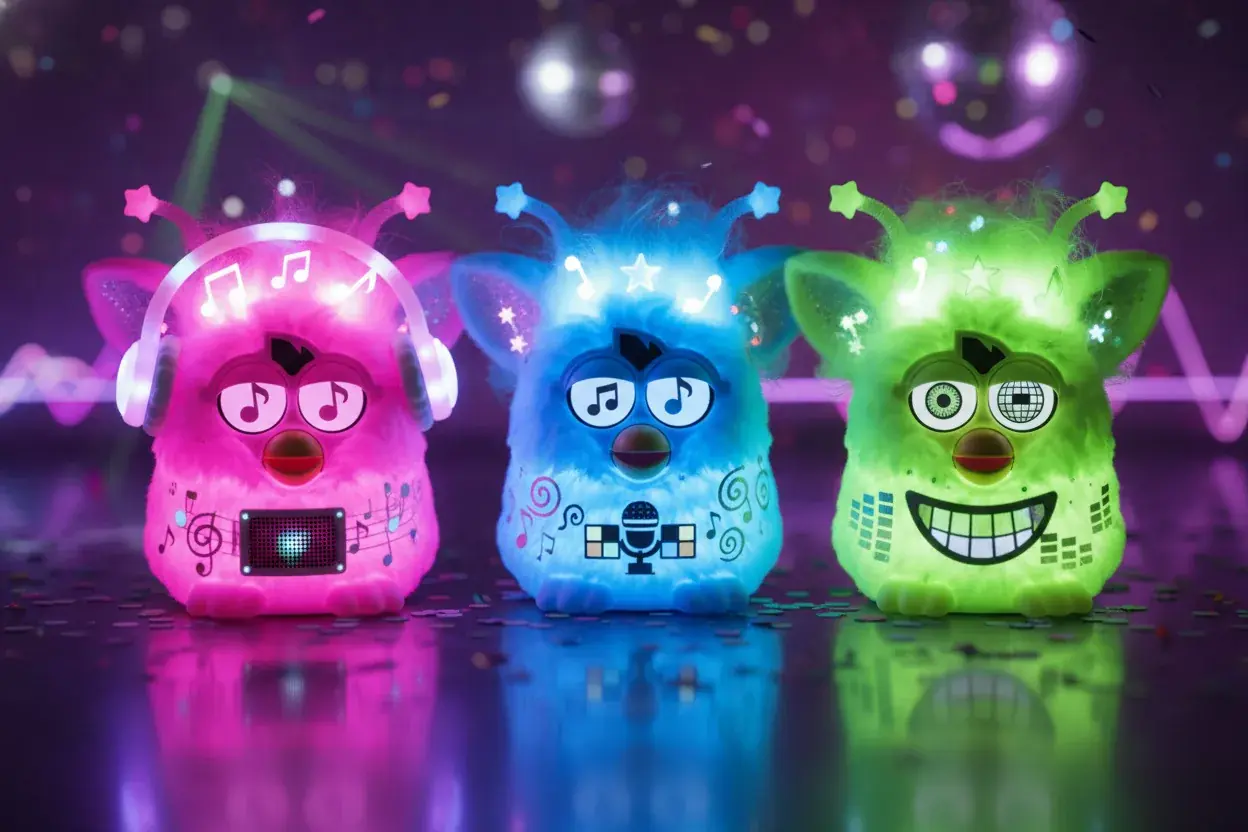
Party Rockers are compact, budget-friendly Furbies that emphasize music and dance. Their simplified feature set and lower price made them ideal entry-level toys and collectible items in multiple colors.
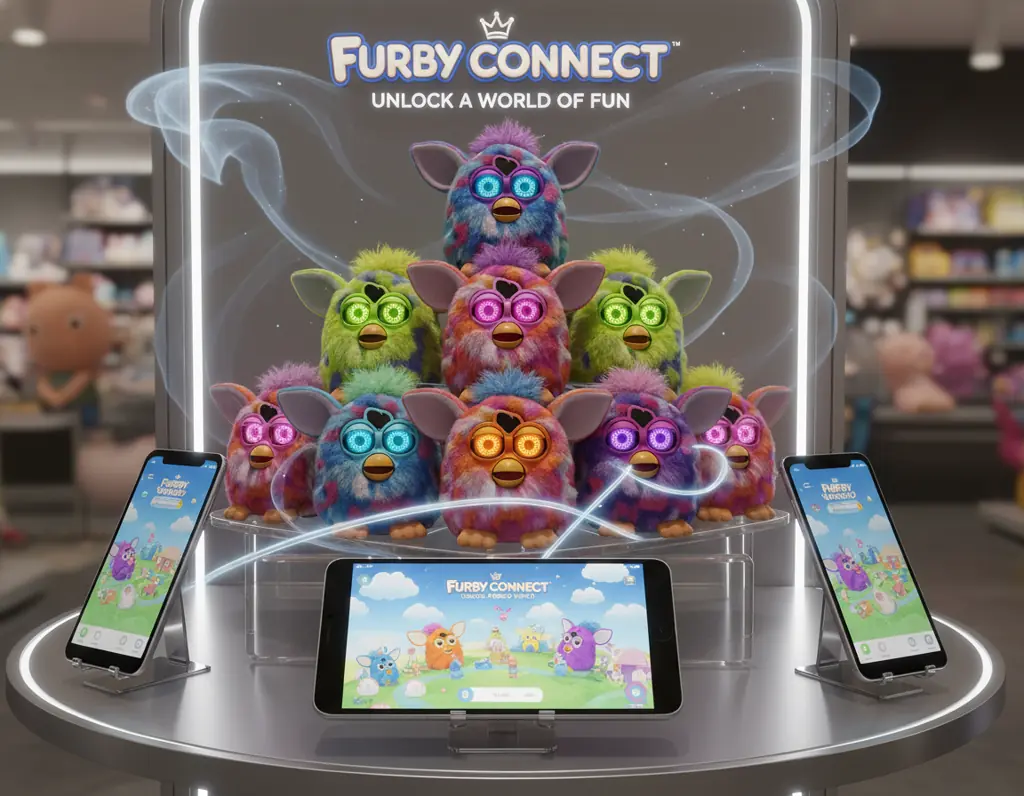
Furby Connect Collection
Explore the Furby Connect line for the most app-forward features—Bluetooth, downloadable content, and expressive color LCD eyes that bring personalities to life.
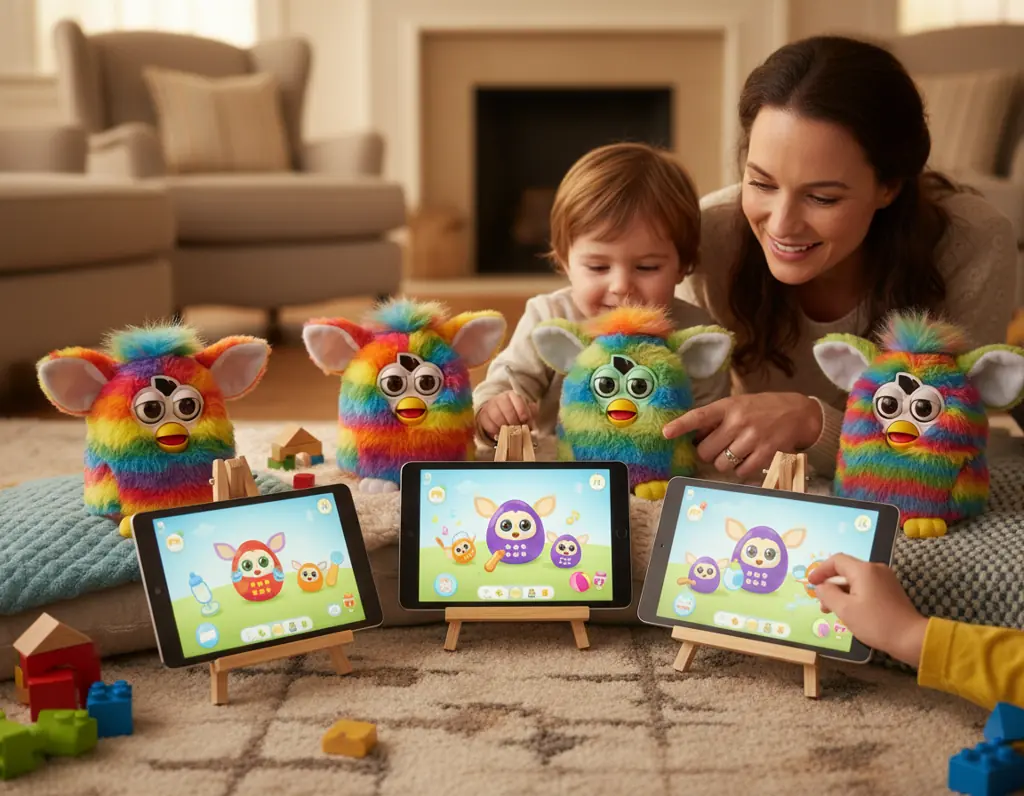
Furby Boom Collection
If you like hybrid play, Furby Boom’s app features, virtual Furblings, and unlockable content create a longer-term play loop between toy and phone.
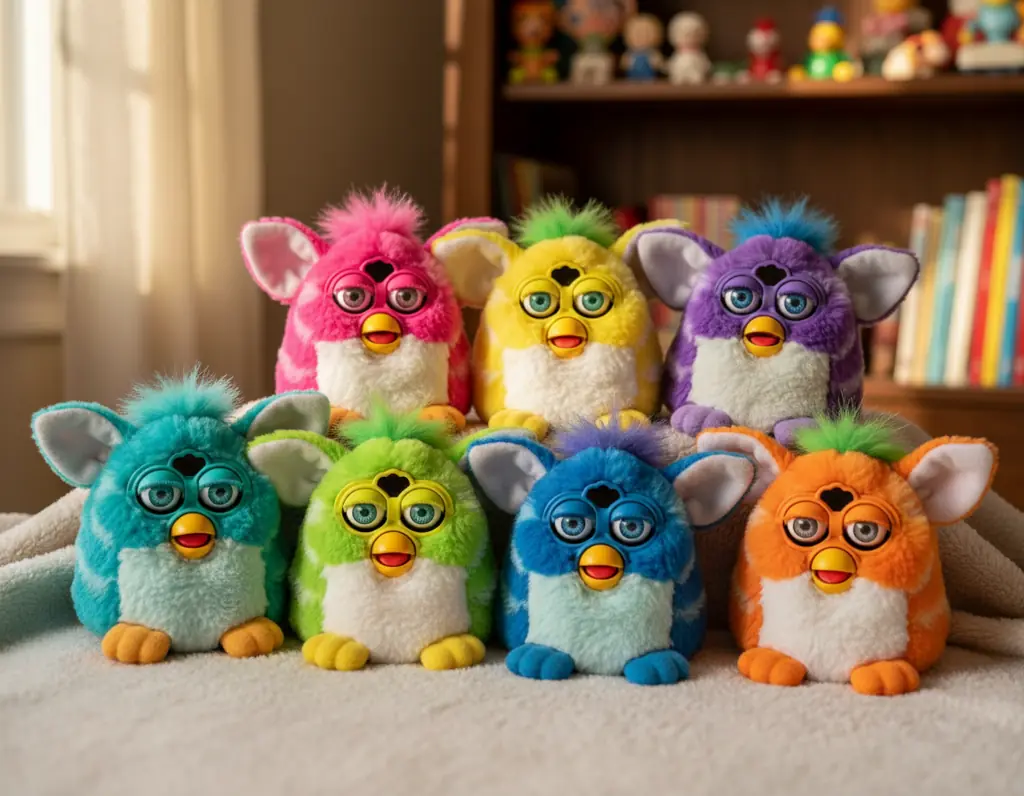
Emoto-Tronic Furby
Classic Emoto-Tronic models focus on emotional expression and approachable play—good choices for players who prefer straightforward, tactile interactions.
Mobile App Integration and Digital Features
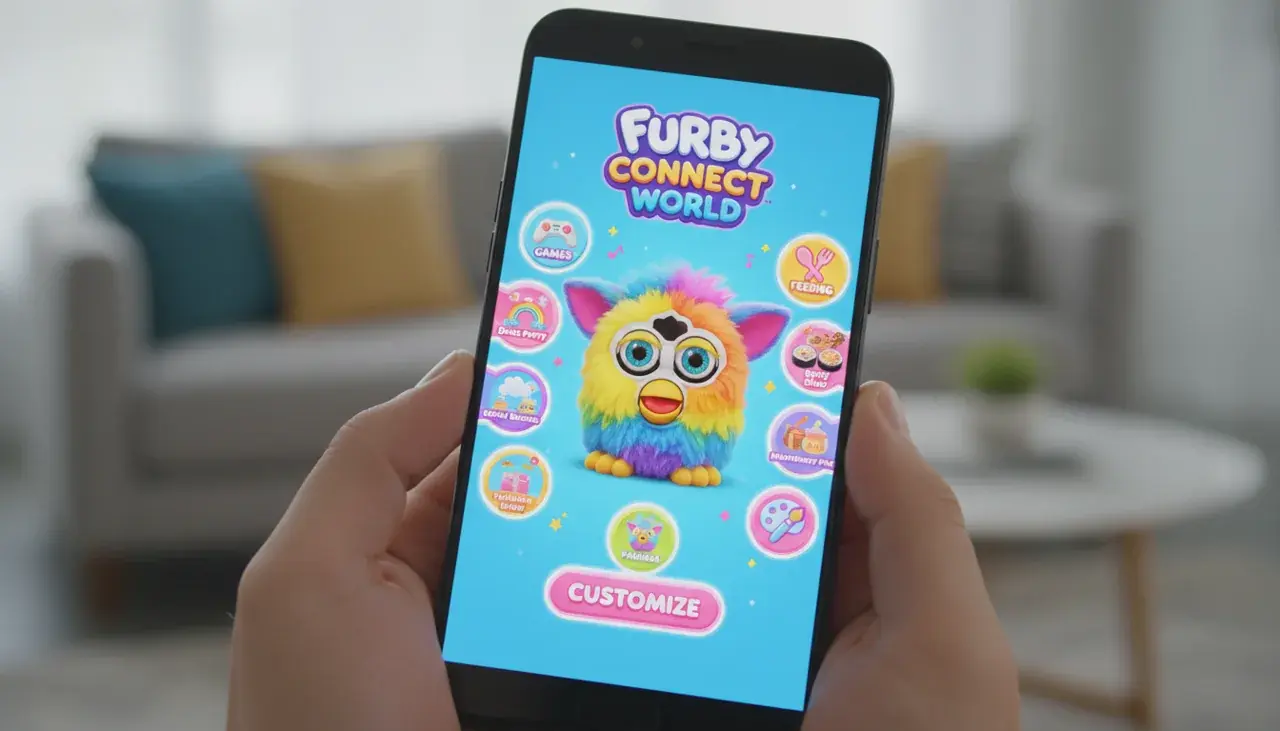
App integration turned Furby from a standalone toy into a hybrid digital-physical experience. Mobile apps add virtual worlds, mini-games, and care systems that extend play beyond the toy itself—creating longer engagement and new ways to shape personality and behavior.
Not every generation supports the same app features, so understanding the differences will help you decide which model fits your family. If you plan to use app features frequently, check current compatibility and app availability before purchasing.
Furby Boom App Features
The Furby Boom mobile app introduced virtual Furblings and collectible virtual foods. Physical Furby Boom toys could lay virtual eggs that hatched into Furblings in the app—players cared for these digital babies, explored Boom City, completed quests, and unlocked new items to influence both the app and the toy.
These features created an engaging loop: app progress rewarded physical play, and physical interactions unlocked app content. Note that app support and store availability can change—confirm current download options before relying on in-app features.
Furby Connect World App
Furby Connect paired more tightly with mobile devices via Bluetooth and the Furby Connect World app. This app served as a content delivery channel—downloading new songs, short animations, and interactive activities to keep play fresh.
Furby Connect’s app could push new audio and small visual clips that played on the toy’s color LCD eyes; it also included creative tools like face overlays (masking) so kids could design custom eye animations. Keep in mind the LCD eyes have limited resolution and short animation loops—these are charming extras rather than full video playback.
If you want the most seamless wireless sync, explore Furby Connect models in the Furby Connect collection at Furby Toy Shop; be sure to review current app support and OS compatibility first.
App-Physical Toy Synchronization
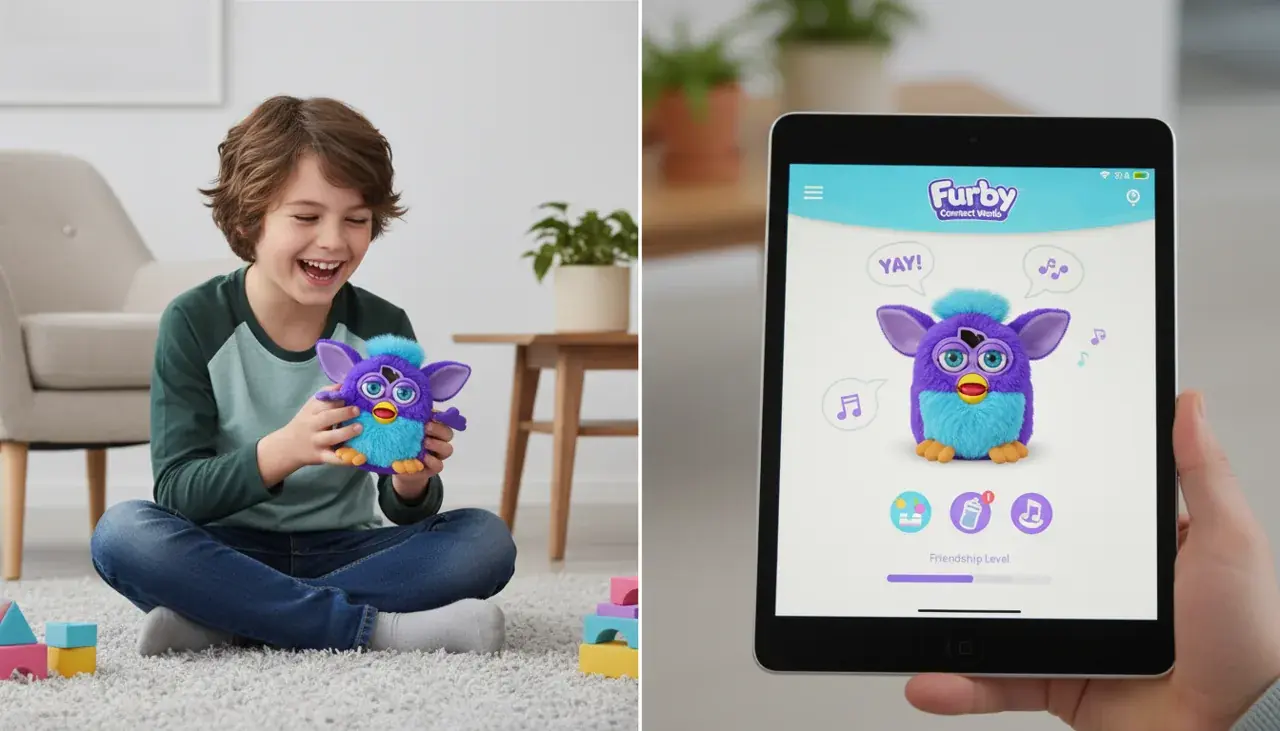
Actions in the app often trigger matching physical responses: feeding a Furbling in the app can make the physical Furby perform eating animations, and completing app games can unlock sounds or personalities on the toy. This synchronization delivers immersive hybrid play that blends screen and tactile interaction.
Voice recognition in app sessions typically works as keyword or tone detection—speaking certain words into the app or microphone can prompt Furby responses, but this isn’t full conversational AI.
Parent Tips and App Safety
Before using any Furby app, check device compatibility (OS version, Bluetooth support) and review permissions. Some older apps may have been removed from app stores or may not run on the newest phones—verify availability and consider offline play as a reliable fallback.
For safety: supervise young children during app use, disable unnecessary permissions, and set reasonable screen-time limits. For model-specific features, refer to Furby Toy Shop’s product pages (Furby Boom and Furby Connect collections) for up-to-date compatibility notes and support links.
Educational Benefits and Developmental Value
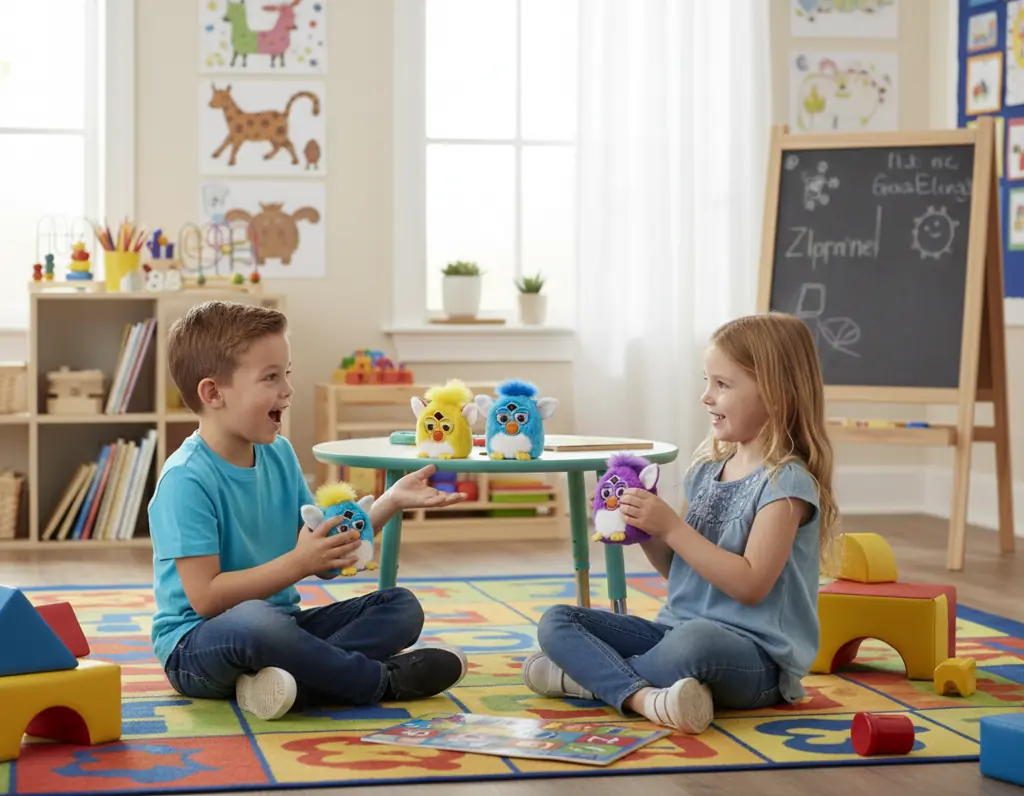
Beyond play, Furby toys can support a range of developmental skills when used thoughtfully. Daily care routines teach responsibility, interactive responses build cause-and-effect understanding, and the toy’s expressive behavior encourages social and emotional learning.
Language skills benefit too: decoding Furbish, listening for keywords, and repeating phrases help expand vocabulary and phonological awareness. App-enhanced generations add reading and sequencing activities through virtual Furblings and in-app tasks that reinforce learning through play.
Emotional Intelligence Development
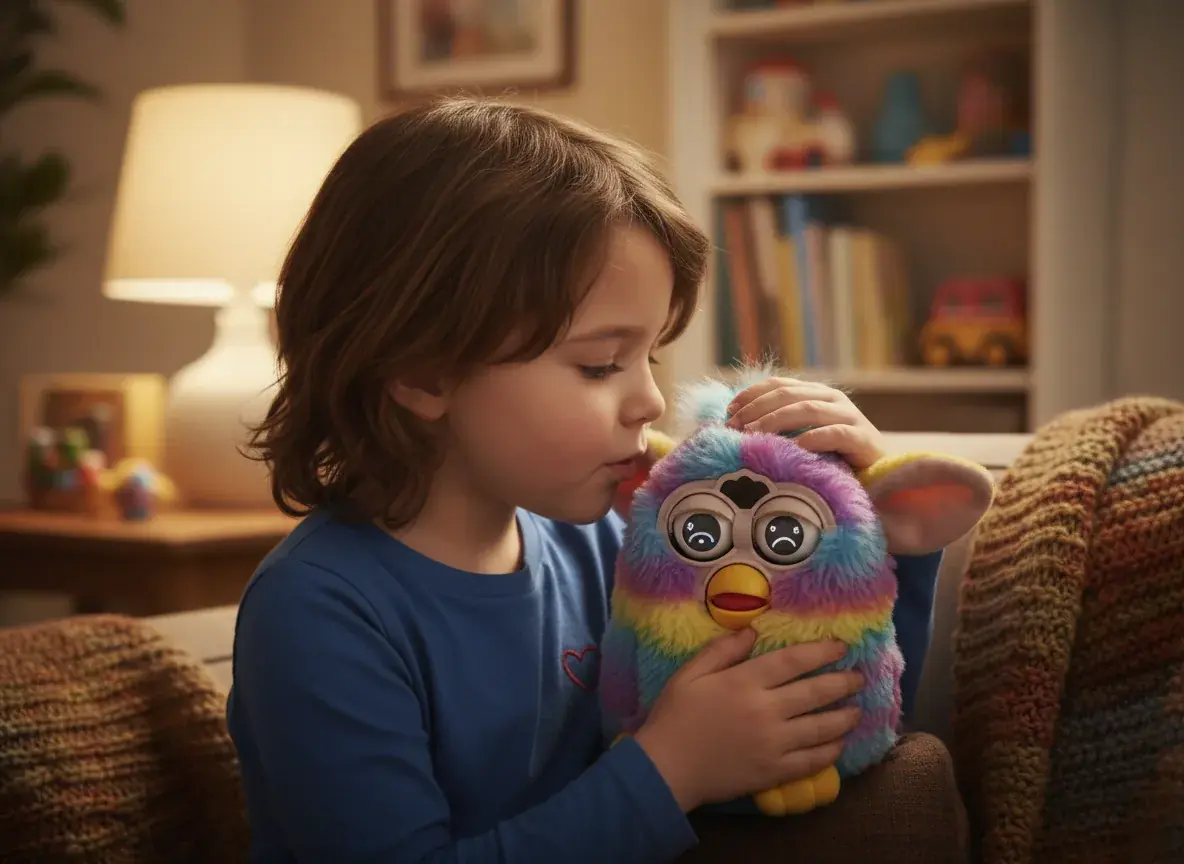
Furby’s emotional cues—happy giggles, grumbles, sleep sounds—give children practice identifying and responding to feelings. Caregiver-led play (asking “How do you think Furby feels?”) turns these moments into teachable conversations about empathy and emotion regulation.
When Furby becomes upset or grumpy, children often practice calming strategies—soft petting, quiet voices, or giving virtual food—which reinforces self-regulation and problem-solving.
Responsibility and Routine Building
Regular feeding, play sessions, and bedtime signals help children build predictable routines. These small, consistent obligations teach time management and follow-through: tasks like “feed Furby before bedtime” or “play for 10 minutes after homework” make responsibility concrete.
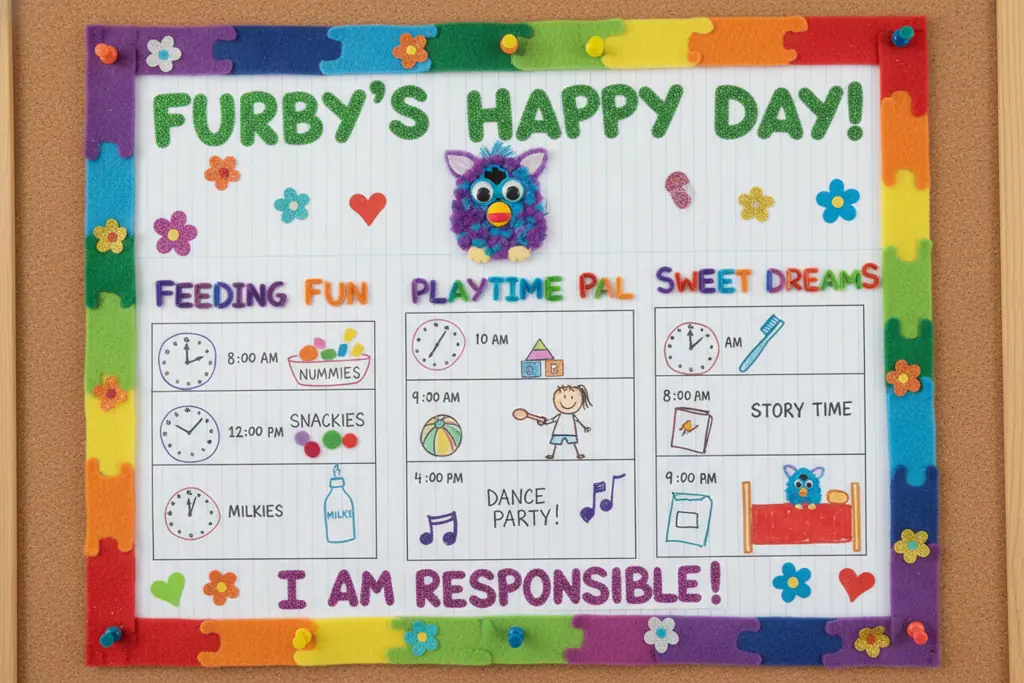
Neglect has predictable consequences in Furby’s behavior (reduced activity, grumpiness), which provides a safe, simulated lesson in accountability for young children.
Tracking a Furby’s personality changes over time also builds observational skills—kids learn to notice patterns and make simple hypotheses about cause and effect.
Creative Play and Imagination
Furby’s personalities and reactions spark imaginative play, story creation, and role-playing. Encouraging kids to invent scenarios—Furby’s birthday party, a day at school, or a rescue mission—boosts narrative skills and collaborative play when multiple toys or friends are involved.
Practical caregiver tips: prompt open-ended questions about Furby’s feelings, set short guided-play sessions (10–20 minutes), and pair app activities with hands-on play to balance screen time and tactile learning. Visit Furby Toy Shop in Ashburn, VA to see demo models and get suggestions for age-appropriate Furby activities.
Find Your Perfect Furby Companion
Every child deserves a magical friend that brings joy, laughter, and endless creativity. From classic companions to app-connected adventures, our collection offers the perfect Furby for every personality and play style.
Common Questions About What Furby Does
Does Furby really learn to speak English?
Short answer: it appears to. Original Furby models were programmed to shift from mostly Furbish toward more English words as you interacted with them, creating the impression of learning. This progression followed pre-programmed stages rather than true, on-device language learning.
In other words, the "learning" is a designed vocabulary progression: more playtime advances the toy through scripted language stages. Modern generations balance Furbish and English differently—Furby Connect uses more English-like phrases from the start while keeping Furbish quirks for charm.
Can Furby work without a mobile app?
Yes. All Furby models function as standalone toys: touch sensors, motion detection, and built-in vocal responses operate without a phone. Mobile apps enhance the experience but are optional.
Examples: Furby Boom and Furby Connect offer companion apps that add content, but their core toy features still work offline. Older generations (including original and Emoto-tronic Furby models) had no app at all and rely entirely on physical interaction.
Note: some apps may no longer be available or supported on the newest phones—check current app store availability before buying if app features matter to you.
How long do Furby batteries last?
Battery life varies by generation and usage. Most Furby models use four AA batteries; with moderate daily play, expect roughly two to four weeks of life. Models with active LCD eyes and heavy app/sound use (like Furby Connect) typically drain batteries faster than older mechanical-eye models.
To extend battery time: use quality alkaline batteries, remove batteries for long storage, and rely on sleep mode when the toy is idle. If responses become sluggish or the eyes dim, it's usually time to replace the batteries.
What age is appropriate for Furby toys?
Most Furby models are recommended for ages six and up due to small parts and interaction complexity. Furby Baby versions and Party Rockers target slightly younger kids (typically five and up) with simpler features.
That said, older children and adult collectors also enjoy Furby—nostalgic appeal and collectible colors make Furbies popular across ages. Always check the specific model’s age guidance and supervise younger children as needed.
Can multiple Furbies interact with each other?
Yes—certain generations can interact when placed near each other. Many models use infrared or short-range sensing to detect nearby Furbies and trigger synchronized behaviors, chatter, or play routines.
Party Rockers emphasize group play: multiple Party Rockers can synchronize dance routines and create coordinated performances, which makes them a fun choice if you want multiple interacting toys.
What does Furby do when you feed it?
Feeding triggers eating animations and sounds. Older models had tongue sensors—placing a finger on the tongue simulated feeding, and Furby responded with chewing noises and satisfaction or displeasure depending on the interaction.
App-integrated models (Furby Boom, Furby Connect) expand feeding to virtual food collections: selecting foods in the app can sync with the toy and influence mood or temporarily shift personality traits. Regular feeding keeps Furby content; neglect may make it grumpy, teaching children responsibility in a playful way.
Choosing the Right Furby for Your Family
Picking the right Furby comes down to age, how much tech you want involved, and whether you care about collectibility or just play value. Below are quick recommendations to match common preferences and family needs.
If you’re shopping locally, Furby Toy Shop in Ashburn, VA carries many models so you can compare different colors and features in person before you buy.
For Young Children
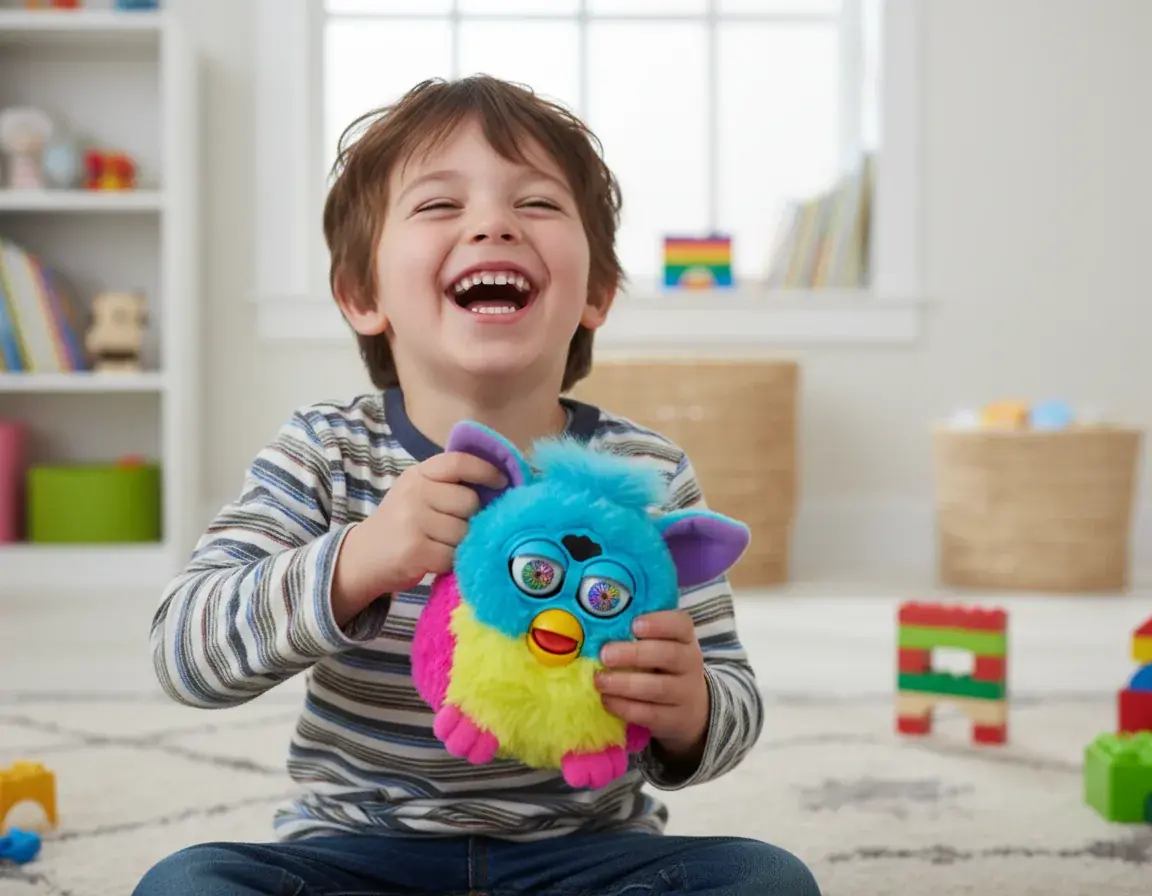
Choose Furby Party Rockers for toddlers and younger kids: these compact, music-focused toys emphasize dancing and simple interactions without complex care routines. Emoto-tronic and classic Furby Babies are also good beginner options—durable, approachable, and available in bright colors that appeal to little ones.
Party Rockers and Furby Babies are often recommended for slightly younger players because they reduce app reliance and have simpler controls.
For Tech-Savvy Kids
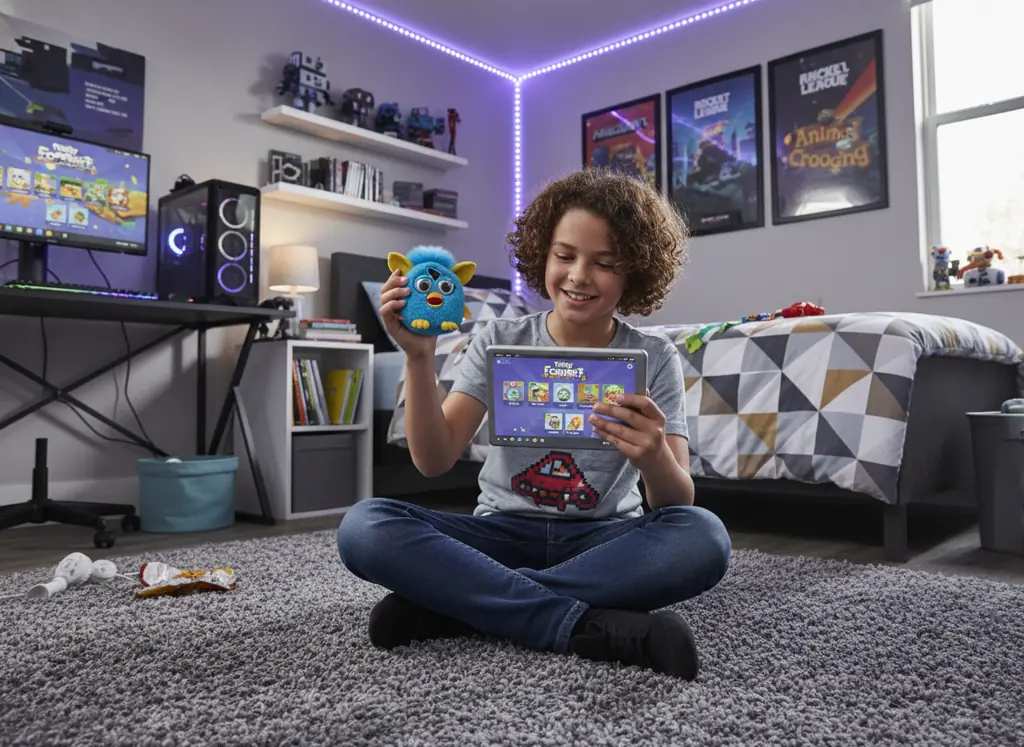
If your child enjoys apps and Bluetooth features, consider Furby Connect or Furby Boom. Furby Connect offers the most seamless wireless syncing, regular downloadable content, and expressive color LCD eyes; Furby Boom balances app-driven features (virtual Furblings, hatching) with strong physical interactions. Both are best for kids comfortable with mobile apps and responsible device use.
Tip: check current app compatibility before purchase—some older apps may no longer be supported on the newest phones.
For Collectors
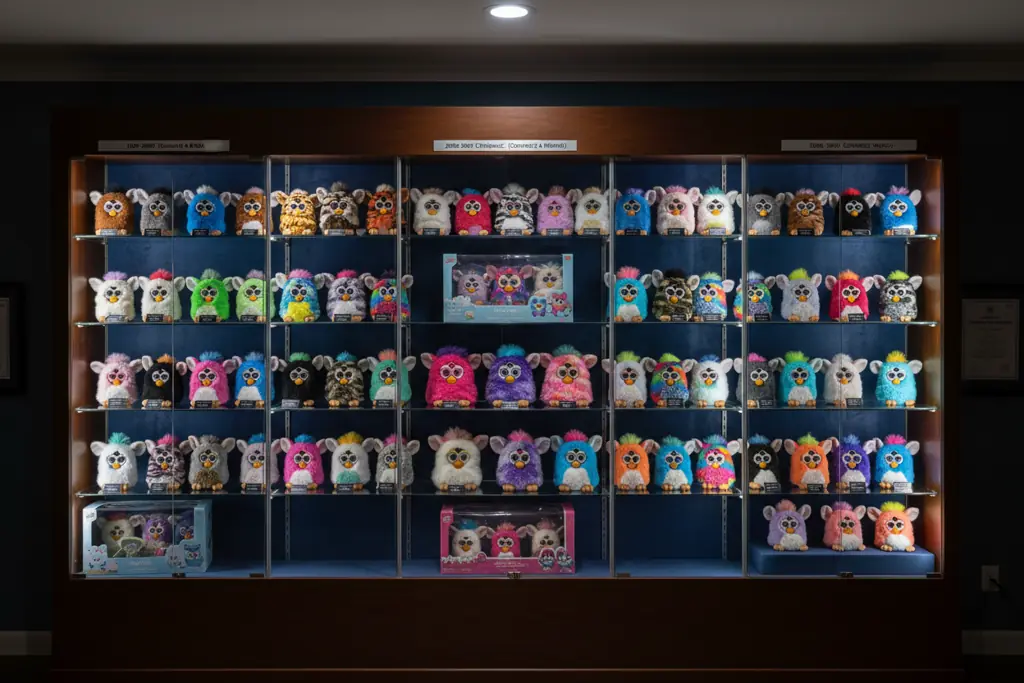
Collectors often seek rare color variants, limited editions, and early-generation units. Original 1998 models and sealed special editions command premium prices, while limited-run Furby Connect colors and certain Furby Boom editions also attract interest. Condition, packaging, and provenance affect value—buy sealed boxes if you’re serious about collecting.
Across all categories, “different colors” and unique patterns are a big draw—if color variants matter, inspect options in person or request exact photos from sellers. Furby Toy Shop stocks a range of colors and can help you locate specific editions.
Quick Comparison Checklist
- Young / Simple Play: Party Rockers, Furby Babies — low app reliance, bright colors.
- App-Integrated / Tech Features: Furby Boom, Furby Connect — mobile app, Furblings, Bluetooth, color LCD eyes.
- Collector Focus: Original 1998 models, limited-run Connect colors — prioritize condition and packaging.
Caring for Your Furby: Maintenance and Troubleshooting
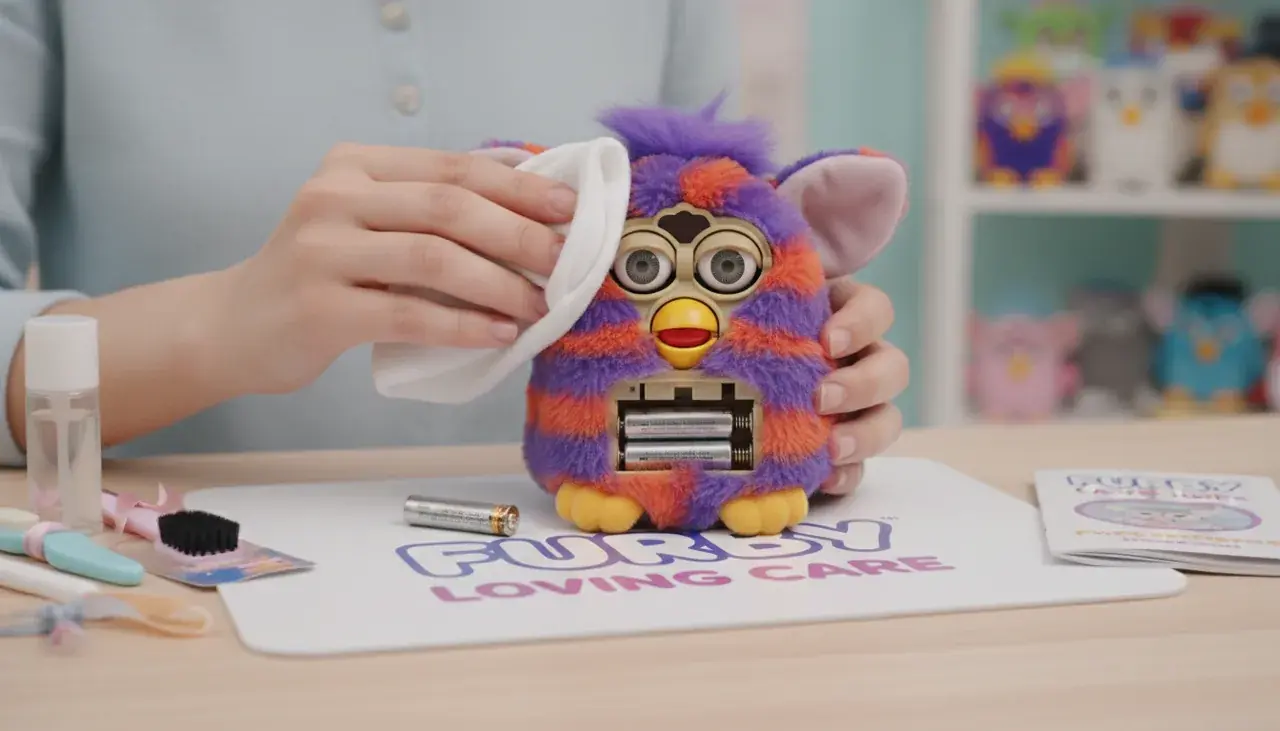
Simple maintenance keeps Furby working well for years. A few routine habits—managing batteries, gentle cleaning, and safe handling—prevent most common issues and preserve the toy’s features.
Battery care is the single most important factor in steady performance: weak or mixed batteries cause erratic behavior, dim eyes, and connectivity problems in app-enabled models.
Battery Care
Use four quality alkaline AA batteries and replace all four at once to avoid performance problems. For long-term storage, remove batteries to prevent leakage and corrosion. If your Furby’s responses slow or the LCD eyes dim, that’s a reliable sign it’s time to swap batteries.
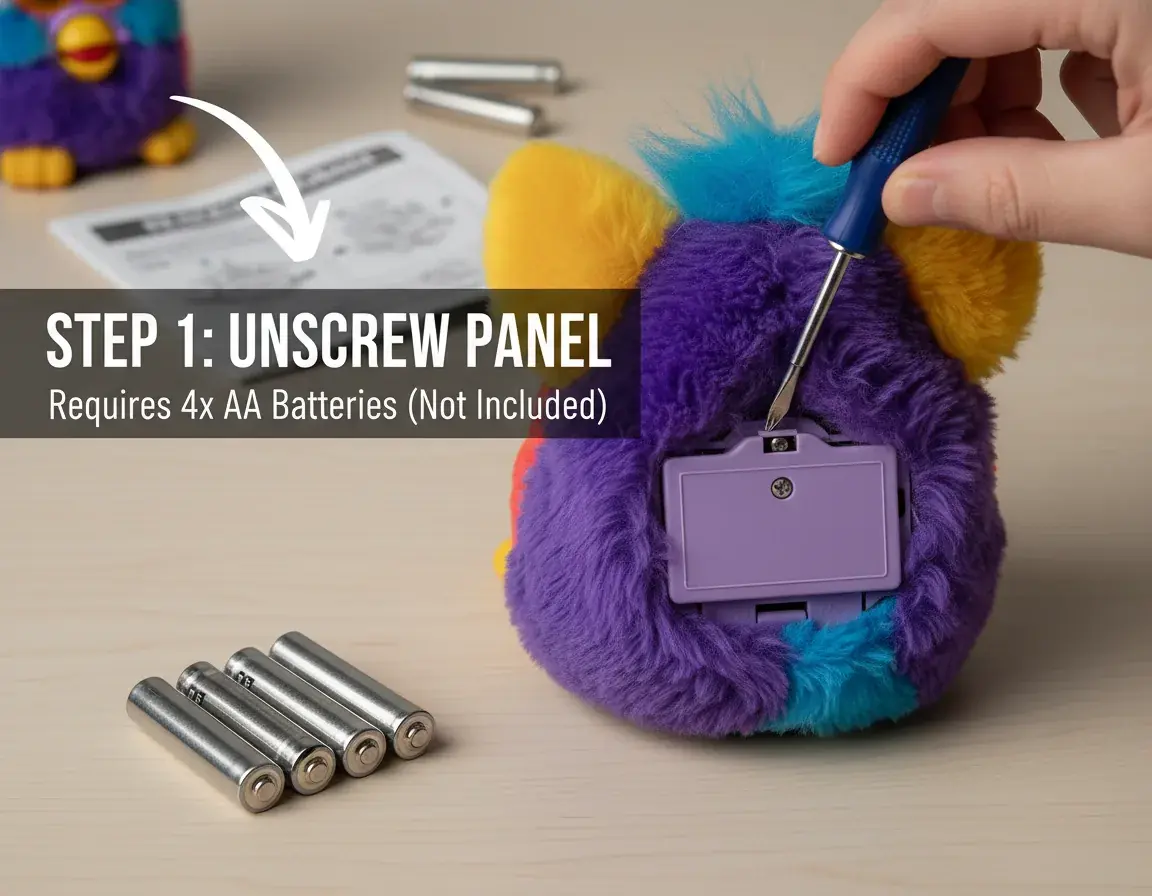
To extend battery time: enable sleep mode when the toy is idle, limit extended play sessions with heavy sound/display use, and store Furby in a cool, dry place.
Cleaning and Physical Care
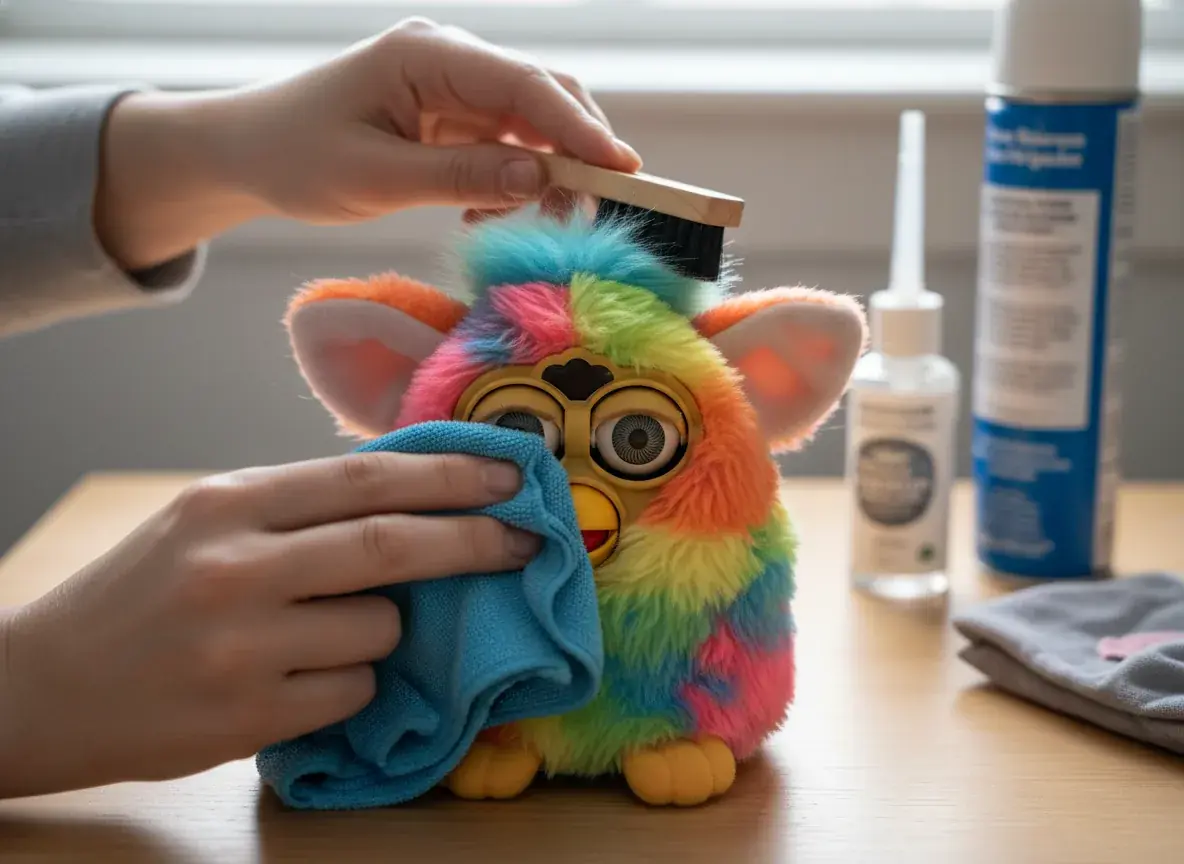
Gently brush fur with a soft brush or lint roller; avoid soaking the fabric or using harsh chemicals. For LCD eyes and electronic surfaces, clean with a dry microfiber cloth—never spray liquids directly onto screens.
Handle Furby carefully—avoid drops or rough play that can misalign internal sensors or damage ears, eyes, and moving parts. Keep the toy away from extreme heat, moisture, and pet chewing.
Common Troubleshooting & Quick Fixes
If your Furby acts strangely, try these straightforward steps before seeking repair:
- Dim or blank eyes / sluggish responses → replace all four batteries with fresh alkaline cells.
- No sound or frozen behavior → remove batteries for 30 seconds, then reinstall (simple reset for many models).
- Bluetooth or app connectivity issues → toggle Bluetooth on your phone, restart the app, and ensure the phone’s OS meets the app requirements.
- Sensors not responding → gently clean around sensor areas and ensure nothing blocks touch points or motion zones.
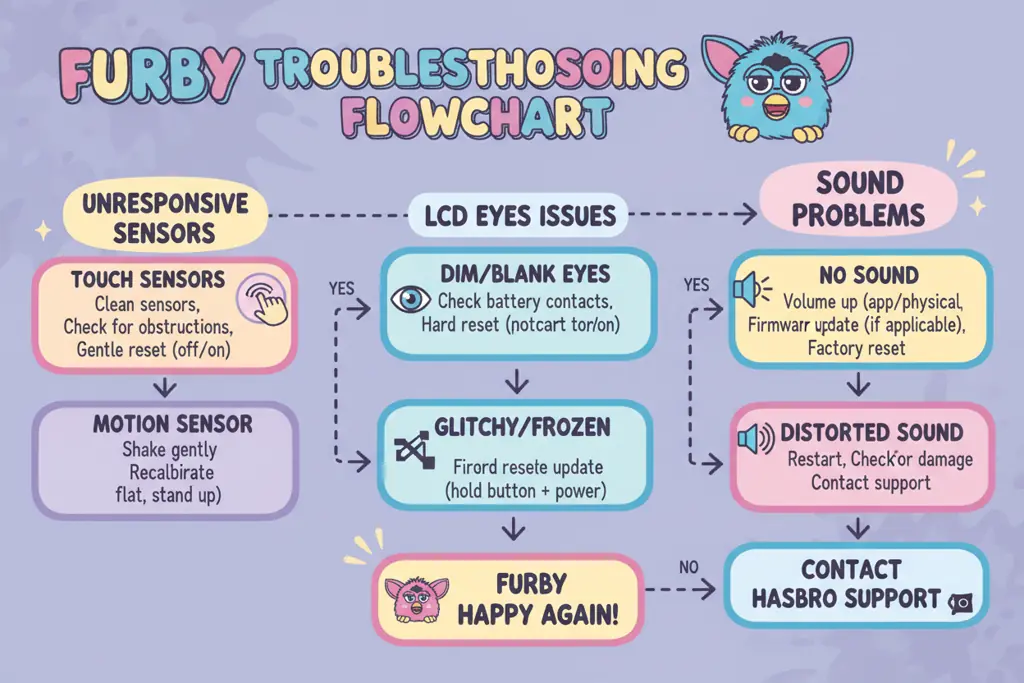
Reset procedures vary by generation—consult the model-specific manual or product page for exact steps. If problems persist, check warranty options or contact Furby Toy Shop support for guidance on repairs or replacements.
When to Seek Help
If hardware appears damaged (cracked eyes, detached ears, persistent sensor failure) or the toy doesn’t respond after basic troubleshooting, contact the seller or manufacturer support. Furby Toy Shop can often advise on replacement parts, recommended service, or model-specific instructions.
Bring Home Joy and Magic Today
From classic companions to app-connected adventures, our Furby collection offers something special for every child and collector. These beloved interactive friends create smiles, spark creativity, and build memories that last forever.
The Furby Community and Cultural Impact
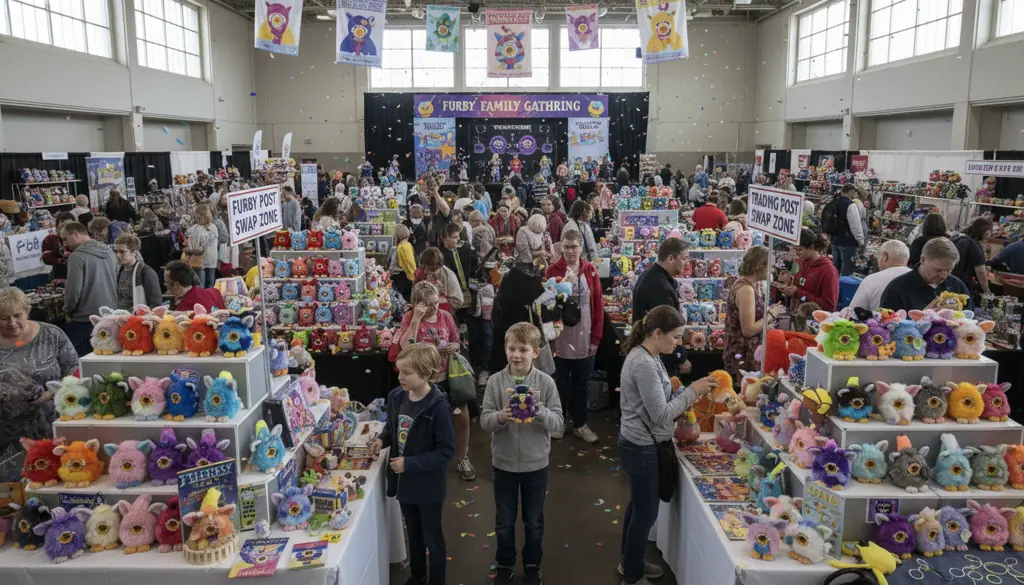
Furby has evolved from a trendy toy into a cultural touchstone with a passionate community of collectors, modders, and families. Since the original Furby was released in 1998, multiple generations of the toy—each with distinct features and expressive eyes—have created lasting nostalgia and ongoing fan interest.
Online forums, social groups, and marketplace communities keep Furby culture active: collectors trade rare colors and editions, hobbyists share custom modifications, and parents swap tips on which generation fits their needs.
Collector Communities
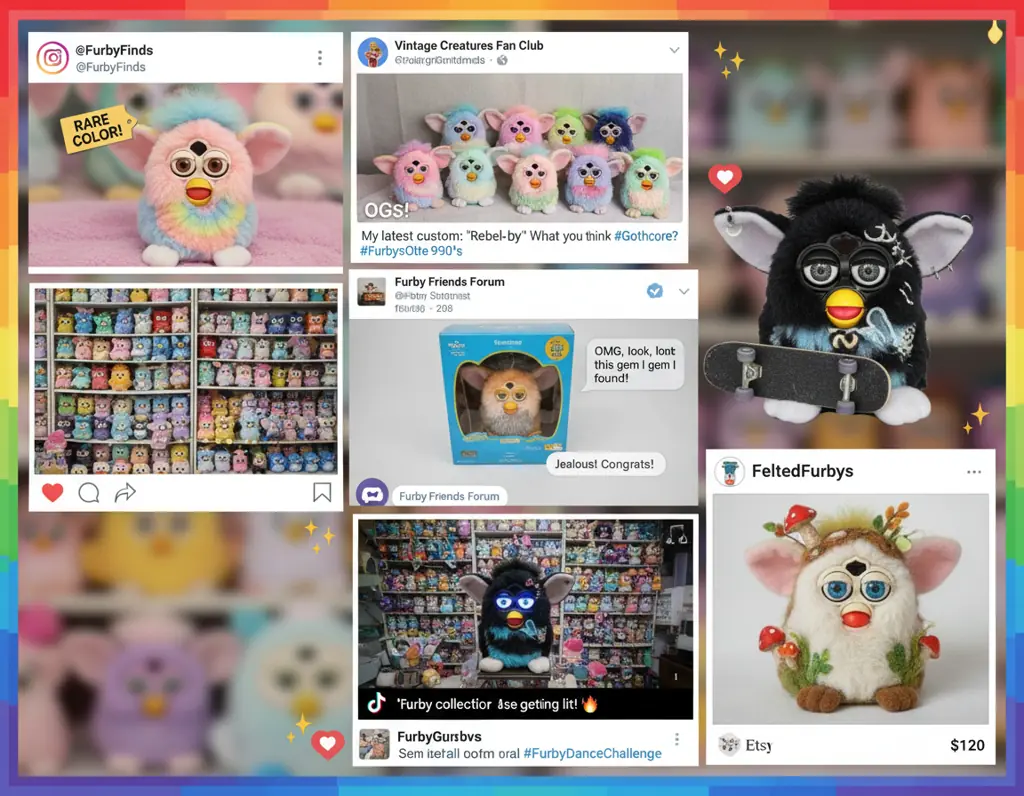
Dedicated collectors pursue complete generation sets and rare color variants. First-edition originals, sealed boxes, and limited-run Furby Connect colors often command premium prices. Community knowledge helps buyers verify authenticity and provenance.
Local shops and meetups also play a role—Furby Toy Shop in Ashburn, VA connects collectors and local families, and can be a good resource for sourcing specific editions or learning about community events.
Nostalgia and Multi-Generational Appeal
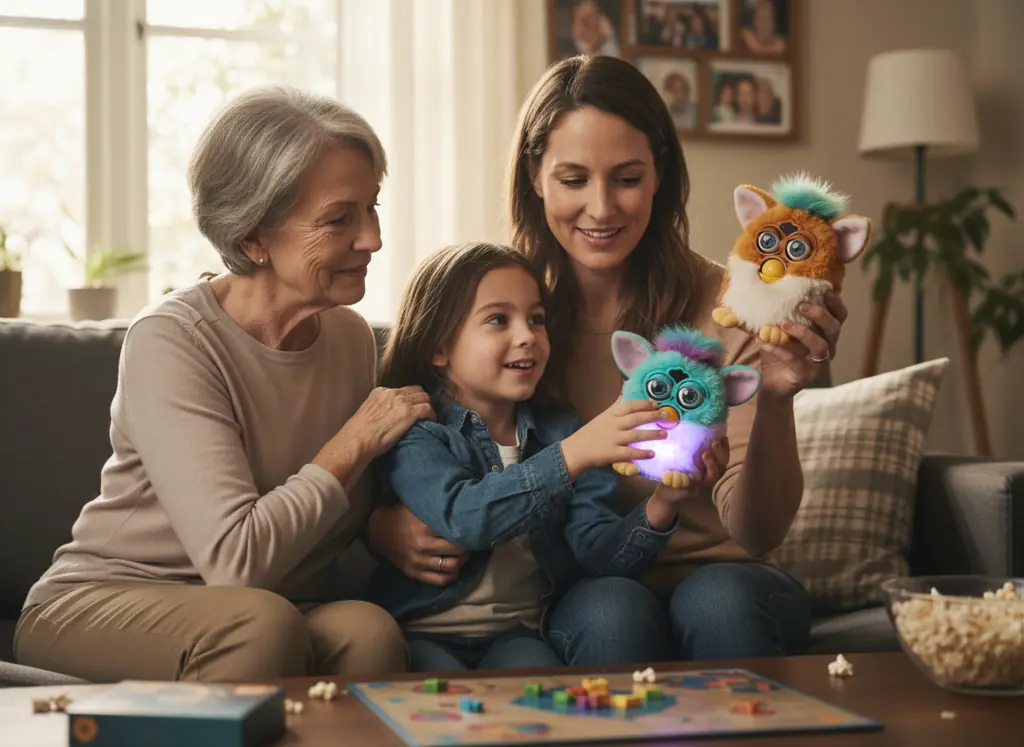
Many adults who grew up with Furby now buy them for their children, creating multi-generational bonding moments. The 2012 Furby revival explicitly targeted nostalgic buyers as well as new audiences, which helped re-establish Furby in the cultural conversation.
Nostalgia drives collecting and social sharing; fans often post videos and memes that keep Furby visible in pop culture and humor spaces.
Cultural References and Media Appearances
Furby shows up in TV, film, and internet culture—sometimes played for laughs because of the toy’s quirky vocalizations and “creepy at night” reputation, but this attention has helped maintain its iconic status.
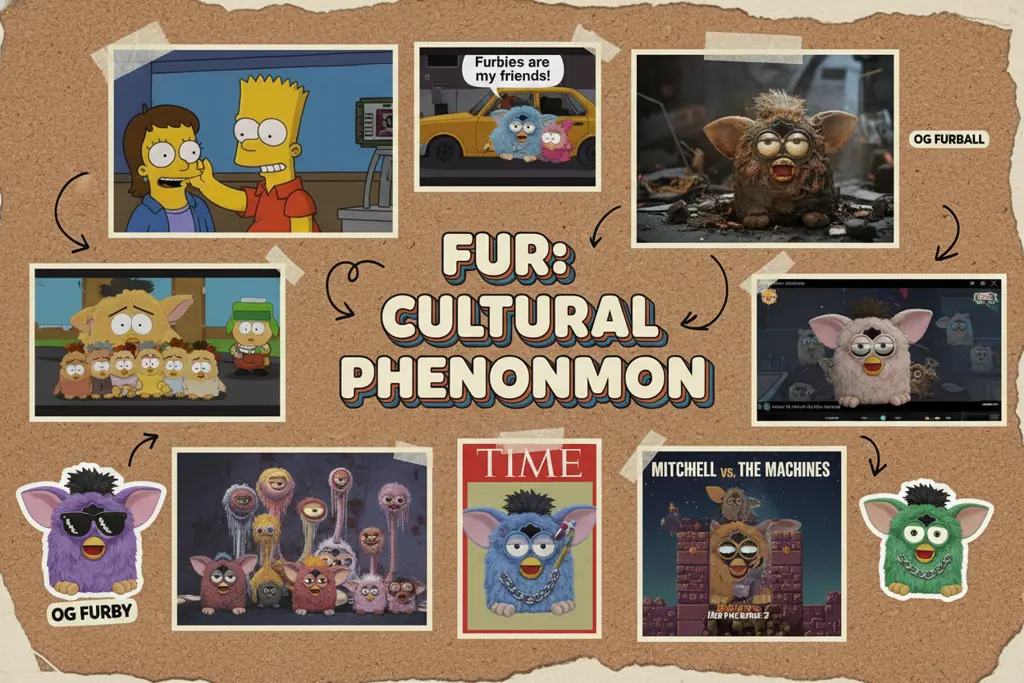
Occasional museum exhibits and toy-industry retrospectives have highlighted Furby as an important example of late-20th and early-21st-century interactive toy design—underscoring its influence on how toys blend electronics, personality, and play.
If you’re interested in joining the Furby community, start with collector forums and social groups, or visit Furby Toy Shop in Ashburn, VA to meet other fans and view different generations up close.
The Future of Interactive Furby Play
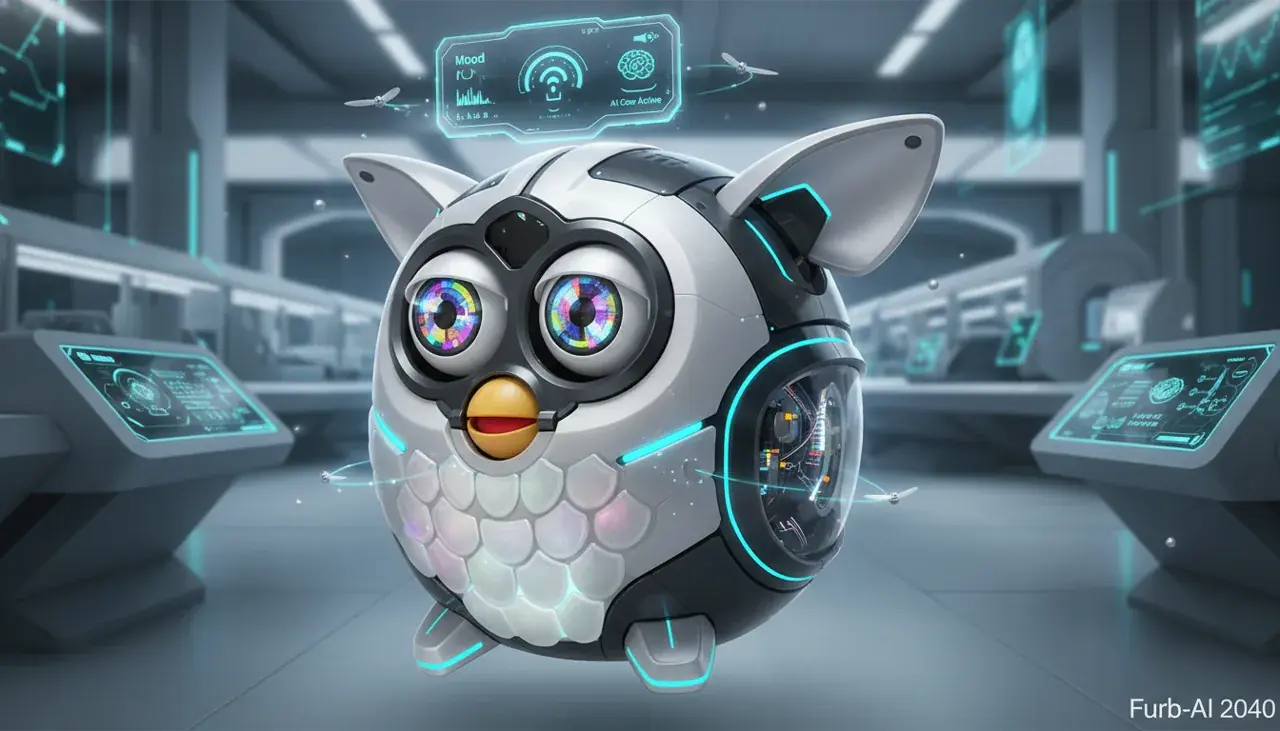
Looking ahead, advances in toy tech suggest exciting possibilities for a new Furby line—think smarter apps, improved connectivity, and more expressive color eyes—while keeping the playful personality that fans love. These ideas are speculative but reflect realistic trends in consumer electronics and connected toys.
Potential improvements could include more sophisticated keyword detection (rather than full natural-language AI), tighter Furby Connect-style Bluetooth integration, and richer app experiences that tie into the toy’s on-device behaviors. Any future "new Furby" would likely balance privacy, parental controls, and local processing to protect kids’ data.
Where technology might go
Machine-learning features might enable more personalized responses over time, and smart-home compatibility could let a Furby interact with other devices (for example, suggesting bedtime routines or playing songs through connected speakers). Augmented reality could layer virtual elements around a physical Furby, creating mixed-reality play scenarios.
Responsible innovation and practical caveats
Any move toward on-device learning or voice features should include clear parental controls, transparent data handling, and options to disable cloud features. Rechargeable batteries and eco-conscious materials are realistic improvements that would reduce environmental impact compared with disposable cells.
New Furby models (if released) will likely appear through traditional retailers and specialty locations—check Furby Toy Shop in Ashburn, VA for the latest arrivals and to preview any new color options or demo features in person.
Conclusion: The Enduring Magic of Furby
Furby toys do far more than basic electronic tricks: they respond, adapt, and create emotional connections through touch, voice cues, expressive eyes, and evolving personalities. Whether through classic mechanical charm or modern app-enhanced features, Furby brings playful companionship to daily life.
Across generations—from the first Furby released in 1998 to the color-LCD-equipped revivals—these toys have offered a mix of feeding, play, language, and personality systems that engage kids and collectors alike. Newer models blend app content with on-device responses to extend playtime and introduce fresh surprises.
For parents, Furby offers educational and emotional benefits when used thoughtfully; for collectors, Furby represents a rich field of colors, limited editions, and nostalgic appeal. In short, Furby entertains, educates, and delights—making it a memorable addition to any toy collection.
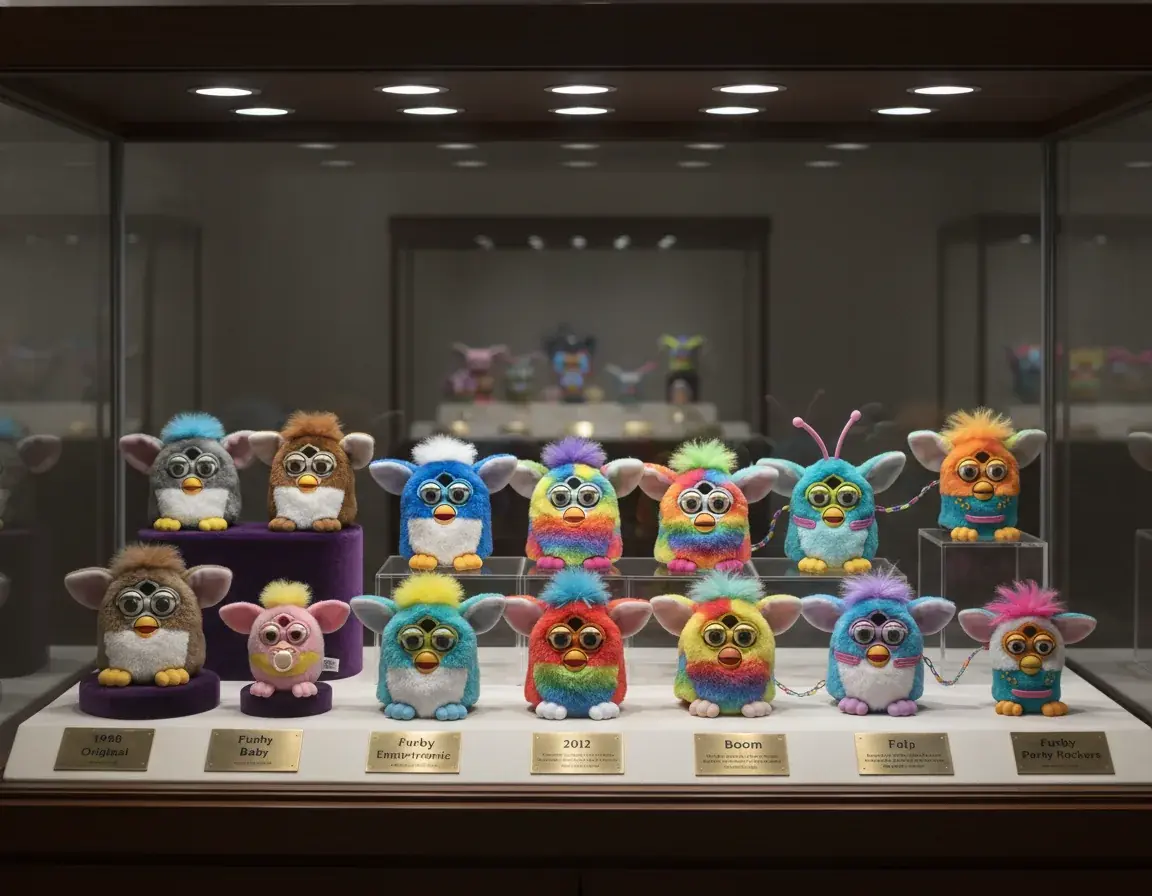
The question "what does Furby do" has many answers depending on the model: some emphasize music and party play, others prioritize personalities and app features, but all share the same playful heart that has kept Furby relevant for decades.
If you want to compare generations, demo features, or find specific colors and editions, visit Furby Toy Shop in Ashburn, VA — or explore our collections online to discover the right Furby for your family or collection.
Visit Furby Toy Shop
Furby Toy Shop is conveniently located in Ashburn, Virginia, making it easy for local customers and collectors to connect with a trusted Furby store.
Our Location
Furby Toy Shop
Address: 42840 Creek View Plaza #115, Ashburn, VA 20147, United States
Phone: +1 571-223-2614